
 English
 Chinese
 Dutch
 Arabic
 Spanish
 Portuguese
 Russian
 French
 Italian
 German
 Japanese
The Christian Church (Disciples of Christ) asks the people who join it to say one thing, the words Peter said when Jesus asked his disciples who they thought he was: “Thou art the Christ, the Son of the living God” (Matthew 16:16). The church’s Design opens with that confession, “We confess that Jesus is the Christ, the Son of the living God, and proclaim him Lord and Savior of the world,” and beyond it the Disciples’ more than 3,000 congregations in the United States and Canada ask for no creed at all. They baptize believers, usually by immersion, and most of their congregations welcome Christians who were baptized another way without baptizing them again. In most of their churches the Lord’s Supper is on the table every Sunday, and anyone who follows Jesus may come to it.
The Churches of Christ grew from the same movement, and since the religious census of 1906 they have been counted as a church of their own. They sing without instruments, they keep each congregation under its own elders with no headquarters above it, and they baptize only believers, by immersion, for the remission of sins. Both churches were born of the hope Jesus put into his prayer, “That they all may be one” (John 17:21), and Thomas Campbell, one of the men who started it all, wrote in 1809 that “the church of Christ upon earth is essentially, intentionally, and constitutionally one.”
The Disciples and the Churches of Christ side by side
| Question | Christian Church (Disciples of Christ) | Churches of Christ |
|---|---|---|
| A separate body since | Roots in 1804 and 1809; one church under its Design since 1968 | Listed apart in the 1906 religious census |
| Creed | None; one confession, that Jesus is the Christ, the Son of the living God | None; “no creed in the usual sense of the word” |
| Final authority | Scripture, which each member studies within the church | The Bible, with the New Testament as the pattern for the church |
| Government | Self-governing congregations, regions and a General Assembly that speaks to the church, not for it | Each congregation under its own elders; no conventions or headquarters |
| Baptism | Believers, usually by immersion; most congregations accept infant and other baptisms | Believers only, by immersion, for the remission of sins |
| The Lord’s Supper | Every Sunday in most congregations, open to all followers of Jesus | Every Sunday, binding on each member unless providentially hindered |
| Salvation | By the saving grace of Christ, answered in faith and baptism; no official teaching on losing it | By grace, on the conditions of pardon, baptism among them; a Christian can fall away |
| Mary | No official teaching | The virgin birth; no further doctrine |
| Music | Instruments used | Unaccompanied singing only |
The Disciples have a Design and a set of principles we can quote, but the Churches of Christ have no central creed and no headquarters, so for them we have gone to people who speak for themselves: Batsell Barrett Baxter, who chaired the Bible department at David Lipscomb College and wrote a pamphlet called “Who are the churches of Christ and what do they believe in?”, and two congregations that publish their beliefs, the Southaven church of Christ in Mississippi and the La Vista Church of Christ in Nebraska. Every congregation answers for itself, so you may meet a Church of Christ that puts things a little differently.
How one movement for unity became separate churches
The story begins with two Presbyterian ministers who wanted Christians to be one. In 1801 Barton W. Stone led a revival of 20,000 people at Cane Ridge, Kentucky, and in 1804 he and five other ministers dissolved their own presbytery with a document they called its Last Will and Testament: “We will, that this body die, be dissolved, and sink into union with the Body of Christ at large; for there is but one body, and one Spirit, even as we are called in one hope of our calling.” They were writing their will in Paul’s words, “There is one body, and one Spirit, even as ye are called in one hope of your calling” (Ephesians 4:4).
Thomas Campbell had come from Ireland to western Pennsylvania in 1807. The heart of his trouble with his Presbyterian superiors, as the historian Winfred Ernest Garrison tells it, was that he said “the church has no divine warrant for holding Confessions of Faith as terms of communion,” and in September 1808 he renounced the authority of his presbytery, which later deposed him. On August 17, 1809, his friends formed the Christian Association of Washington, and they took as their motto, “Where the Scriptures speak, we speak; where the Scriptures are silent, we are silent.” On September 7 they approved his Declaration and Address. The association made itself a church on May 4, 1811, and from the start it kept the custom both churches keep today: it “observed the Lord’s Supper the next day, and thereafter every Lord’s day.” Its plain building at Brush Run held its first service on June 16, 1811.
Stone’s people called their churches Christian Churches, Campbell’s called themselves Disciples of Christ, and when the two groups met at Lexington, Kentucky, on January 1, 1832, and agreed to become one, nobody could make the union happen from the top. “Since neither group recognized any church authority superior to the local congregation, actual union could be accomplished only by going to the congregations,” Garrison writes, and so it went from church to church. Many of Stone’s churches never accepted it; they became Congregational-Christian churches, and today they are part of the United Church of Christ, with whom the Disciples have shared their mission work in Global Ministries for more than twenty-five years.
The quarrel that divided the movement came over worship and over how to read the New Testament’s silence. Some churches bought organs, and others answered with the case Garrison sums up from J. W. McGarvey’s writing in 1864: “no element in public worship is legitimate unless it is explicitly authorized in the New Testament; instrumental music is not so authorized; therefore it is not legitimate.” Garrison adds that “Churches did not disfellowship each other over the organ question, but many congregations divided on it.” The missionary societies, home and foreign, divided them more deeply still. By 1906 the separation was plain enough that the United States Bureau of the Census listed the Churches of Christ by themselves, with 159,658 members out of 1,142,359 in the whole movement, about one in seven.
In the first decades of the twentieth century a third body drew away from the Disciples, over modern theology, over the Federal Council of Churches, formed in 1908, and over “open membership”, receiving Christians who had not been baptized by immersion. Since the movement began, some congregations have been called Christian Churches and others Churches of Christ, so the body goes by both names, Christian Churches/Churches of Christ. Its North American Christian Convention first met in Indianapolis in 1927, though many of its congregations stayed listed in the Disciples’ yearbook until 1968. That year the International Convention approved Restructure, and in 1969 the first General Assembly met for the Christian Church (Disciples of Christ), the church that still carries both of the old names, Stone’s and Campbell’s.

Why the Disciples ask no creed but Christ
The Disciples of Christ ask no creed but the confession that Jesus is the Christ, the Son of the living God, and they hold Scripture at the center of their life. A new member makes Peter’s confession and is asked for nothing more; the church’s first Principle of Identity says it requires “nothing more – and nothing less – as a basis of our life together,” and congregations say it in worship as a statement of faith, never as a test. Where another church would hand a new member its creed, the Disciples hand them the Bible and trust them to read it with care: “Rather than having tests of faith and creedal statements, we critically and thoughtfully study scripture, taking into account the history and background – the context – in which it was written.”
Each Disciples of Christ congregation governs its own life under the Design, and the church’s General Assembly speaks to the church but not for it. The Design, the covenant by which congregations, regions and the general ministries live together, calls the congregation “the primary expression of the community of faith within the Christian Church (Disciples of Christ)” and leaves it to settle its own practices and call its own ministers. The General Assembly meets every second year and has no authority over any congregation, and Disciples have a saying for it: the Assembly “speaks to the church, but not for the church.” They baptize “in the name of the Father, Son and Holy Spirit,” and their last principle names “the God – Creator, Redeemer, and Sustainer,” though no member is asked to sign a statement about the Trinity.
How do Disciples of Christ baptize?
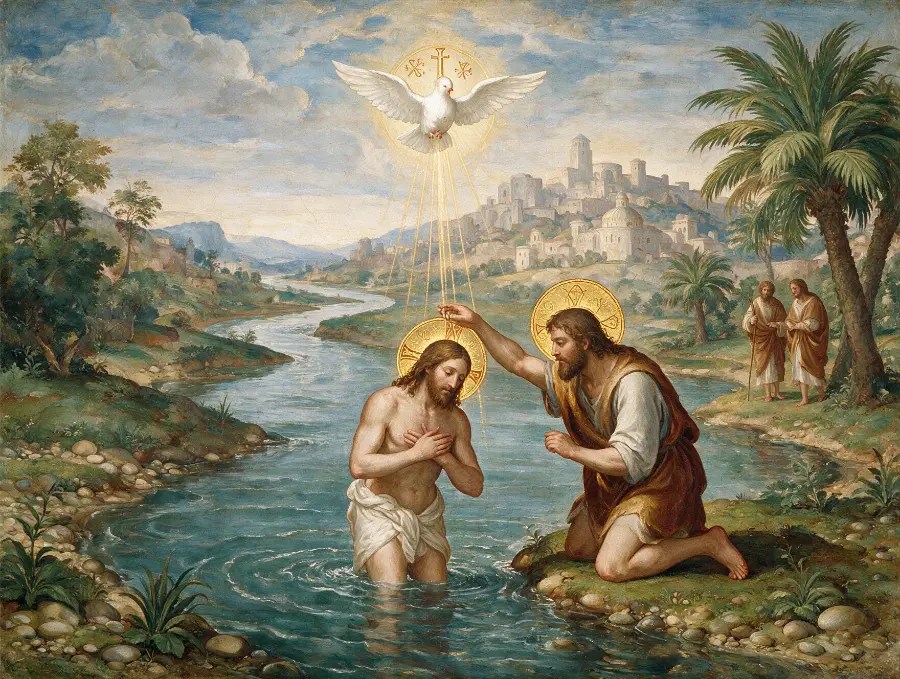
Disciples of Christ baptize believers who choose to follow Christ, usually by immersion, and most Disciples congregations receive Christians who were baptized as infants or in another way without baptizing them again. The founders of the movement baptized by immersion, and until the twentieth century the Disciples would not recognize the baptism of infants at all. The change began in Chicago in 1906, when the Monroe Street Church became the first church among the Disciples to receive into full membership Christians of other churches who had never been immersed, and the quarrel that followed helped to split off the third body. Today, as Robert Welsh writes in his description of the church for its dialogue with the Catholic Church, “most Disciples congregations today receive into membership persons who have been baptized as infants and later confirmed,” and they count them brothers and sisters in Christ with no need to be baptized again.
Immersion is still the form Disciples prefer, and they still hold that baptism is a believer’s own answer to God: “A person makes the choice to follow God’s call rather than the choice being made for them as an infant.” The third principle holds the two sides together, “We practice the baptism of believers, which emphasizes that God’s grace demands a response of faith and discipleship, while also recognizing the baptism performed in other churches,” and the church joins other Christians in saying “that baptism is at once a divine gift and a human response.”
Who can take communion in a Disciples church?
Most Disciples of Christ congregations celebrate the Lord’s Supper every Sunday at a table open to all who follow Jesus, and the church teaches that the living Christ is met there in the bread and the cup. It “is open to all who are followers of Jesus Christ,” the church says, and “Through the power of the Holy Spirit, the living Christ is met and received in the sharing of the bread and the cup, representative of the body and blood of Jesus.” The table stands at the center of their worship, and that is why the church’s emblem is a chalice: “Most congregations do this by celebrating communion every Sunday. That’s why we use a chalice as our logo.”
Disciples have never kept a closed table, and Welsh says they often call themselves “a people of the Table”. They also share the table’s work: lay people preside at it alongside the clergy, which Welsh counts among the gifts the Disciples bring to the wider church. When they describe themselves in a few words, they speak of that table: “We are a movement for wholeness in a fragmented world. As part of the one Body of Christ, we welcome all to the Lord’s Table as God has welcomed us.” Paul said it to the Corinthians long ago, “For we being many are one bread, and one body” (1 Corinthians 10:17).
How do Disciples say a person is saved?
The Disciples of Christ teach that the saving grace of Christ calls for a response of faith and discipleship, and that through baptism into Christ a believer enters newness of life; the church has no official teaching on whether salvation can be lost. Their Design says that it is through congregations that “individuals are brought to the saving grace of Christ, baptized into the Body of Christ, nurtured in their faith, and gather at the Lord’s Table,” and its Preamble confesses, “Through baptism into Christ we enter into newness of life and are made one with the whole people of God.” Grace comes first, and we answer it.
Whether a believer can be sure of salvation, or can fall away, the church does not say. We read the Design with its Preamble, the twelve Principles of Identity, the church’s own pages on its identity, its confession, baptism and communion, Welsh’s account of its beliefs, and the two reports of its dialogue with the Catholic Church, from 1992 and 2009, and none of them takes up either question, so each Disciple is left to the Scriptures.
Do Disciples of Christ have a teaching about Mary?
The Disciples of Christ have no official teaching about the Virgin Mary; neither the Preamble to their Design nor their twelve Principles of Identity mentions her. Nor does any of the other documents we read. The one confession the church asks of its members is about her Son, and the second principle leaves each of them free to study what the Gospels say of her: “each person has the freedom – and the responsibility – to study God’s Word within the community of the church.”
What the Churches of Christ teach on the same five questions
Churches of Christ have no creed but the Bible, and each congregation is autonomous under its own elders, with no headquarters above it. Ask Baxter whether the church has a creed and he says, “No. At least, there is no creed in the usual sense of the word. The belief of the church is stated fully and completely in the Bible.” There are no conventions, no annual meetings and no official publications, and nothing stands above the elders of each congregation, who serve under Christ with the New Testament as “a kind of constitution.” The Southaven congregation describes itself the same way: “We are a completely autonomous congregation, governed locally, just as the church in the first century was.”
Churches of Christ baptize only believers old enough to understand the gospel, only by immersion, and they teach that baptism is for the remission of sins. The Greek word means “to dip, to immerse, to plunge,” and Paul speaks of baptism as a burial and a resurrection in Romans 6, so they go all the way under the water. No infant is baptized, because “Faith must always precede baptism, so only those old enough to understand and believe the gospel are considered fit subjects for baptism.” Southaven teaches that “we are to be baptized in order to have our sins washed away,” pointing to Acts 2:38 and 22:16.
Churches of Christ eat the Lord’s Supper every Sunday to remember Christ and proclaim his death, and each member counts that weekly meeting as binding unless providentially hindered. They take their pattern from the way the first Christians met, “upon the first day of the week, when the disciples came together to break bread” (Acts 20:7), and Baxter calls the Supper “a central part of the worship.” At Southaven they put it in their own words: “We remember our Lord and Savior Jesus Christ and proclaim his death until he returns by partaking in the Lord’s Supper.”
Churches of Christ teach that a person is saved by God’s grace when he meets the conditions of pardon, hearing the gospel, believing, repenting, confessing Jesus as Lord and being baptized for the remission of sins, and that a careless Christian can lose his salvation. “God’s part is the big part,” Baxter says, pointing to Ephesians 2:8–9, and yet “Man must comply with the conditions of pardon which the Lord has announced.” After baptism comes a faithful life, and he speaks with confidence: “If we do just what our Lord commanded we know that our salvation is certain.” The La Vista congregation adds the warning that goes with it: “The truth is that a careless Christian can lose his salvation.”
Churches of Christ teach the virgin birth of Christ and have no further doctrine about Mary; their prayers go to God alone. They read Matthew 1:20 and 25 “at face value as declarations of the virgin birth,” and Southaven confesses of Jesus, “We believe that He was born of a virgin.” Asked whether prayers go to the saints, Baxter answers, “No. God the Father is considered the only one to whom the prayers may be addressed.”
On a Sunday morning in a Church of Christ you will hear voices and nothing else, because “acappella singing is the only music used in the worship,” and Baxter gives the reason: “It is felt that there is no authority for engaging in acts of worship not found in the New Testament.” He points to Paul’s words, “Speaking to yourselves in psalms and hymns and spiritual songs, singing and making melody in your heart to the Lord” (Ephesians 5:19). There is more on how the Churches of Christ differ from their Baptist neighbours in Church of Christ and Baptist beliefs compared.
Where the two churches still stand together
The two churches parted over how to read the New Testament’s silence, and so over organs, missionary societies and whom to receive as members, but they are still the children of Stone and Campbell. Both baptize believers, by immersion as the founders taught; both come to the Lord’s Table on the Lord’s Day; neither asks its members to sign a creed; and in both, the local congregation governs its own life. The verses on baptism that both churches read, and that other churches read differently, are gathered in Bible verses about baptism. Stone and his friends wrote their presbytery’s will in the words of Ephesians 4:4, and the verse that comes next belongs to both churches still: “One Lord, one faith, one baptism” (Ephesians 4:5).
Related reading
- Church of Christ vs Baptist: Baptism, Music and Salvation
- What the United Church of Christ believes, and how it differs from the Churches of Christ
- 19 Bible Verses About Baptism, and Where Christians Read Them Differently
- 17 Bible Verses About Communion
- Methodist vs Baptist: Baptism, Salvation and Who Chooses the Pastor
- How Many Christian Denominations Are There? About 53,000


Leave a Reply