
 English
 Chinese
 Dutch
 Arabic
 Spanish
 Portuguese
 Russian
 French
 Italian
 German
 Japanese
Eternal life, in the Bible, is knowing God, and Jesus says it begins now. He lifted up his eyes to heaven and said to his Father, “And this is life eternal, that they might know thee the only true God, and Jesus Christ, whom thou hast sent” (John 17:3), and he speaks of it in the present tense when he says, “He that heareth my word, and believeth on him that sent me, hath everlasting life” (John 5:24). So the phrase tells us what kind of life this is as well as how long it lasts. The churches do not all read those words alike, and they differ over when the gift comes in full, whether it can be lost and what becomes of those who refuse it.
The words about knowing God come in the middle of a prayer, with nobody asking him for a definition, and one verse earlier he has said that the Father gave him power “that he should give eternal life to as many as thou hast given him” (John 17:2). So before it is anything else the life is a gift, and Paul calls it that in so many words, “the gift of God is eternal life through Jesus Christ our Lord” (Romans 6:23). What is given is God himself, to be known by people who are still alive and still have to die, and the last chapter of the Bible tells us what his servants have to look forward to, “And they shall see his face” (Revelation 22:4).
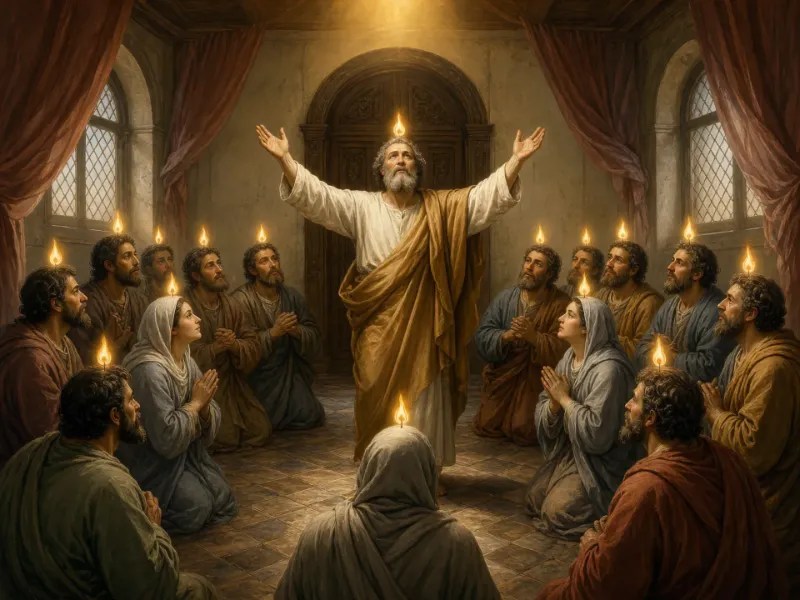
What does “eternal” mean in the Greek New Testament?
The phrase in the Greek is zoe aionios. Joseph Thayer’s lexicon describes this life as “a life active and vigorous, devoted to God, blessed, the portion even in this world of those who put their trust in Christ, but after the resurrection to be consummated by new accessions (among them a more perfect body), and to last forever,” so in one sentence he has told us how the life is lived, that it has already started for those who trust Christ, that the resurrection will add to it, and that it will not stop. For aionios itself he gives “without end, never to cease, everlasting”, and he says the word “gives prominence to the immeasurableness of eternity”.
The King James translators had two English words for it and used both, “eternal life” in John 3:15 and “everlasting life” in the very next verse, which Thayer lists together as one Greek phrase. If we count “eternal life” in 26 verses, “everlasting life” in 11 and “life eternal” in 4, we come to 41 verses, and 22 of them are in John’s Gospel and his First Letter, which is more than all the other books of the Bible put together. Matthew, Mark and Luke have 7 between them, Paul’s letters to the Romans, Timothy and Titus have 8, Acts has 2 and Jude has 1, and in the King James the Old Testament has only Daniel 12:2. If you would like to read some of them one after another, they are gathered in 22 Bible verses about eternal life.
Where does the Old Testament speak of it?
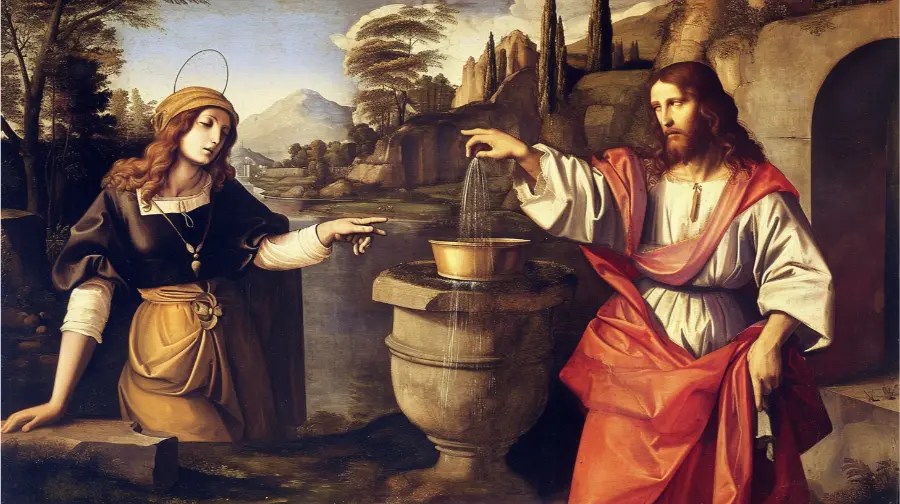
The story begins in a garden, with a way being closed. After Adam and Eve have sinned, God says “lest he put forth his hand, and take also of the tree of life, and eat, and live for ever,” and he sends the man out and sets cherubim and a flaming sword “to keep the way of the tree of life” (Genesis 3:22–24). Daniel is the one who gives us the words themselves, “And many of them that sleep in the dust of the earth shall awake, some to everlasting life, and some to shame and everlasting contempt” (Daniel 12:2). His Hebrew is chayyei olam, and the Brown-Driver-Briggs lexicon, which defines olam as “long duration, antiquity, futurity”, lists this verse among its uses “after death”. On the last page of the Bible we see the tree again, “in the midst of the street of it, and on either side of the river” (Revelation 22:2). Nothing is said there of a sword, and the next verse reads, “And there shall be no more curse” (Revelation 22:3).
Does eternal life begin when we die?
Jesus speaks of it in the present, “He that believeth on me hath everlasting life” (John 6:47), and John writes to believers “that ye may know that ye have eternal life”, because “God hath given to us eternal life, and this life is in his Son” (1 John 5:11–13). Yet when Peter says that they have left everything to follow him, Jesus promises whoever has done so “an hundredfold now in this time” and “in the world to come eternal life” (Mark 10:28–30), and he says that those in the graves will come forth “unto the resurrection of life” (John 5:28–29). So Scripture speaks of it as ours already and as still to come, and the churches, when they come to write it down, start from different ends.
The Catholic Church and the Orthodox Church in America begin with now, and both teach that a person living in God’s grace already shares in God’s own life. The Catholic Catechism calls grace “a participation in the life of God” (1997), and the Orthodox Church in America goes as far as the word deification, which it says comes “by the grace of God”. Peter wrote that we may be “partakers of the divine nature” (2 Peter 1:4), and Athanasius of Alexandria said it in one line, which the Catholic Catechism repeats in its own wording (460), “He was made man that we might be made God.” Put that next to Jesus’ prayer and we begin to hear how much the word “know” can hold.
Martin Luther’s Small Catechism and the Seventh-day Adventist statement of belief both speak of the gift as given on the last day, when God, as the Adventists put it, “will grant eternal life to His redeemed.” Luther has it in the first person, so that whoever says his words is saying that the Holy Ghost “will raise up me and all the dead, and will give to me and to all believers in Christ everlasting life.”

Is eternal life the same as heaven?
Heaven is part of it, and the Catholic Catechism, the Westminster Confession and the Orthodox Church in America each go on to say more. The Catechism calls heaven “the state of supreme, definitive happiness” and says that to live there is “to be with Christ” (1024–1025), and then it carries on to the end of time, when the righteous “will reign for ever with Christ, glorified in body and soul”, in what Scripture calls “new heavens and a new earth” (1042–1043). The Westminster Confession, which many Presbyterian and Reformed churches hold, says that the souls of the righteous at death “are received into the highest heavens, where they behold the face of God, in light and glory, waiting for the full redemption of their bodies” (chapter 32), and the word to notice is “waiting”, because even those souls have more to come. The Orthodox Church in America, in its faith in resurrection and eternal life, looks to “this very world so loved by God”. To be with Christ and to behold the face of God are the words of two different churches, and a psalm has the same thing in one line, “in thy presence is fulness of joy; at thy right hand there are pleasures for evermore” (Psalm 16:11).
If someone you love has died and you are asking where that person is now, the churches give different answers. A Presbyterian who holds the Westminster Confession will tell you that the souls of the righteous are with God already. A Catholic will say that each of us is judged at death (Catechism, 1022), and that those who die in God’s grace enter heaven, some at once and some after a purification the Church calls Purgatory, in which they are already “assured of their eternal salvation” (1030–1031). The Seventh-day Adventist statement says that “death is an unconscious state for all people” until the resurrection. These churches differ over the time between, and none of them stops at the grave. Neither does Jesus, who says that “all that are in the graves shall hear his voice” (John 5:28), which takes in every grave any of us has ever stood beside. He calls what follows, for those who have done good, “the resurrection of life” (John 5:29), and the resurrection has a page of its own here, why the resurrection is crucial to Christianity.
Can eternal life be lost?
“They shall never perish, neither shall any man pluck them out of my hand,” Jesus says of his sheep (John 10:28), and the question the churches divide over is whether a person who truly has this life can ever lose it. The Westminster Confession says no. Those whom God has accepted may for a time fall into grievous sin, it teaches, but they “can neither totally nor finally fall away from the state of grace” (chapter 17), and a believer may be sure of this and is told to work at being sure (chapter 18).
The Catholic Church says yes, teaching that mortal sin costs a believer sanctifying grace and, unless it is repented of, “causes exclusion from Christ’s kingdom and the eternal death of hell” (Catechism, 1861), which is why its Catechism speaks of perseverance to the end as something Catholics hope for (2016). An Orthodox priest, Fr. Theodore Stylianopoulos, argues the same in an essay published by the Greek Orthodox Archdiocese of America. Receiving salvation is a lifelong process, he says, in which we can accept the gift or reject it, and he reads Paul as warning that those who sin and do not repent, “including Christians to whom he is writing, will suffer ultimate loss of salvation.” If this is your own question, can you lose your salvation? goes through the verses.
What happens to those who do not receive it?
“And these shall go away into everlasting punishment: but the righteous into life eternal,” Jesus says (Matthew 25:46), and the one Greek word aionios, as Thayer’s lexicon shows, stands on both sides of that sentence. In John’s Gospel he says that “they that have done evil” will come out of the graves “unto the resurrection of damnation” (John 5:29). What the churches differ over is what everlasting means for the lost, whether they go on for ever or come to an end.
The Catholic Church and the Westminster Confession say that they go on. For Catholics the chief punishment of hell is “eternal separation from God” (Catechism, 1035), and the Catechism adds that “God predestines no one to go to hell” (1037), while Westminster speaks of “eternal torments” (chapter 33). The Orthodox Church in America puts it another way, that at the end God will fill all creation with himself, and that this one presence will be paradise for those who love him and hell for those who hate him.
The Seventh-day Adventist Church answers that the lost come to an end, reasoning that since Scripture says God alone is immortal they cannot live for ever, and its own words are “They are destroyed forever, not forever burning.” Some evangelicals hold a similar view under the names annihilationism and conditional immortality, and in 2000 the Evangelical Alliance in Britain, through its ACUTE commission, published a report that called it a “significant minority evangelical view” and said it fell within “the parameters set by” the Alliance’s 1970 Basis of Faith.
None of these verses says who in particular is lost, and the disciples wondered about that themselves, on the day a man came running to Jesus to ask about eternal life and went away grieved. “Who then can be saved?” they said among themselves, and Jesus looked at them and answered, “With men it is impossible, but not with God: for with God all things are possible” (Mark 10:26–27).
Jesus lifted up his eyes and said that eternal life is to know the only true God and the one he sent. The last page of the Bible says where that knowing comes to rest, beside the tree and the river with no more curse, and of those who serve him it says, “And they shall see his face” (Revelation 22:4).


Leave a Reply