
 English
  Chinese
  Dutch
Dutch  Arabic
  Spanish
  Portuguese
  Russian
  French
  Italian
  German
  Japanese
 Protestant symbols are few, and the best known come from the churches of the Reformation. They are the plain cross without the figure of Christ, the Luther rose, the Huguenot cross, the burning bush and the open Bible. No single emblem stands for all Protestants, and most of their churches use fewer images than Catholic or Orthodox churches do.
| Symbol | Used mainly by | What it stands for |
|---|---|---|
| Plain (empty) cross | Most Protestant churches | Christ’s death and resurrection |
| Luther rose | Lutherans | Faith in the crucified Christ, which brings joy and peace |
| Huguenot cross | French Protestants and other Reformed Christians | The cross, with a dove for the Holy Spirit |
| Burning bush | Presbyterian and Reformed churches | The bush Moses saw, on fire but not burned up |
| Open Bible | Presbyterian and Reformed churches | Scripture as the way God’s word is known |
| Cross and flame | The United Methodist Church | Christ and the Holy Spirit |
| Compass rose | The Anglican Communion | The Communion’s worldwide reach |
Is there one symbol of Protestantism?
No. Protestantism is a family of churches, and no one body chooses an emblem for all of them. The one sign nearly all of them share is the cross, which the Presbyterian Church (U.S.A.) calls “the universal and most ecumenical symbol of the Christian church.” It belongs to every Christian tradition, not to Protestants alone.
Beyond the cross, each family of churches has its own mark. For Lutherans it is Luther’s seal, which the Lutheran Church—Missouri Synod calls “the most enduring symbol of the Lutheran Reformation.” For Presbyterians it is the burning bush, which the Presbyterian Church in Ireland describes as “probably the most commonly used and recognised symbol in Irish Presbyterian Churches.” French Protestants wear the Huguenot cross, and United Methodists put the cross and flame on their signs. So which symbol counts as the Protestant one depends on the church.
Do Protestants use the cross or the crucifix?
Most Protestant churches use a plain cross, with no figure of Christ on it. The Musée protestant, the museum of French Protestantism, notes that Protestant crosses are very simple and seldom show Christ. Many Protestants call it the empty cross. An article from Northwest Nazarene University, a school of the Church of the Nazarene, explains that an empty cross “symbolizes Christ’s defeat of death through God’s act of raising Jesus from the dead.” Luther himself defended crucifixes when others in Wittenberg wanted them removed.
Catholic churches use the crucifix, a cross that carries the body of Christ. The University of Portland, a Catholic university, gives one reason for it: “the crucifix helps the beholder remember that God took on flesh to suffer in solidarity with all those who are ill, tortured or stricken in any way.” The Nazarene article links the crucifix to Paul’s words, “But we preach Christ crucified” (1 Corinthians 1:23).
The two signs stress different moments of one faith. The same article puts it plainly: “Both Protestants and Roman Catholics see Christ’s crucifixion as a sacrificial act of atonement for all of humanity’s sins.” What Christians of every church have held in common for two thousand years is the subject of a free course, Christianity: What Christians Have Believed for 2,000 Years.
What does the Luther rose mean?
The Luther rose is the seal Martin Luther used on his books. According to the Lutheran Church—Missouri Synod, it was on the title pages of his works by the early 1520s. In a letter to Lazarus Spengler dated 8 July 1530, Luther explained it part by part, from the centre outward.
| Part | Colour | What Luther said it means |
|---|---|---|
| Cross | Black | “faith in the Crucified One that saves us” |
| Heart | Red, its natural colour | The cross “leaves the heart its natural color”: it “does not kill us but keeps us alive” |
| Rose | White | “faith gives joy, comfort, and peace” |
| Field | Sky blue | “a beginning of heavenly, future joy” |
| Ring | Gold | “blessedness in heaven lasts forever and has no end” |
Luther tied the centre of the seal to Paul. The cross sits in a heart, he wrote, because “Anyone who believes from the heart will be justified (Romans 10:10).” The cross is black because it “mortifies and causes pain.” The rose had to be white, “not red,” because “White is the color of the spirits and angels.” Read from the middle out, the seal moves from the cross to heaven: faith in the crucified Christ, a heart kept alive, joy and peace now, and a joy that will have no end.
What is the Huguenot cross?
The Huguenot cross is the cross of French Protestants, the Huguenots. The Musée protestant calls it “a sign of recognition among the Reformed” and says it “may have been created in the South of France by Maystre, a goldsmith in Nimes, around 1688.”
It has two parts. The cross has four equal arms, modelled on the Maltese cross and the cross of Languedoc. From it hangs a pendant that “features a flying dove or the ‘Holy Spirit’,” which the museum also calls “the Whitsun dove,” the dove of Pentecost. In some versions a small bulb takes the dove’s place. The museum explains that the bulb recalls the Sainte-Ampoule, the holy vial used at the crowning of the kings of France, which a dove is said to have brought to Saint Rémy when he baptised Clovis. The museum says its spread through the Reformed world “seems recent,” and that its spread beyond the south “could be attributed to population movements over the last third of the 19th century.”
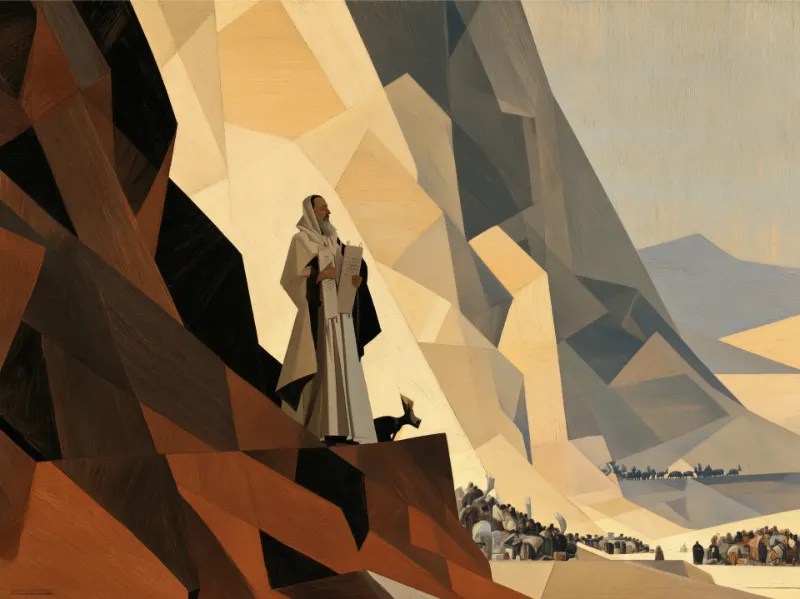
Why is the burning bush a Presbyterian symbol?
The burning bush is the place where God called Moses: “And the angel of the Lord appeared unto him in a flame of fire out of the midst of a bush: and he looked, and, behold, the bush burned with fire, and the bush was not consumed” (Exodus 3:2).
Reformed and Presbyterian churches took that bush as their sign, each with a Latin motto. According to the Presbyterian Church in Ireland, the earliest recorded use is “by the French Protestant church in the late 17th century with the Latin inscription flagror non consumer.” The Latin means: I burn, but I am not consumed. The Irish church adds that the Church of Scotland has long used the inscription nec tamen consumebatur, which it translates as “not consumed.” The Presbyterian Church in Canada made the same bush and motto its official symbol in 2014. Irish Presbyterians chose a motto of their own, ardens sed virens, “burning but flourishing.” Their bush first appeared in 1842, on the first issue of the Presbyterian newspaper The Banner of Ulster, and it is now embroidered on pulpit falls and carved into church tables, chairs and hymn boards across Ireland.
The mottos carry the meaning: a bush on fire that is not burned up, and, in the Irish form, one that goes on flourishing. The Presbyterian Church (U.S.A.) gives the flames in its seal a double sense: “a symbol of revelation in the Old Testament when God spoke to Moses from the burning bush and a suggestion of the beginning of the Christian church when Christ manifested himself to his apostles at Pentecost.”
Why do Protestants display an open Bible?
The open Bible stands for the place the Reformation gave to Scripture and to preaching. In the seal of the Presbyterian Church (U.S.A.), approved in 1985, the crossbar of the cross is drawn as an open book. The church says this “highlights the emphasis that the Reformed tradition has placed on the role of Scripture as a means of knowing God’s word.” Beneath the book is a lectern or pulpit, for “the important role of preaching in the history of Presbyterian worship.” When the Irish Presbyterian newspaper first printed its burning bush in 1842, it set “an open Bible beneath.”
Which other symbols do Protestant churches use?
The Methodist cross and flame
The United Methodist Church uses a cross joined to a single flame with two tongues. Its General Conference adopted the emblem in 1968, the year The Methodist Church and the Evangelical United Brethren Church united. The church explains that it “relates The United Methodist church to God through Christ (cross) and the Holy Spirit (flame).” The flame recalls Pentecost, when “there appeared unto them cloven tongues like as of fire, and it sat upon each of them” (Acts 2:3). The church adds that the elements of the emblem also recall a moment in the life of John Wesley, Methodism’s founder, when he sensed God’s presence and felt his heart “strangely warmed.” The two tongues of the single flame, it says, “may also be understood to represent the union of two denominations.” There is more on the emblem in the Methodist Church symbol and what it means.
The Anglican compass rose
Anglican churches use the compass rose, the drawing of the compass directions found on maps. The Episcopal Church describes it as “The emblem of the Anglican Communion signifying its global reach, and centered on the St. George’s Cross with its motto taken from John 8:32.” In the King James Version that verse reads: “And ye shall know the truth, and the truth shall make you free.”
The dove
The dove appears inside several of these symbols. It hangs from the Huguenot cross, and it forms the top of the cross in the Presbyterian (U.S.A.) seal. There it stands for the Holy Spirit, and the church says it “also symbolizes Christ’s baptism by John and the peace and wholeness which his death and resurrection bring to a broken world.”
The fish
The fish is older than Protestantism and belongs to all Christians. The Presbyterian Church (U.S.A.) says that some see a fish in the body of the dove on its seal, “an early Christian sign for Christ.” Its history is told in the meaning of the Jesus fish symbol.
Why do Protestants use fewer images?
The churches of the Reformation divided over images, though they read the same commandment: “Thou shalt not make unto thee any graven image, or any likeness of any thing that is in heaven above, or that is in the earth beneath, or that is in the water under the earth. Thou shalt not bow down thyself to them, nor serve them” (Exodus 20:4–5).
The Reformed and Presbyterian churches read it strictly. The Westminster Larger Catechism of 1647 counts among the sins of the second commandment “the making any representation of God, of all or of any of the three persons, either inwardly in our mind, or outwardly in any kind of image or likeness of any creature whatsoever; all worshiping of it, or God in it or by it.” The Heidelberg Catechism asks whether images may stand in churches “in place of books for the unlearned” and answers: “No, we should not try to be wiser than God.” It does not ban every picture: “Although creatures may be portrayed, yet God forbids making or having such images if one’s intention is to worship them or to serve God through them.” This is why many Reformed churches have plain walls, with the pulpit and the Bible at the front.
Luther saw it differently. When his Wittenberg colleague Andreas Karlstadt called images idolatry and pressed for their removal, Luther answered in Against the Heavenly Prophets (1524–25) that idolatry happens first in the heart, not in the picture. “But images for memorial and witness, such as crucifixes and images of saints, are to be tolerated,” he wrote. He knew the mind makes pictures anyway: “For whether I will or not, when I hear of Christ, an image of a man hanging on a cross takes form in my heart.” Lutherans, like Catholics, number the commandments differently from the Reformed churches. Luther’s Small Catechism gives the First Commandment as “Thou shalt have no other gods” and the Second as “Thou shalt not take the name of the Lord, thy God, in vain.” The words about graven images are not counted as a separate commandment.
Catholic and Orthodox Christians honour images. The Orthodox Church in America says the seventh ecumenical council, Nicaea II in 787, “Affirmed the propriety of icons as genuine expressions of the Christian Faith.” It teaches that “icons are not only permissible, but are spiritually necessary,” because the Son of God became man (John 1:14), and that icons “are not just human pictures or visual aids to contemplation and prayer.” The Catechism of the Catholic Church explains that “the honor rendered to an image passes to its prototype,” and that “Religious worship is not directed to images in themselves, considered as mere things.” Each tradition means to keep the same commandment; they differ on what keeping it requires.
When did the Protestant symbols appear?
| When | Symbol | Where |
|---|---|---|
| By the early 1520s | Luther’s seal | Title pages of Luther’s books |
| 8 July 1530 | Luther explains his seal | Letter to Lazarus Spengler |
| Late 17th century | Burning bush, flagror non consumer | The French Protestant church |
| About 1688 | Huguenot cross | Nîmes, southern France |
| 1842 | Burning bush, first Irish use | The Banner of Ulster |
| 1968 | Cross and flame | The United Methodist Church |
| 1985 | Seal with cross, book, dove and flames | Presbyterian Church (U.S.A.) |
| 2014 | Burning bush made official | Presbyterian Church in Canada |


Leave a Reply