
 English
 Chinese
 Dutch
 Arabic
 Spanish
 Portuguese
 Russian
 French
 Italian
 German
 Japanese
Jesus is called Christ because Christ means “anointed one” in Greek. The Greek word, christos, translates the Hebrew mashiach, Messiah, so “Jesus Christ” means “Jesus the Messiah.” Christ is a title, not a surname. Christians give it to him because they believe he is the anointed king that Israel’s Scriptures promised.
The Gospel of John catches the moment the word first passed from one person to another. Andrew, who had just met Jesus, went and found his brother Simon and told him, “We have found the Messias, which is, being interpreted, the Christ” (John 1:41). Everything the title means is packed into that sentence, said by one brother to another.

What does Christ mean?
Christ means “the anointed one.” The Greek verb chriō means to anoint, to rub or pour oil on someone, and its adjective, christos, describes a person who has been anointed. The Septuagint, the ancient Greek translation of the Hebrew Scriptures, uses christos for mashiach. It is the word it uses for “the priest that is anointed” (Leviticus 4:3) and for the king of Israel, “the LORD’s anointed.”
John treats the two words as one and translates for his readers, as he did with Andrew. Later a Samaritan woman says to Jesus, “I know that Messias cometh, which is called Christ” (John 4:25). Messiah is the Hebrew word brought into English, and Christ is the Greek one. They mean the same thing.
| Word | Language | Meaning |
|---|---|---|
| mashiach | Hebrew | anointed one |
| Messias | Greek spelling of the Hebrew (John 1:41) | Messiah |
| christos | Greek, from chriō, “to anoint” | anointed one |
| Messiah, Christ | English | the Anointed |
In the Old Testament the King James Version usually renders mashiach as “anointed.” Once it says “Messiah”, in Daniel 9:25: “unto the Messiah the Prince shall be seven weeks, and threescore and two weeks.” Interpreters read that figure in different ways; the Brown-Driver-Briggs Hebrew lexicon lists readings that take him to be Cyrus or the high priest Joshua. It is not yet the later title “the Messiah.”
Who was anointed in Israel?
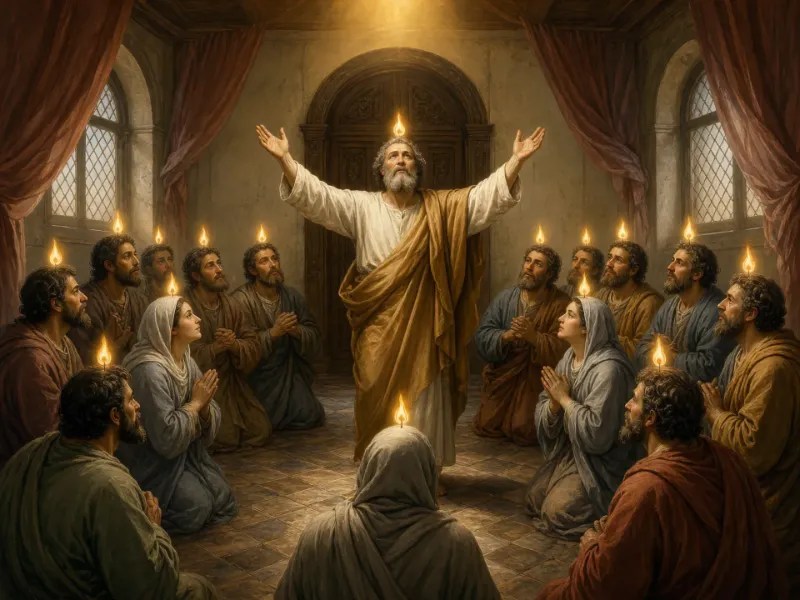
In ancient Israel, oil poured on the head marked someone God had chosen for a task. Priests and kings received it, and in rare cases a prophet. Being anointed meant being set apart for God’s service.
| Who | Anointed as | Scripture |
|---|---|---|
| Aaron | high priest | Exodus 29:4–7 |
| Saul | Israel’s first king | 1 Samuel 10:1 |
| David | king | 1 Samuel 16:13 |
| Elisha | prophet (God’s command to Elijah) | 1 Kings 19:16 |
| Cyrus of Persia | called God’s anointed | Isaiah 45:1 |
When Samuel made Saul king, he “took a vial of oil, and poured it upon his head” (1 Samuel 10:1). When he anointed David, “the Spirit of the LORD came upon David from that day forward” (1 Samuel 16:13). From the start, then, the oil and the Spirit go together. The anointing also made a king sacred. David once had Saul at his mercy and would not touch him: “The LORD forbid that I should do this thing unto my master, the LORD’s anointed” (1 Samuel 24:6).
Isaiah even gives the title to a foreign ruler: “Thus saith the LORD to his anointed, to Cyrus” (Isaiah 45:1). Through most of the Old Testament, the anointed one is someone God has already commissioned. It is not yet the name of one person everyone is waiting for.

What did the Jewish people hope the Messiah would be?
The hope grew from God’s promise to David: “thine house and thy kingdom shall be established for ever before thee: thy throne shall be established for ever” (2 Samuel 7:16). The psalms speak of kings who rise “against the LORD, and against his anointed” (Psalm 2:2). In time, Jews read such passages as promises of a king still to come. Thayer’s lexicon of New Testament Greek notes that “the Messiah”, standing alone as the title of that one coming king, is not found in the Old Testament. It first appears in later Jewish writings such as the Book of Enoch and the Psalms of Solomon.
By Jesus’ day people knew what they were looking for. When Jesus asked the Pharisees, “What think ye of Christ? whose son is he?”, they answered at once, “The son of David” (Matthew 22:42). A crowd in Jerusalem argued, “Hath not the scripture said, That Christ cometh of the seed of David, and out of the town of Bethlehem, where David was?” (John 7:42).
Traditional Judaism holds this hope still, in its own words. Moses Maimonides (1135–1204) wrote in the Laws of Kings, part of his code of Jewish law, the Mishneh Torah: “In the future, the Messianic king will arise and renew the Davidic dynasty, restoring it to its initial sovereignty. He will build the Temple and gather the dispersed of Israel.” He gave a test. A king of David’s house who keeps the Torah, leads Israel in it and “fights the wars of God” may be presumed to be the Messiah, and “if he succeeds in the above, builds the Temple in its place, and gathers the dispersed of Israel, he is definitely the Mashiach.”
On that test, traditional Jewish teaching holds that the Messiah has not yet come. Maimonides names Jesus of Nazareth in the same chapter and rejects his claim. Rabbi Shraga Simmons of Aish puts today’s Jewish view plainly: “Because no one has ever fulfilled the Bible’s description of this future King, Jews still await the coming of the Messiah.” Christians answer that Jesus is that king, and that what is still unfinished he will finish when he returns. The Nicene Creed says he “will come again in glory to judge the living and the dead, and His kingdom will have no end.” Aish replies that “the Messiah will fulfill the prophecies outright,” and that “in the Bible no concept of a second coming exists.” Reform Judaism holds a different hope. Its earliest rabbis replaced prayer for a Messiah with prayer for a messianic age, and it teaches that “we cannot wait for nor do we expect a personal Messiah.”
So Jews and Christians read the same promises to David, and part over one question: have those promises begun to come true in Jesus? It is an old and serious disagreement, and it deserves to be stated honestly by both sides.
Why is Jesus called the Messiah?
The New Testament says God anointed Jesus, with the Holy Spirit rather than with oil. In the synagogue at Nazareth, Jesus stood to read and was handed the scroll of Isaiah. He read, “The Spirit of the Lord is upon me, because he hath anointed me to preach the gospel to the poor,” then sat down and said, “This day is this scripture fulfilled in your ears” (Luke 4:18, 21). Peter later told the centurion Cornelius “how God anointed Jesus of Nazareth with the Holy Ghost and with power: who went about doing good” (Acts 10:38). The title was his from his birth. The angel told the shepherds, “unto you is born this day in the city of David a Saviour, which is Christ the Lord” (Luke 2:11).
The first Christians took up Psalm 2 for him. In a prayer recorded in Acts, they quoted it, “against the Lord, and against his Christ,” and applied it to “thy holy child Jesus, whom thou hast anointed” (Acts 4:26–27).
The churches explain the title through the three kinds of people Israel anointed. The Catechism of the Catholic Church says that the Messiah had to be “anointed by the Spirit of the Lord at once as king and priest, and also as prophet,” and that “Jesus fulfilled the messianic hope of Israel in his threefold office of priest, prophet and king.” The Westminster Larger Catechism, a doctrinal standard of many Presbyterian churches, says the same: “Our mediator was called Christ, because he was anointed with the Holy Ghost above measure; and so set apart, and fully furnished with all authority and ability, to execute the offices of prophet, priest, and king of his church.” Here Catholic and Reformed Christians speak with one voice. Priest, prophet and king, once three people with three flasks of oil, are one man filled with the Spirit.
Did Jesus call himself the Christ?
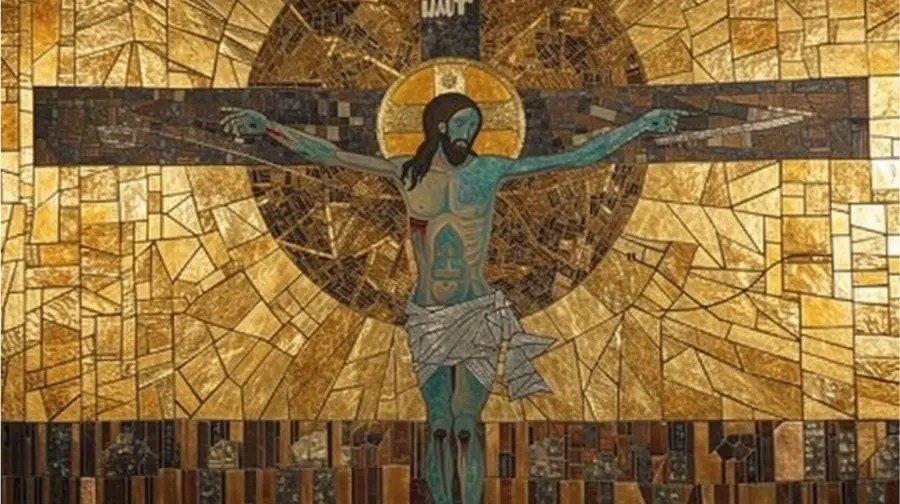
He accepted the title, but he rarely claimed it in public. Near Caesarea Philippi he asked his disciples, “But whom say ye that I am?” It was Simon Peter who answered, the brother Andrew had gone to find: “Thou art the Christ” (Mark 8:29). Matthew gives the fuller answer, “Thou art the Christ, the Son of the living God” (Matthew 16:16), and Jesus blessed Peter for it. Then “he charged them that they should tell no man of him” (Mark 8:30), and “began to teach them, that the Son of man must suffer many things” (Mark 8:31).
Why the silence? The Catechism says Jesus accepted the title “with some reserve because it was understood by some of his contemporaries in too human a sense, as essentially political.” People wanted a king who would win. He spoke first of suffering.
Twice he said it outright. To the Samaritan woman who spoke of the coming Messias, he said, “I that speak unto thee am he” (John 4:26). And at his trial the high priest asked, “Art thou the Christ, the Son of the Blessed?” and Jesus answered, “I am” (Mark 14:61–62). He claimed the title openly when it could only cost him.
Is Christ Jesus’ last name?
No. Jews of his time were known by their father or their town. Jesus calls Peter “Simon the son of Jona” (John 1:42), and Peter calls Jesus “Jesus of Nazareth” (Acts 10:38). His given name came from the angel’s word to Joseph: “thou shalt call his name Jesus: for he shall save his people from their sins” (Matthew 1:21). His name in his own language and how Yeshua became Jesus are questions of their own.
The Gospels use Christ as a title, usually with the article: “the Christ.” Matthew writes of “Jesus, who is called Christ” (Matthew 1:16). John says he wrote his whole Gospel “that ye might believe that Jesus is the Christ, the Son of God” (John 20:31). That is a confession of faith, and Christ in it is a title.
In Paul’s letters the title is already turning into a name. Paul writes “Jesus Christ” and “Christ Jesus” interchangeably, as in “the redemption that is in Christ Jesus” (Romans 3:24), and often simply “Christ.” In the second century, Justin Martyr, writing to the Roman Senate, still explained what it meant: the Son “is called Christ, in reference to His being anointed and God’s ordering all things through Him.” The Catechism sums up the change: Christ “became the name proper to Jesus only because he accomplished perfectly the divine mission that ‘Christ’ signifies.” The title became his name because he lived it.
The title names his office. On its own it does not name his nature. The belief that Jesus is both God and man rests on other words, such as “the Word was made flesh, and dwelt among us” (John 1:14), and the creeds set that belief out in lines of their own.
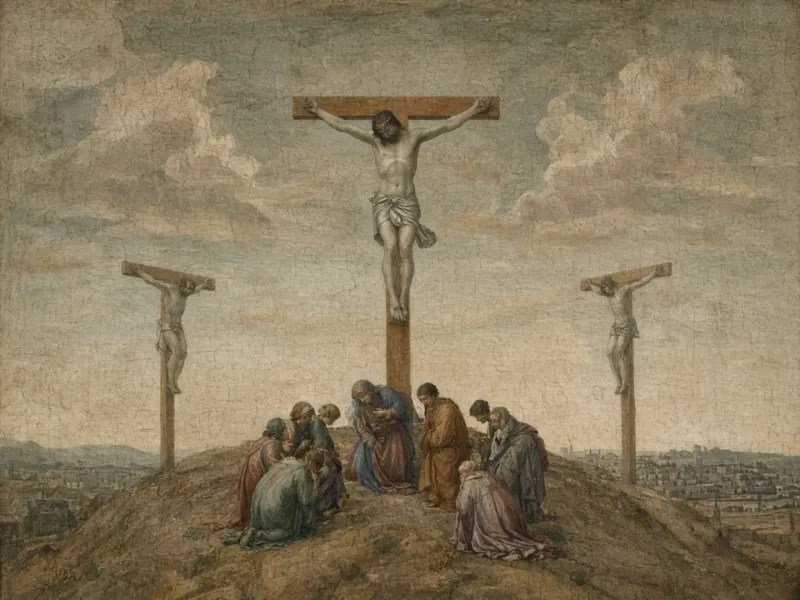
Why does the creed say “Jesus Christ, His only Son, our Lord”?
The Apostles’ Creed confesses faith “in Jesus Christ, His only Son, our Lord.” In one line it gives his name, his title as the anointed one, his relation to the Father and his authority. The Catechism of the Catholic Church walks through the line in that order, in sections on Jesus, Christ, the only Son and Lord. The free course Christianity: What Christians Have Believed for 2,000 Years covers the creeds and the beliefs Christians of every tradition hold in common.

Why are Christians called Christians?
The name comes from the title. Luke records that “the disciples were called Christians first in Antioch” (Acts 11:26). A Christian is one of the Christ’s people. The word comes only twice more in the New Testament. King Agrippa told Paul, “Almost thou persuadest me to be a Christian” (Acts 26:28). And Peter, the same Peter, wrote to believers under pressure, “if any man suffer as a Christian, let him not be ashamed” (1 Peter 4:16).
Thayer’s lexicon judges that outsiders gave the name first, and that believers took it up as a title of honour from the second century. The Roman historian Tacitus, writing about Nero’s persecution in his Annals, explained it to his readers: “Christus, from whom the name had its origin, suffered the extreme penalty during the reign of Tiberius at the hands of one of our procurators, Pontius Pilatus.” To a Roman, Christus was simply a name. To the people who bore it, it still meant what Andrew meant when he went to find his brother: “We have found the Messias.”


Leave a Reply