 Chinese
  English
  Dutch
Dutch  Arabic
  Spanish
  Portuguese
  Russian
  French
  Italian
  German
  Japanese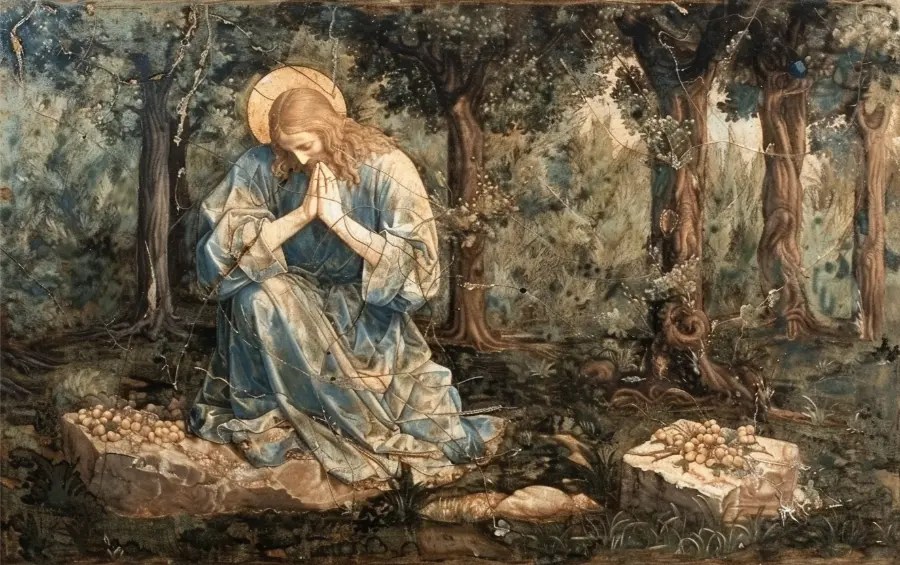
Continue reading with a subscription
Get unlimited access to all our premium content and exclusive features.
Enjoy unlimited access, cancel anytime.

” What is the basic definition of an apostle versus a disciple? To understand the difference between an apostle and a disciple, we must look to the example of Jesus Christ and the early Church. At its core, a disciple is a follower and student of a teacher or master. In the Christian context, disciples are those who follow Jesus, learn from His teachings, and strive to imitate His life of love and service. The word “disciple” comes from the…
Get unlimited access to all our premium content and exclusive features.
Enjoy unlimited access, cancel anytime.
Addai-Mensah, P. (2020). AN APPRASAIL OF THE UNITY OF THE CHURCHES AND ITS RELEVANCE IN CONTEMPORARY SOCIETY FOR NATIONAL DEVELOPMENT. Journal of Philosophy, Culture and Religion.
Addai-Mensah, P., & Opoku, J. (2014). AUGUSTINE, THE RELIGIOUS EDUCATOR: HIS RELEVANCE FOR EDUCATING CHRISTIANS IN CONTEMPORARY SOCIETY. European Scientific Journal, ESJ, 10.
Alexander, L. C. A. (2018). The Church in the Synoptic Gospels and the Acts of the Apostles. The Oxford Handbook of Ecclesiology.
Ayuch, D. (2023). THE PRACTICE OF PRAYER IN THE JERUSALEM CHURCH ACCORDING TO THE BOOK OF ACTS. Icoana Credintei.
Backus, I. (1998). The Church Fathers and the Canonicity of the Apocalypse in the Sixteenth Century: Erasmus, Frans Titelmans, and Theodore Beza. The Sixteenth Century Journal, 29, 651–666.
Barber, M., & Allison, D. (2023). The Historical Jesus and the Temple.
Berglund, C. (2024). Mimetic Mediators in Mark: How Graeco-Roman Biographies Use Secondary Characters to Offer Multiple Patterns of Imitation. Journal for the Study of the New Testament, 46, 464–488.
Bharathi, P. (2021). Jesus – His Transforming Effect. International Journal of Indonesian Philosophy & Theology.
Bolinhas, M. I. (2023). Apostola apostolorum – Mary Magdalene according to St. Thomas Aquinas. Revista Portuguesa de Humanidades.
Borland, J. A. (1991). Women in the Life and Teachings of Jesus.
Brink, L. (2013). Walking in the Footsteps of Christ: Religious Orders as Followers, Disciples, and Apostles. New Theology Review, 22.
Carey, H. (2019). Women in Action: Models for Discipleship in Mark’s Gospel. The Catholic Biblical Quarterly, 81, 429–448.
Catharism, L., Evans, A. P., Lambert, M. D., & Autier, P. (1989). The reform movement. Wisconsin Medical Journal, 88 4, 3.
Christian, & Scriptures. (2012). THE THEOLOGY OF THE LOCAL CHURCH IN HISTORICAL DEVELOPMENT.
Circhirillo, E., & Rosato, T. (2014). LibGuides. Apostles and Disciples of the Early Church. Home.
Damanik, R., Suparti, H., Suksmono, A., & Lestari, A. (2022). An Explanatory and Confirmatory Study about The spreading of Jesus’ message based on Matthew 28:18-20 by Christian Religious Education Teachers in Batam City. Pharos Journal of Theology.
Doyle-Borowski, A. (2011). Acts 4: Going Viral in Jesus’ Name | Devotionals | The Foursquare Church.
Dweba, Z. M., Mbali, N. M., & Rashe, R. Z. (2021). Selective Reading and Misconstrued Biblical Text: A Case for the Inclusion of Women in Church Governance Structures in Black South African Churches.
Eager, G. B. (1925). Book Review: The Men Whom Jesus Made. A Series of Studies in the Characters of the Twelve Apostles. Review & Expositor, 22, 357–357.
Ezeogamba, A. E. (2023). Explication of the Relationship Between the Ministers & the Ministry & Christ (1 COR. 3:1-15): Contextual Understanding of Catholic Priests. International Journal of Culture and Religious Studies.
Grant, R. (1962). The Apostolic Fathers’ First Thousand Years. Church History: Studies in Christianity and Culture, 31, 421–429.
Grant, R. (1988). The Apostolic Fathers’ First Thousand Years. Church History: Studies in Christianity and Culture, 57, 20–28.
Hartin, P. (1993). The role of the disciples in the Jesus story communicated by Mark. 58, 35–52.
Hermina, H. (2023). The Impact of Divine Healing on Evangelism Based on Acts of the Apostles Chapter 3 and Its Significance for Believers. Theological Journal Kerugma.
Hill, G. (2020). Holding Up Half the Sky: A Biblical Case for Women Leading and Teaching in the Church.
Huntsman, R. (2020). Why She Ran: Hebrew Bible Well Symbolism in the Protevangelium of James 11.1–4. 19, 59–67.
JeniÅ¡ová, L. (2014). JežÃÂÅ¡ovo vzkÅ™ÃÂÅ¡enàv JanovÄ› evangeliu.
Kertelge, K. (1998). From the Jüngergemeinde of Jesus to the early Christian church. 32, 425–432.
Kolbutova, I. (2017). 伪经使徒行传、教父著作及基督教圣像画中十字架象征意义的柏拉图与犹太-基督教层面的相互关系。13, 309–338。
Kopczynski, M., & Sobechowicz, Ã…Â. (2016). The Impact of Urbanization on Stature and bmi in Poland. Journal of Interdisciplinary History, 47, 359–379.
Kurian, G. T. (2011). Tintoretto, Jacopo (1519–1594).
Langhu, K. (2022). Church Fathers on the Sabbath and Sunday. Jurnal Koinonia.
Luna, M. (2010). Mission and Contextualization. 2, 139–151.
马拉尼亚克,A. (2023)。《基督教会的合一:使徒教父的诠释》。《索菲亚:人文与宗教研究公报》。
Marius, R. (1968). Thomas More and the Early Church Fathers. Traditio, 24, 379–407.
McGuire, J. M., & Pace, A. C. (2018). Self-stigma of depression in Christians versus the general population. Mental Health, Religion & Culture, 21, 601–608.
Mensah, A. M. (2022). Women and Discipleship in the Gospels. Ghana Journal of Religion and Theology.
Nalewaj, A. (2021). »We have Found the Messiah«¯(John 1:41) – The Formation of Disciples in the Gospel of John. Nova Prisutnost.
Nam, S. I., & Byeong-Kim. (2022). A Exploratory Study of the Educational View of Jesus. Korean Association For Learner-Centered Curriculum And Instruction.
Op, D. W. (2012). Contemporary Spiritualities and Christianity: Is There an Authentic Christian Gnosis? New Blackfriars, 93, 580–597.
Peerzada, M. M., & Jamali, P. (2018). 我们如何调和《圣经》中的耶稣基督与《古兰经》中的尔萨圣人。人文与社会科学研究杂志,9,935–943。
Poceratu, I. (2023). Duties of The Church Diaconal According to Acts 6:1-7. East Asian Journal of Multidisciplinary Research.
Prassas, D. D. (2004). The Bible in Mission: Women in Mission. International Review of Mission, 93, 35–38.
PÃ…â„¢ibyl, S. (2023). 早期教会的纪律程序。《波兰教会法学者协会公报》。
Reimer, I. R. (1995). Women in the Acts of the Apostles¯: a feminist liberation perspective.
Review: The Catholic Students’ Aids to the Bible. The Old Testament. (1913). The Downside Review, 32, 334–335.
Reynolds, G. S. (2013). The Quran and the apostles of Jesus1. Bulletin of the School of Oriental and African Studies, 76, 209–227.
Richard, F. (2021). How Jesus Taught His Disciples to Walk With Head Held High. The Nicholai Studies International Journal for Research of Theological and Ecclesiastical Contribution of Nicholai Velimirovich.
Safrai, C. (2014). His Disciples¯: The Beginnings of Their Organization by Chana Safrai.
Schroeder, C. T. (2012). Andrew, Acts of.
Schuler, M. (2023). Apostles Today. Global South Theological Journal.
Staniforth, M., & Louth, A. (1968). Early Christian writings¯: the Apostolic Fathers.
Sterling, G. (2007). From Apostle to the Gentiles to Apostle of the Church: Images of Paul at the End of the First Century. 99, 74–98.
Sugiharto, A., & Sirait, J. R. (2022). Women’s Witnesses in the Resurrection of Jesus and Implications in Church Service. Jurnal Teologi (JUTEOLOG).
Thinane, J. (2021). 南非自封精神领袖对宗教头衔的滥用:先知、使徒和教皇。《法罗斯神学杂志》(Pharos Journal of Theology)。
Thompson, G. L. (2019). The Daughter of the Word: What Luther Learned from the Early Church and the Fathers. Perichoresis, 17, 41–56.
Wambete, M. C., Choge, E., Wamalwa, M., & Kinuthia, R. (2020). Enhancement of Strategies of Men Participation in the Great Commission Mandate in the Africa Inland Church in Trans-Nzoia East Sub-County, Kenya. 5, 47–62.
ìŤì˜Â민. (2014). 새신잠êµÂìÅ¡: 무엇ì„, ìâ€Â´Ã«â€Â»ÃªÂ²Å’ 가르칠것ì¸가? 285–303.
ì´ì›Âì¼. (2014). 목ÚŒìžÂìÂËœ ì„ êµÂ젠리ëÂâ€Ã¬â€¹Â êµÂìš엠대Պ비ÃÅ’Â젠성찰. 42, 223–246.
Acevedo, Y. (2019). Book Review of The Disciple Investing Apostle. 33.
Adams, M., & Harold, G. (2023). Polity of the New Apostolic Movement considering Biblical and Historical Precedents in the Christian Church. Pharos Journal of Theology.
Alexander, L. C. A. (2018). The Church in the Synoptic Gospels and the Acts of the Apostles. The Oxford Handbook of Ecclesiology.
Asare, A. D. (2019). SINGING THE HEALING: THE RITUALS OF THE TWELVE APOSTLES CHURCH IN GHANA. African Music: Journal of the International Library of African Music, 11, 113–116.
Ayuch, D. (2023). THE PRACTICE OF PRAYER IN THE JERUSALEM CHURCH ACCORDING TO THE BOOK OF ACTS. Icoana Credintei.
Barolsky, P. (2022). Giotto’s Fleeing Apostle. Arion: A Journal of the Humanities and the Classics, 18, 116–122.
Beitia, P. (2008). LES DISCIPLES ET LES COLLABORATEURS DES APÃâ€TRES DANS LES MARTYROLOGES LATINS. Ephemerides Liturgicae, 122, 397–451.
Benea, O. N. (2021). The Education of the Apostle John Between Discipleship and the Fourth Gospel. Studia Universitatis BabeÈ™-Bolyai Theologia Orthodoxa.
Brink, L. (2013). Walking in the Footsteps of Christ: Religious Orders as Followers, Disciples, and Apostles. New Theology Review, 22.
Circhirillo, E., & Rosato, T. (2014). LibGuides. Apostles and Disciples of the Early Church. Home.
Cleuziou, Y. (2012). Albert-Marie Besnard, a Master Surpassed by His Disciples: The Mysticism of Generating and Subverting Forms of Authority at Le Saulchoir Dominican House of Study (1964–1968). 25–45.
Cullmann, O. (1953). Peter, disciple, apostle, martyr¯: a historical and theological study.
Cullmann, O. (2011). Peter, disciple–apostle–martyr.
DeCock, M. (2024). Origen’s Sources of Exegetical Authority: The Construction of an Inspired Exegete in the Pauline Lineage. New Testament Studies, 70, 149–159.
Dijkstra, R. (2016). Portraying Witnesses¯: the apostles in early Christian art and poetry.
Eastman, D. L. (2017). Death, Resurrection, and Legitimacy in the Apocryphal Acts of the Apostles. 267–286.
Fajrie, I. (2022). What is Religious Authority?: Cultivating Islamic Communities in Indonesia by Ismail Fajrie Alatas (review). Contemporary Southeast Asia: A Journal of International and Strategic Affairs, 44, 342–344.
Freyne, S. (1968). The Twelve Disciples and Apostles: A Study in the Theology of the First Three Gospels.
Grant, R. (1962). The Apostolic Fathers’ First Thousand Years. Church History: Studies in Christianity and Culture, 31, 421–429.
Grant, R. (1988). The Apostolic Fathers’ First Thousand Years. Church History: Studies in Christianity and Culture, 57, 20–28.
Grislis, E. (1991). Menno Simons as a Devout Disciple of the Apostle Paul. Journal of Mennonite Studies, 9, 54–72.
Hägg, T. (1993). Magic bowls inscribed with an apostles-and-disciples catalogue from the Christian settlement of Hambukol (Upper Nubia). 62, 376–399.
Haile, G. (2022). Conversation of Our Lord and Saviour Jesus with His Twelve Apostle Disciples at Jericho (EMML 7229, fols 93r–109r). Aethiopica.
Hatch, W. (1928). The Apostles in the New Testament and in the Ecclesiastical Tradition of Egypt. Harvard Theological Review, 21, 147–161.
Heindel, A. (2021). Apostolicity – The question of Continuity and Authority. ARUMBAE: Jurnal Ilmiah Teologi Dan Studi Agama.
Howe, J. (2009). The Life and Miracles of Saint Maurus: Disciple of Benedict, Apostle to France (review). The Catholic Historical Review, 95, 787–788.
Hunwick, A. (2013). The Evangelists’ and apostles’ styles. Views held on this subject by modern writers and early Church scholars, followed by critical observations.
Jackson, M. (2022). Living by the staff: a perspective on episcopacy and authority. International Journal for the Study of the Christian Church, 23, 74–89.
马太福音中的耶稣作为教师。(2023)。
Kia, A. (2023). The Use of Heuristic Reasoning in Christian Education. AL-ISHLAH: Jurnal Pendidikan.
Kim, J. (2023). Michel Foucault’s Discourse on Paresia and the Parrhesia of the New Testament: Focusing on Parrhesia in the Acts of the Apostles. The Korean Society of Culture and Convergence.
Knoetze, J. (2017). Who are the disciples? Identity perceptions about millennials and the church. Verbum Et Ecclesia, 38, 7.
Köstenberger, A. J., & Stout, S. O. (2008). The Disciple Jesus Loved: Witness, Author, Apostle  A Response to Richard Bauckham’s Jesus and the Eyewitnesses. Bulletin for Biblical Research.
Kubalica, T. (2021). The relation of master and disciple against the background of Józef M. BocheÅ„ski’s logic of authority. Studies in East European Thought, 74, 225–240.
Lee, H. (2014). Becoming a disciple-making church: A strategic transition for Dongshin Apostle Community.
Leszka, M. J., & Marinow, K. (2011). Book Reviews: Uczniowie Apostołów Słowian. Siedmiu Świętych Mężów Disciples of the Apostles of the Slavs. The Seven Holy Men(#), ed. Małgorzata Skowronek, Georgi Minczew, Collegium Columbinum Cracoviae, Kraków 2010, pp. 216 = Biblioteka duchowości europejskiej, 4(#). 1, 226–228.
Logan, J. E. (2019). A Disciple Development Strategic Design for a Mission-Minded Ministry in a Post-Modern Era.
Long, J. D. (2023). Goddess, Guru, and Sanghajanani: The Authority and Ongoing Appeal of the Holy Mother Sarada Devi. Religions.
Macciò, D. D. (2016). The Apostles’ justice: Cambridge reflections on economic inequality from Moore’s Principia Ethica to Keynes’s General Theory (1903–36). Cambridge Journal of Economics, 40, 701–726.
Manson, T. (1935). The Teaching of Jesus: Detached Note C. The Terms ‘Disciple’ and ‘Apostle.’
Maribel, G., & Terrones, F. (2016). Woman as a disciple and apostle in the evangelist practices of the church from jesus to the present LA MUJER COMO DISCÃÂPULA Y APÓSTOL EN LAS PRÃÂCTICAS EVANGELIZADORAS DE LA IGLESIA, DESDE JESÚS HASTA NUESTROS DÃÂAS.
Meyer, F. B. (2009). Peter: Fisherman, Disciple, Apostle.
Muhammad, A. (2019). 3) Biblical Apostle Judas Iscariot A Critical Evaluation of His Integrit. 24, 39–61.
Muñoz, P. D. (2014). Befriending the Beloved Disciple and the Beloved Apostle: A Study of the Diverse Unity of John’s and Paul’s Theologies. Philippiniana Sacra.
Nalewaj, A. (2021). »We have Found the Messiah«¯(John 1:41) – The Formation of Disciples in the Gospel of John. Nova Prisutnost.
Neil, W. (1954). Peter: Discipleâ€â€Apostleâ€â€Martyr . By Oscar Cullmann. S.C.M. 18s.
Norelli, E. (2010). Of Books and Bishops. The Second Century as a Key to the Processes that Led to a New Testament Canon. Zeitschrift Für Religionswissenschaft, 18, 179–198.
Park, H. (2016). Developing a Strategy to Make Young Adult Disciples in Korean Churches: Focusing on God’s Word in a Discipleship Process.
Peter: Discipleâ€â€Apostleâ€â€Martyr . By Oscar Cullmann. Translated from the German by Floyd V. Filson. Philadelphia: The Westminster Press, 1953. 238 pages. $4.50. (n.d.).
Phillips, J. B. (1955). The young Church in action¯: the Acts of the Apostles translated into modern english.
Placido, M. D. (2022). The satsang dispositif: Mooji’s teachings, power, authority, and self-transformation. Journal of Contemporary Religion, 37, 457–474.
Poceratu, I. (2023). Duties of The Church Diaconal According to Acts 6:1-7. East Asian Journal of Multidisciplinary Research.
Rakocy, W. (2021). In Search of the Key to the Theology of Paul the Apostle. 90, 443–462.
Riess, J. (2019). 摩门教宗教权威的重组。下一代摩门教徒 (The Next Mormons)。
Robertson, A. (1920). Book Review: Peter: Fisherman, Disciple, Apostle. Review & Expositor, 17, 230–230.
Safrai, C. (2014). His Disciples¯: The Beginnings of Their Organization by Chana Safrai.
Sanders, J. A. (2018). A Disciple in Damascus. Biblical Theology Bulletin, 48, 34–39.
Schuler, M. (2023). Apostles Today. Global South Theological Journal.
Smith, A. (2015). Book Review: Molly Worthen, Apostles of Reason: The Crisis of Authority in American Evangelicalism. Review & Expositor, 112, 347–348.
Tarocchi, S. (2018). Baptism in the Synoptic Gospels and the Acts of the Apostles. Poznańskie Studia Teologiczne, 32, 29–45.
Taylor, J. E. (2021). Male–Female Missionary Pairings among Jesus’ Disciples. 11–25.
Turner, C. H. (1913). A PRIMITIVE EDITION OF THE APOSTOLIC CONSTITUTIONS AND CANONS AN EARLY LIST OF APOSTLES AND DISCIPLES. The Journal of Theological Studies, 53–65.
Vorholt, R. (2020). Atkins, J. D.: The Doubt of the Apostles and the Resurrection Faith of the Early Church. The Post-Resurrection Appearance Stories of the Gospels in Ancient Reception and Modern Debate. 116.
Walsh, R. G. (2007). Gospel Judases: Interpreters at Playin Mythic Fields. Postscripts: The Journal of Sacred Texts and Contemporary Worlds, 2, 29–46.
Zuber, M. A. (2021). Dionysius Andreas Freher, Boehme’s Apostle to the English. Spiritual Alchemy.
Zyl, V., & Hermie, C. (2012). Authority as service: The role of the disciples in the Gospel according to Matthew. Hts Teologiese Studies-Theological Studies, 68, 13–21.
ÚþñõтÑÂú, ÃÂ. (2021). LOCAL AND AUTOCEPHALOUS CHURCHES: CANONICAL JUSTIFICATION AND TRADITION. ãúрðїýÑÂьúð ßþûþýÑâ€Ã‘Âтøúð.
ßðрðхøý, á. ÃÂ. (2022). What the Apostles Asked Jesus on the Mount of Olives? (Mt. 24, 3; Mk. 13, 4; Lk. 21, 7). Theological Herald.

