
 Japanese
 English
 Chinese
 Dutch
 Arabic
 Spanish
 Portuguese
 Russian
 French
 Italian
 German
Where the churches’ words differ
How it begins
- Our Father, who art in heavenCatholics, Orthodox, Anglicans, Lutherans, Methodists and Presbyterians, in the traditional wording
- 天におられる我らの父よThe King James Bible and the 1662 Book of Common Prayer
- Our Father in heavenThe modern wording the churches agreed in 1975 and revised in 1988, in the Episcopal Prayer Book, the ELCA’s worship book and the United Methodist Hymnal
What we ask God to forgive
- forgive us our trespasses, as we forgive those who trespass against usCatholics, Orthodox, Anglicans, Lutherans and Methodists
- forgive us our debts, as we forgive our debtorsPresbyterian and Reformed churches, from Matthew 6:12
- forgive us our sins as we forgive those who sin against usThe modern wording, closer to Luke 11:4
誘惑
- lead us not into temptationEvery traditional wording, and the Church of England’s modern one
- save us from the time of trialThe modern wording of 1975 and 1988
邪悪
- 悪より救い出したまえNearly every English wording in use, the Orthodox Church in America’s included
- deliver us from the Evil OneHapgood’s Orthodox service book of 1906
The ending
- Amen, with no closing praiseCatholics outside Mass, and Luther’s Small Catechism
- For the kingdom, the power and the glory are yours now and for ever.Catholics at Mass, after the priest’s prayer for peace
- 国と力と栄光は、永遠にあなたのものです。アーメン。Anglicans and Lutherans; Methodists and Presbyterians end “forever”
- For thine is the kingdom … of the Father, and of the Son, and of the Holy Spirit, now, and ever, and unto ages of ages.The Orthodox priest, alone
When each church prays it
- カトリック
At every Mass the whole congregation stands to say or sing the Our Father just before Communion. The priest then prays alone that we be delivered from every evil and kept in peace, and the people answer with the closing praise.
The Church asks for it at Morning and Evening Prayer as well, so that with the Mass it is prayed solemnly three times a day, as the first Christians prayed it three times a day. In the Rosary an Our Father opens each decade of ten Hail Marys.
- 正教会
At the Divine Liturgy the priest asks that we may call on God as our Father “boldly and without condemnation,” and the people say or sing the prayer before Communion. The priest then sings the closing praise alone.
In the daily services, and in the prayers Orthodox Christians say at home, it follows the Trisagion, “Holy God, Holy Mighty, Holy Immortal, have mercy on us,” sung three times.
- 聖公会は
The Church of England says the prayer has a place in every Anglican act of worship. In the 1662 Prayer Book it comes twice in Morning Prayer, with the people kneeling and saying it aloud with the minister, the first time with the closing praise and the second without. At the Holy Communion in the American Prayer Book of 1979, priest and people say it together after the great prayer of thanksgiving.
- ルーテル派
In Germany’s Lutheran churches a bell rings while the congregation prays it, in every service, so that anyone who hears the bell and cannot be there can pray along.
Luther’s Small Catechism teaches it petition by petition, and asks Christians to say it with the Creed each morning and evening, kneeling or standing, and again before meals.
- Methodists, Presbyterians and Baptists
Methodists use it widely in Sunday worship and as part of the Lord’s Supper, and Presbyterians pray it with “debts.” Baptist churches have no prayers set for them by any denomination, so whether the Lord’s Prayer is said on a Sunday is up to each congregation.
Churches that don’t pray it as a set prayer
Almost every church says these words aloud, but a few read Jesus’ “After this manner therefore pray ye” as a pattern for our own prayers rather than words to repeat. The Church of Jesus Christ of Latter-day Saints teaches that the prayer “serves as a pattern to follow and not as a piece to memorize and recite repetitively,” since Jesus gave it straight after warning against vain repetitions. Jehovah’s Witnesses call it a model prayer that is “not to be recited word for word,” and point out that Luke gives it in other words than Matthew.
Quakers who worship in silence keep no set order of service, so no fixed prayer is said in their meetings, though some Quakers do pray words from the Bible. And a small number of Bible teachers who divide Scripture into dispensations, among them the Berean Bible Society, hold that Jesus gave the prayer to his disciples for Israel’s kingdom and the Tribulation, so they do not pray it today.
Many Churches of Christ leave it out of their services for another reason. They teach that the kingdom came at Pentecost, so “Thy kingdom come” has already been answered. Not every congregation agrees, and some pray it.
Where the Lord’s Prayer comes from
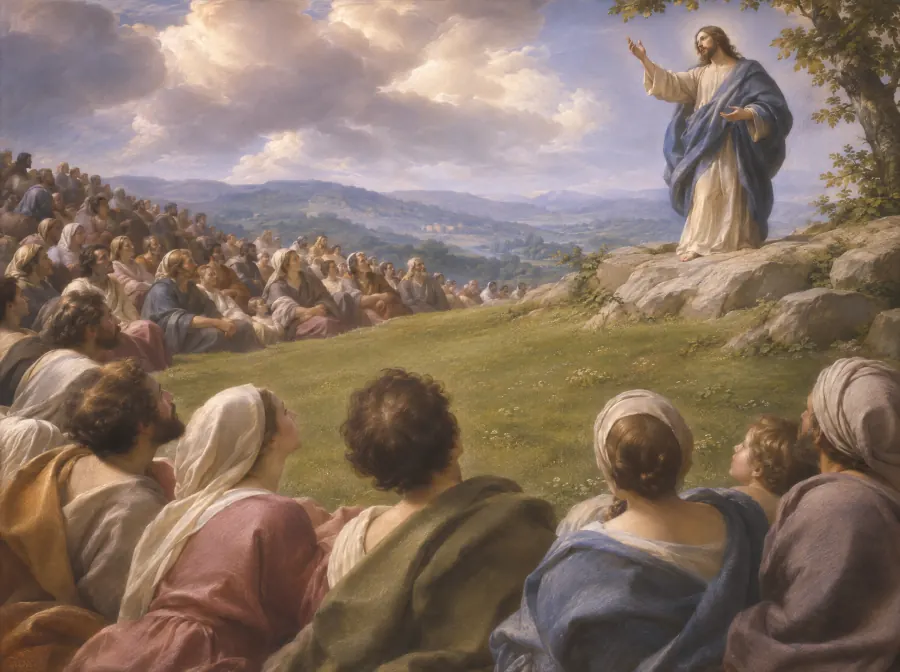
Jesus gave this prayer twice. In Matthew it stands in the middle of the Sermon on the Mount, straight after he warns against vain repetitions: “After this manner therefore pray ye” (Matthew 6:9). In Luke one of the disciples asks, “Lord, teach us to pray, as John also taught his disciples,” and Jesus answers with a shorter prayer of five petitions (Luke 11:1–4). The churches have always prayed Matthew’s longer form, with its seven.
Even a single word of it keeps its mystery. The word we translate “daily,” epiousios, appears nowhere else in the New Testament, and the Catechism gives three ways the Church has heard it: bread for this day, the bread we need, and the Bread of Life himself.
The closing praise is nearly as old as the Gospels. The Didache, a handbook for Christians usually dated to around the year 100, ends the prayer “for Thine is the power and the glory for ever and ever” and tells believers to pray it three times a day. Its words echo King David’s prayer, “Thine, O LORD, is the greatness, and the power, and the glory” (1 Chronicles 29:11). The oldest Greek copies of Matthew do not have it, and neither did Jerome’s Latin Bible, which is why Catholics end the prayer at “deliver us from evil.”
Tertullian of Carthage wrote the earliest known commentary on the prayer, and he called it “an epitome of the whole Gospel.”
How the English words took shape
- 1526William Tyndale’s New Testament asks God to “forgeve vs oure treaspases.”
- 1549The first Book of Common Prayer makes “trespasses” the word of English worship.
- 1611The King James Bible goes back to “debts,” the word in the Greek, and prints the closing praise.
- 1906Isabel Hapgood publishes the Orthodox liturgy in English, with “deliver us from the Evil One.”
- 1970The Roman Mass takes up the closing praise, said by the people after the priest’s prayer.
- 1975The churches agree a modern English wording, “Our Father in heaven,” revised in 1988.
Why the Catholic prayer stops at “deliver us from evil”
カトリック形式の主の祈りは「悪から救い出してください」で終わり、結びの賛美はない。ミサでは司祭が祈りを付け加えた後、全員で「国と力と栄えはあなたのものです」と唱える。ラテン語聖書にはこの言葉はなく、ローマ・ミサ典礼で採用されたのは1970年のことであり、マタイによる福音書の最も古いギリシャ語写本にもこの言葉は存在しない。
The Lord’s Prayer and the Our Father are two names for the same prayer, and the Catechism uses both. The familiar English forms differ mainly in two places: the word for what is forgiven, and the ending. Choose Side by side at the top of this page to see them line against line.
「国と力と栄えは」という言葉はどこから来たのか?
これは福音書の最も古い写本からではなく、初期教会の礼拝から由来するものです。アメリカ正教会の司祭であるローレンス・ファーリー神父は、その証拠を明確に述べています。「初期のシナイ写本やバチカン写本には頌栄が含まれておらず、テルトゥリアヌス、オリゲネス、キプリアヌス、ニュッサのグレゴリオスの引用にも見当たりません」。1915年にジェームズ・オアが編集した聖書参考書『国際標準聖書百科事典』も同様の結論に達しており、頌栄は「主要な写本には見られず、一般的に古代の典礼上の付加物と見なされている」としています。
この付加は古いものです。通常100年頃のものとされる初期キリスト教の教本『ディダケー』には主の祈りが記されており、「力と栄光は永遠にあなたのものです」で終わり、その後に「一日に三度このように祈りなさい」と付け加えられています。その結びには「国」という言葉はありません。『カトリック教会のカテキズム』も同じ箇所を引用し、「ごく初期から、典礼において主の祈りは頌栄で締めくくられていた」と述べており、後の『使徒憲章』で「国」が加えられました(2760)。ファーリーは、写本に見られる他の結びの言葉として、「力は永遠にあなたのものです」から、父と子と聖霊に言及するものまで、いくつかを挙げています。
これらの言葉は、歴代誌上29章11節のダビデ王の祈りを反映しています。「主よ、偉大さと力と栄光はあなたのものです……主よ、国もあなたのものです」。ドイツ聖書協会は、この結びの賛美がその箇所に基づいて形成されたと指摘しています。
なぜ欽定訳聖書には含まれているのに、カトリックの聖書には含まれていないのか?
二つの聖書の系統は、異なるテキストから翻訳されました。『欽定訳聖書』は、エラスムスが利用可能な写本から編集したギリシャ語新約聖書の印刷版である『テクストゥス・レセプトゥス』に従っています。カトリック・アンサーズのチャールズ・グロンディン神父は、「『テクストゥス・レセプトゥス』よりも古い二つの写本(シナイ写本とバチカン写本)には、問題の節が含まれていない」と書いています。英語で最初に印刷されたウィリアム・ティンダルの新約聖書(ウォームズ、1526年、1534年改訂)の1534年版マタイによる福音書6章13節には「For thyne is the kyngedome」とあり、『欽定訳聖書』もそれを受け継いでいます。
カトリックの聖書はラテン語から翻訳されました。『ドゥアイ・ランス聖書』はラテン語の『ウルガタ』から翻訳されたもので、グロンディンが指摘するように「聖ヒエロニムスのラテン語『ウルガタ』には含まれていなかった」のです。現代のカトリック聖書はもはや『ウルガタ』に依拠していませんが、最も古い写本に欠けているため、同様にこれを除外しています。百科事典が指摘するように、改訂版(英国および米国)も同じ理由でこれを省略しています。 カトリックとプロテスタントの聖書は は、書物の数など、他の点で異なります。
マタイによる福音書とルカによる福音書はどう違うのか?
この祈りは福音書に2回登場します。「聖ルカは5つの願いからなる短いテキストを提示しているのに対し、聖マタイは7つの願いからなるより発展したバージョンを提示している」とカテキズムは述べており、「教会の典礼の伝統は聖マタイのテキストを採用してきた」(2759)とあります。ラテン語から翻訳されたドゥアイ・リームズ訳聖書はルカの短い形式を示しており、後のギリシャ語写本から翻訳された欽定訳聖書は、マタイに近いルカの形式を提示しています。マタイのテキストの各行が何を意味するのかについては、以下をお読みください。 マタイによる福音書6章9節〜13節の逐語解説.
| 回線 | マタイによる福音書 6:9-13 (ドゥアイ・ランス訳) | ルカによる福音書 11:2-4 (ドゥアイ・ランス訳) | ルカによる福音書 11:2-4 (欽定訳) |
|---|---|---|---|
| ドレス | 天におられるわたしたちの父よ、 | Father, | 天におられるわたしたちの父よ、 |
| ください | 御名が聖とされますように。 | 御名が聖とされますように。 | 御名が聖とされますように。 |
| Kingdom | 御国が来ますように。 | 御国が来ますように。 | 御国が来ますように。 |
| 起こる | 御心が行われますように。天におけるように地においても。 | このテキストにはありません | 御心が行われますように。天におけるように地の上にも。 |
| パン | わたしたちの日ごとの糧を今日もお与えください。 | わたしたちの今日の日ごとの糧を今日もお与えください。 | わたしたちの日ごとの糧を今日もお与えください。 |
| 許し | わたしたちの負い目を赦してください。わたしたちも自分に負い目のある人を赦しましたように。 | わたしたちの罪を赦してください。わたしたちも自分に負い目のあるすべての人を赦しますから。 | わたしたちの罪を赦してください。わたしたちも自分に負い目のあるすべての人を赦しますから。 |
| 誘惑 | わたしたちを誘惑に遭わせないでください。 | わたしたちを誘惑に遭わせないでください。 | わたしたちを誘惑に遭わせず、 |
| 邪悪 | 悪からお救いください。アーメン。 | このテキストにはありません | 悪い者から救い出してください。 |
ドゥアイ・リームズ版聖書では、どちらの福音書にも頌栄は含まれておらず、欽定訳聖書ではマタイによる福音書にのみ含まれています。
マタイによる福音書の「超本質的」とルカによる福音書の「日々の」は同じギリシャ語を翻訳したものですが、その正確な意味は誰にも分かっていません。祈りの各単語をタップすると、その背後にあるギリシャ語を確認できます。

カトリック信者は栄唱(ドクソロジー)を唱えることがあるのか?
はい、ミサにおいてですが、1970年以降のことです。『ローマ・ミサ典礼書の総則』(81)によると、会衆と司祭が共に主の祈りを唱えた後、「司祭のみが挿入句を唱え、会衆は頌栄をもって締めくくる」とされています。挿入句とは、同総則の言葉を借りれば「信者の共同体全体のために、悪の力からの解放を求める」短い祈りです。その後、2011年から米国で使用されている英語の典礼文では、会衆が「国と力と栄光は、永遠にあなたのものです」と答えます。
ローマ・ミサ典礼において、常にこの頌栄が含まれていたわけではありません。ヒエロニムスから大聖グレゴリウスに至るまでのミサにおける「主の祈り」に関するラテン語の証拠を調査したウィリアム・サンダース神父は、「これらの証拠のいずれにも頌栄は含まれていない」と結論付けています。南アフリカのカトリック週刊紙『サザン・クロス』のマイケル・シャックルトンは、頌栄は「1970年に新しいミサ典礼が古い典礼に取って代わった際に再導入された」と記しています。ミサでは現在も、この頌栄は福音書の言葉とは区別されており、カトリック教会のカテキズムではこれを「使徒憲章からの頌栄」(2760)と呼んでいます。また、この言葉は最初の3つの願いを再び取り上げ、「今や賛美と感謝として宣言されるもの」であるとも述べています(2855)。カテキズムとその要約版では、祈り自体は「悪からお救いください」で終わる形で記載されています。
正教会のキリスト教徒はどのように祈りを終えるのか?
In the Orthodox Liturgy the people say the petitions and the priest answers with the ending. “After the people say the petitions of the ‘Lord’s prayer,’ the priest responds,” writes Fr. Alexis Trader, with “For Thine is the Kingdom and the Power and the Glory of the Father and of the Son and of the Holy Spirit now and ever and unto the ages of ages.” The Catechism records the same Byzantine practice: it “adds after ‘the glory’ the words ‘Father, Son, and Holy Spirit’” (2760). Farley writes that his church “uses the fullest version possible.”
なぜ「過ち」と言う人と「負債」と言う人がいるのか?
欽定訳聖書とドゥアイ・リームズ版聖書の双方において、マタイによる福音書には「負い目(debts)」、ルカによる福音書には「罪(sins)」と記されています。『新アメリカ聖書』のカトリック注釈では、この比喩について「『負い目』という言葉は罪を比喩的に表しており、神に対して負っている『債務』を意味する」と説明しています。ライトフット訳の『ディダケー』では単数形で「わたしたちの負い目を赦してください」とされています。
「過ち(trespasses)」という言葉は、祈りの直後の節に現れます。イエスは「もしあなたがたが人々の過ちを赦すなら、あなたがたの天の父もあなたがたを赦してくださる」(マタイによる福音書6章14節、欽定訳聖書)と言われました。ティンダルは祈りそのものの中でこの言葉を使用しており、1534年の新約聖書改訂版には「forgeve vs oure treaspases(わたしたちの過ちを赦してください)」と記されています。『英国国教会の祈祷書』と英語のカトリック・ミサでは、どちらも「trespasses」が使われています。長老派教会や改革派教会では、1647年の『ウェストミンスター小教理問答』に従い、「わたしたちの負い目を赦してください。わたしたちも自分に負い目のある人を赦しましたように」という願いとして唱えられています。
プロテスタントは皆同じように主の祈りを唱えるのか?
彼らはこの祈りを唱えますが、その結びについては標準的なテキストによって異なります。『ウェストミンスター小教理問答』は主の祈りを祈りの「特別な指針」と呼び、結びの部分をその一部として扱っています。「主の祈りの結びは、国と力と栄光は、永遠にあなたのものです、である」。1928年の『英国国教会の祈祷書』では、一つの礼拝の中で両方の結びが使われています。聖餐式の冒頭で司祭が唱える主の祈りは「悪からお救いください」で終わりますが、礼拝の後半で「わたしたちは大胆にもこう言います」という言葉に続いて唱えられる主の祈りには、頌栄が含まれています。これら二つの伝統の間のその他の違いについては、以下で説明されています。 プロテスタントとカトリックの信仰と礼拝の比較.
ルーテル派のテキストも同様に異なります。ルターの『小教理問答』(1529年)のトリグロット・コンコルディア英語訳では、頌栄なしで祈りが記載されています。プロテスタントのサイトevangelisch.deが発行している現代ドイツ語のテキストでは、「Der Beschluss(結び)」という見出しの下に「Denn dein ist das Reich und die Kraft und die Herrlichkeit in Ewigkeit(国と力と栄光は永遠にあなたのものです)」と印刷されています。ルーテル派とカトリックがより深く異なる点については、以下で説明されています。 ルーテル派とカトリックの比較.
ドイツのカトリック教徒とプロテスタントは同じ「主の祈り(Vaterunser)」を唱えるのか?
はい。ドイツ聖書協会は、今日礼拝で使用されているエキュメニカル版を印刷しており、それは「Vater unser im Himmel, geheiligt werde dein Name(天におられるわたしたちの父よ、御名が聖とされますように)」で始まり、頌栄である「Denn dein ist das Reich und die Kraft und die Herrlichkeit in Ewigkeit(国と力と栄光は永遠にあなたのものです)」で終わります。また、マタイとルカの後の写本には、この結びの賛美が追加されていることにも言及しています。
ドイツのカトリック信者も、ローマ典礼の他の地域のカトリック信者と同様に、『ローマ・ミサ典礼書の総則』の指示に従い、司祭の祈りの後にのみミサで頌栄を唱えます。
Print the prayer, or send it to someone
主の祈り
天におられるわたしたちの父よ、 御名が聖とされますように。 御国が来ますように。 御心が行われますように。天におけるように地においても。 Give us this day our daily bread, and forgive us our trespasses, as we forgive those who trespass against us; わたしたちを誘惑に遭わせず、 悪からお救いください。アーメン。
Matthew 6:9–13, as Catholics pray it
Our Father, who art in heaven. 御名が聖とされますように。 御国が来ますように。 Thy will be done on earth. As it is in heaven. わたしたちの今日の日ごとの糧を今日もお与えください。 わたしたちの負い目をお許しください。わたしたちも自分に負い目のある人たちを許しましたように。 わたしたちを誘惑に遭わせず、 But deliver us from the Evil One: For thine is the kingdom, and the power, and the glory, of the Father, and of the Son, and of the Holy Spirit, now, and ever, and unto ages of ages. Amen.
Matthew 6:9–13, from the Orthodox Divine Liturgy
天におられるわたしたちの父よ、 hallowed be thy Name, 御国が来ますように。 thy will be done, on earth as it is in heaven. わたしたちの今日の日ごとの糧を今日もお与えください。 わたしたちの負い目をお許しください。わたしたちも自分に負い目のある人たちを許しましたように。 わたしたちを誘惑に遭わせず、 悪い者から救い出してください。 国と力と栄光は、永遠にあなたのものです。アーメン。
Matthew 6:9–13, Book of Common Prayer
Our Father who art in heaven. 御名が聖とされますように。 御国が来ますように。 御心が行われますように。天におけるように地においても。 わたしたちの今日の日ごとの糧を今日もお与えください。 わたしたちの負い目をお許しください。わたしたちも自分に負い目のある人たちを許しましたように。 わたしたちを誘惑に遭わせないでください。 悪からお救いください。アーメン。
Matthew 6:9–13, Luther’s Small Catechism
天におられるわたしたちの父よ、 御名が聖とされますように。 御国が来ますように。 thy will be done, on earth as it is in heaven. わたしたちの今日の日ごとの糧を今日もお与えください。 and forgive us our debts, as we forgive our debtors; わたしたちを誘惑に遭わせず、 悪い者から救い出してください。 For thine is the kingdom and the power and the glory, forever. Amen.
Matthew 6:9–13, as Presbyterians pray it
天におられるわたしたちの父よ、 御名が聖とされますように。 御国が来ますように。 御心が行われますように。天におけるように地においても。 わたしたちの今日の日ごとの糧を今日もお与えください。 わたしたちの負い目をお許しください。わたしたちも自分に負い目のある人たちを許しましたように。 わたしたちを誘惑に遭わせず、 悪い者から救い出してください。 For thine is the kingdom, and the power, and the glory, forever. Amen.
Matthew 6:9–13
天におられるわたしたちの父よ、 御名が聖とされますように。 御国が来ますように。 御心が行われますように。天におけるように地においても。 わたしたちの今日の日ごとの糧を今日もお与えください。 わたしたちの負い目をお許しください。わたしたちも自分に負い目のある人たちを許しましたように。 わたしたちを誘惑に遭わせず、 悪い者から救い出してください。 For thine is the kingdom, and the power, and the glory, forever. Amen.
Matthew 6:9–13
天におられるわたしたちの父よ、 hallowed be your name, your kingdom come, your will be done on earth as it is in heaven. わたしたちの今日の日ごとの糧を今日もお与えください。 Forgive us our trespasses, as we forgive those who trespass against us. Lead us not into temptation, 悪い者から救い出してください。 For yours is the kingdom, and the power, and the glory, forever. Amen.
Matthew 6:9–13
天におられるわたしたちの父よ、 御名が聖とされますように。 御国が来ますように。 Thy will be done, on earth as it is in heaven. わたしたちの今日の日ごとの糧を今日もお与えください。 and forgive us our trespasses, as we forgive those who trespass against us; わたしたちを誘惑に遭わせず、 but deliver us from the evil one. In Christ Jesus our Lord, for Thine is the kingdom and the power and the glory forever. Amen.
Matthew 6:9–13
天におられるわたしたちの父よ、 御名が聖とされますように。 御国が来ますように。 御心が行われますように。天におけるように地においても。 Give us this day our daily bread, and forgive us our trespasses, as we forgive those who trespass against us; わたしたちを誘惑に遭わせず、 悪い者から救い出してください。 For thine is the kingdom, and the power, and the glory, of the Father, and of the Son, and of the Holy Spirit, now, and ever, and unto ages of ages. Amen.
Matthew 6:9–13
天におられるわたしたちの父よ、 御名が聖とされますように。 御国が来ますように。 御心が行われますように。天におけるように地においても。 わたしたちの今日の日ごとの糧を今日もお与えください。 わたしたちの負い目をお許しください。わたしたちも自分に負い目のある人たちを許しましたように。 わたしたちを誘惑に遭わせず、 悪い者から救い出してください。 国と力と栄光は、永遠にあなたのものです。アーメン。
Matthew 6:9–13
天におられるわたしたちの父よ、 御名が聖とされますように。 御国が来ますように。 御心が行われますように。天におけるように地においても。 わたしたちの今日の日ごとの糧を今日もお与えください。 わたしたちの負い目をお許しください。わたしたちも自分に負い目のある人たちを許しましたように。 わたしたちを誘惑に遭わせず、 悪い者から救い出してください。 国と力と栄光は、永遠にあなたのものです。アーメン。
Matthew 6:9–13
天におられるわたしたちの父よ、 御名が聖とされますように。 御国が来ますように。 御心が行われますように。天におけるように地においても。 わたしたちの今日の日ごとの糧を今日もお与えください。 わたしたちの負い目をお許しください。わたしたちも自分に負い目のある人たちを許しましたように。 わたしたちを誘惑に遭わせず、 悪い者から救い出してください。 国と力と栄光は、永遠にあなたのものです。アーメン。
Matthew 6:9–13
天におられるわたしたちの父よ、 Our Father-Mother God, all-harmonious, 御名が聖とされますように。 Adorable One. 御国が来ますように。 Thy kingdom is come; Thou art ever-present. 御心が行われますように。天におけるように地においても。 Enable us to know, — as in heaven, so on earth, — God is omnipotent, supreme. わたしたちの今日の日ごとの糧を今日もお与えください。 Give us grace for to-day; feed the famished affections; わたしたちの負い目をお許しください。わたしたちも自分に負い目のある人たちを許しましたように。 And Love is reflected in love; わたしたちを誘惑に遭わせず、 but deliver us from evil; And God leadeth us not into temptation, but delivereth us from sin, disease, and death. For Thine is the kingdom, and the power, and the glory, forever. For God is infinite, all-power, all Life, Truth, Love, over all, and All.
Matthew 6:9–13
Our Father in heaven, hallowed be your name, your kingdom come, your will be done, on earth as in heaven. 私たちの日ごとの糧を、今日もお与えください。 Forgive us our sins as we forgive those who sin against us. Save us from the time of trial and deliver us from evil. For the kingdom, the power, and the glory are yours now and for ever. Amen.
Matthew 6:9–13
天におられるわたしたちの父よ、 hallowed be thy Name, 御国が来ますように。 thy will be done, on earth as it is in heaven. わたしたちの今日の日ごとの糧を今日もお与えください。 わたしたちの負い目をお許しください。わたしたちも自分に負い目のある人たちを許しましたように。 わたしたちを誘惑に遭わせず、 悪い者から救い出してください。 国と力と栄光は、永遠にあなたのものです。アーメン。
Matthew 6:9–13
天におられるわたしたちの父よ、 hallowed be thy Name, 御国が来ますように。 thy will be done, on earth as it is in heaven. わたしたちの今日の日ごとの糧を今日もお与えください。 わたしたちの負い目をお許しください。わたしたちも自分に負い目のある人たちを許しましたように。 わたしたちを誘惑に遭わせず、 悪い者から救い出してください。 国と力と栄光は、永遠にあなたのものです。アーメン。
Matthew 6:9–13
天におられるわたしたちの父よ、 hallowed be thy Name, 御国が来ますように。 thy will be done, on earth as it is in heaven. わたしたちの今日の日ごとの糧を今日もお与えください。 わたしたちの負い目をお許しください。わたしたちも自分に負い目のある人たちを許しましたように。 わたしたちを誘惑に遭わせず、 悪い者から救い出してください。 国と力と栄光は、永遠にあなたのものです。アーメン。
Matthew 6:9–13
天におられるわたしたちの父よ、 御名が聖とされますように。 御国が来ますように。 御心が行われますように。天におけるように地においても。 わたしたちの今日の日ごとの糧を今日もお与えください。 わたしたちの負い目をお許しください。わたしたちも自分に負い目のある人たちを許しましたように。 わたしたちを誘惑に遭わせず、 悪い者から救い出してください。 国と力と栄光は、永遠にあなたのものです。アーメン。
Matthew 6:9–13
christianpure.com
Sources: Matthew 6 and Luke 11 in the King James Bible; the Didache, chapter 8; Tertullian, 『祈りについて』, chapter 1; the Catechism of the Catholic Church, 2759–2767 and 2837; the General Instruction of the Roman Missal, 43 and 81; the General Instruction of the Liturgy of the Hours, 195; John Paul II, 『ロザリオの聖マリア』, 32; the Book of Common Prayer of 1549, 1662 and 1979; Isabel Hapgood’s 『奉神礼書』 (1906); Luther’s Small Catechism in the トリグロット・コンコルディア (1921); the Evangelical Church in Germany; the Church of England; the Church of Jesus Christ of Latter-day Saints; jw.org; Philadelphia Yearly Meeting; the Berean Bible Society; La Vista Church of Christ and Jay Guin, One In Jesus. English translation of The Lord’s Prayer © 1998 English Language Liturgical Consultation (ELLC), and used by permission. http://www.englishtexts.org
関連資料
- マタイによる福音書6章9節〜13節:主の祈りが意味するもの、一行ずつの解説
- 正教会とカトリック:両教会の違い
- 聖公会とカトリック:なぜイングランド国教会はローマ・カトリックではないのか
- 長老派教会とカトリック:すべての実質的な違い
- 欽定訳聖書とカトリック聖書の比較
- カトリックのロザリオの祈り方は?


コメントを残す