
 English
 Chinese
 Dutch
 Arabic
 Spanish
 Portuguese
 Russian
 French
 Italian
 German
 Japanese
The Bible says God stays near the brokenhearted and heals them. Psalm 34:18 and Psalm 147:3 say so directly, and Isaiah 61:1-3 names binding up the brokenhearted as part of the work of the one the Lord anoints.
The Bible also names what breaks a heart. Psalm 69:20 blames the contempt of others, Psalm 27:10 a father and mother who forsake, and Psalm 41:9 and Psalm 55 a close friend’s betrayal. Isaiah 54:6 speaks of “a wife deserted and grieved in spirit,” Hosea 11:8 of God’s own heart recoiling over a people who turned away, and Psalm 51:17 of a heart broken over its own sin.
The Lord near the brokenhearted

Psalm 34:18
“The Lord is near to the brokenhearted and saves the crushed in spirit.”
Reflection: The heading ties the psalm to the day David “changed his behavior before Abimelech, so that he drove him out.” Two verses after the brokenhearted comes a promise about the body: the Lord “keeps all his bones; not one of them is broken” (Psalm 34:20). The psalm closes, “none of those who take refuge in him will be condemned” (Psalm 34:22).
Psalm 147:3
“He heals the brokenhearted and binds up their wounds.”
Reflection: Psalm 147 praises the Lord for a city as well as for people: “he strengthens the bars of your gates; he blesses your children within you. He makes peace in your borders; he fills you with the finest of the wheat” (Psalm 147:13-14). Verse 11 says whom he values: “the Lord takes pleasure in those who fear him, in those who hope in his steadfast love.”
Isaiah 61:1-3
“The Spirit of the Lord God is upon me, because the Lord has anointed me to bring good news to the poor; he has sent me to bind up the brokenhearted, to proclaim liberty to the captives, and the opening of the prison to those who are bound; to proclaim the year of the Lord’s favor, and the day of vengeance of our God; to comfort all who mourn; to grant to those who mourn in Zion— to give them a beautiful headdress instead of ashes, the oil of gladness instead of mourning, the garment of praise instead of a faint spirit; that they may be called oaks of righteousness, the planting of the Lord, that he may be glorified.”
Reflection: Later in the chapter the promise turns to shame: “Instead of your shame there shall be a double portion; instead of dishonor they shall rejoice in their lot; therefore in their land they shall possess a double portion; they shall have everlasting joy” (Isaiah 61:7). The next verse gives the reason and a promise: “For I the Lord love justice; I hate robbery and wrong; I will faithfully give them their recompense, and I will make an everlasting covenant with them” (Isaiah 61:8).
Hearts broken by other people

Psalm 69:20
“Reproaches have broken my heart, so that I am in despair. I looked for pity, but there was none, and for comforters, but I found none.”
Reflection: The psalm, headed “Of David,” opens with a man going under: “the waters have come up to my neck” (Psalm 69:1). Here the cause of the broken heart is reproach, other people’s contempt, and the pain is made worse by finding no one to comfort him. Lamentations 1:2 makes the same complaint of Jerusalem after its fall: “she has none to comfort her.”

Psalm 27:10
“For my father and my mother have forsaken me, but the Lord will take me in.”
Reflection: David is asking God not to hide his face or turn him away: “Cast me not off; forsake me not, O God of my salvation!” (Psalm 27:9). Two verses later he names other enemies, “false witnesses” who “breathe out violence” (Psalm 27:12). The psalm ends by telling the heart to take courage while it waits for the Lord (Psalm 27:14).

Psalm 41:9
“Even my close friend in whom I trusted, who ate my bread, has lifted his heel against me.”
Reflection: David is ill, and his enemies ask, “When will he die, and his name perish?” (Psalm 41:5). The visitor who comes to see him speaks empty words and then spreads the news outside. Then comes the close friend “who ate my bread.” At supper with his disciples, Jesus quoted this line of the one who would betray him (John 13:18).
Psalm 55:22
“Cast your burden on the Lord, and he will sustain you; he will never permit the righteous to be moved.”
Reflection: The burden David casts on the Lord in Psalm 55 is betrayal: “it is not an enemy who taunts me,” but “my companion, my familiar friend” (Psalm 55:12-13), someone he once walked with in God’s house. Earlier he says, “My heart is in anguish within me” (Psalm 55:4). The verse before this one describes the friend’s words as “softer than oil, yet they were drawn swords.”
Psalm 62:8
“Trust in him at all times, O people; pour out your heart before him; God is a refuge for us.”
Reflection: The people troubling David in Psalm 62 are two-faced: “They bless with their mouths, but inwardly they curse” (Psalm 62:4). He tells his own soul to wait in silence for God (Psalm 62:5), then turns to the people and tells them to trust God and pour out their hearts before him, because “God is a refuge for us.”
God’s people cast off and gathered again

Isaiah 54:6
“For the Lord has called you like a wife deserted and grieved in spirit, like a wife of youth when she is cast off, says your God.”
Reflection: The Lord speaks to Zion as a wife: “your Maker is your husband” (Isaiah 54:5). She is pictured as a young wife cast off, and the verses around this one name her shame and “the reproach of your widowhood” (Isaiah 54:4). The next verse answers: “For a brief moment I deserted you, but with great compassion I will gather you” (Isaiah 54:7).

Jeremiah 30:17
“For I will restore health to you, and your wounds I will heal, declares the Lord, because they have called you an outcast: ‘It is Zion, for whom no one cares!’”
Reflection: Earlier in the chapter the Lord tells Zion that he struck the blow himself: “I have dealt you the blow of an enemy, the punishment of a merciless foe, because your guilt is great” (Jeremiah 30:14). The same verse says her lovers have forgotten her, and verse 13 says there is “no medicine for your wound.” Here the Lord who dealt the wound promises to heal it, because others have called Zion an outcast “for whom no one cares.”

Hosea 11:8
“How can I give you up, O Ephraim? How can I hand you over, O Israel? How can I make you like Admah? How can I treat you like Zeboiim? My heart recoils within me; my compassion grows warm and tender.”
Reflection: Hosea 11 pictures Israel as a child: “When Israel was a child, I loved him, and out of Egypt I called my son” (Hosea 11:1). The Lord taught Ephraim to walk, yet “The more they were called, the more they went away” (Hosea 11:2). The heart that recoils in this verse is God’s own, and the chapter ends with a promise: “I will return them to their homes, declares the Lord” (Hosea 11:11).
A crushed spirit

Proverbs 15:13
“A glad heart makes a cheerful face, but by sorrow of heart the spirit is crushed.”
Reflection: A glad heart shows on the face, while sorrow of heart reaches the spirit and crushes it. Psalm 34:18 uses the same picture of a crushed spirit for the people the Lord saves.
Proverbs 18:14
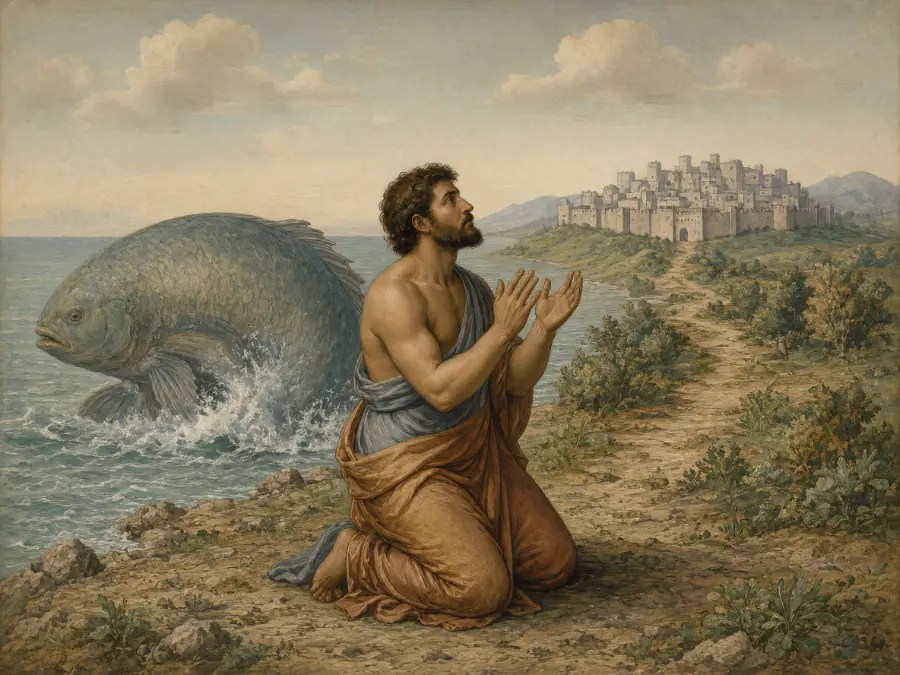
“A man’s spirit will endure sickness, but a crushed spirit who can bear?”
Reflection: The proverb sets sickness of the body beside a crushed spirit. The first a person’s spirit can endure; of the second the verse asks, “who can bear?” and gives no answer.
Psalm 51:17
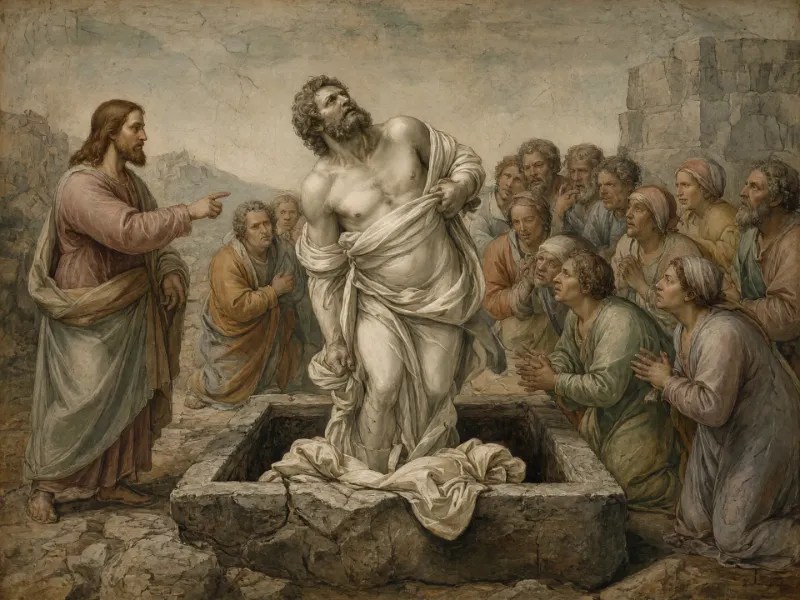
“The sacrifices of God are a broken spirit; a broken and contrite heart, O God, you will not despise.”
Reflection: The heading places Psalm 51 after the prophet Nathan confronted David over Bathsheba. Here the broken heart belongs to the one who did wrong, and David says God values it more than a burnt offering (Psalm 51:16).
Sorrow spoken aloud

Matthew 26:38
“My soul is very sorrowful, even to death; remain here, and watch with me.”
Reflection: In Gethsemane Jesus took Peter and the two sons of Zebedee with him and “began to be sorrowful and troubled” (Matthew 26:37). He then went on to pray, “let this cup pass from me; nevertheless, not as I will, but as you will” (Matthew 26:39). Three times he came back and found the disciples sleeping: “So, could you not watch with me one hour?” (Matthew 26:40).
Psalm 42:11
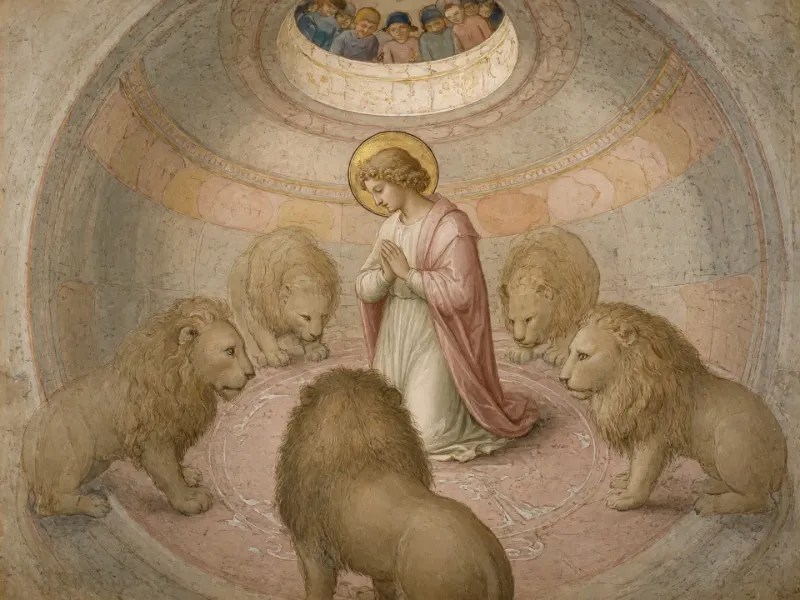
“Why are you cast down, O my soul, and why are you in turmoil within me? Hope in God; for I shall again praise him, my salvation and my God.”
Reflection: The psalm is headed as a Maskil of the Sons of Korah. Its speaker remembers leading the festival crowds to the house of God (Psalm 42:4) and now remembers God “from the land of Jordan and of Hermon” (Psalm 42:6), while others taunt him, “Where is your God?” The question “Why are you cast down, O my soul?” comes in verses 5 and 11, and both times he answers his own soul with “Hope in God.”


Leave a Reply