
 English
 Chinese
 Dutch
 Arabic
 Spanish
 Portuguese
 Russian
 French
 Italian
 German
 Japanese
The Bible describes new life as the life that follows being raised with Christ: lived by the Spirit, already called eternal life, and completed in the resurrection. Romans 6:4 says believers were buried with Christ so that “we too may live a new life,” and 2 Corinthians 5:17 says, “if anyone is in Christ, the new creation has come.”
Ephesians 4 and Colossians 3 describe how that life is lived, putting off the old self and putting on the new, and Galatians 5:25 calls it living “by the Spirit.” In John’s Gospel the believer “has crossed over from death to life” already (John 5:24), while Paul looks ahead to the day “he who raised Christ from the dead will also give life to your mortal bodies because of his Spirit who lives in you” (Romans 8:11). Its beginning is the new birth Jesus describes to Nicodemus (John 3:3).
Raised with Christ to live a new life
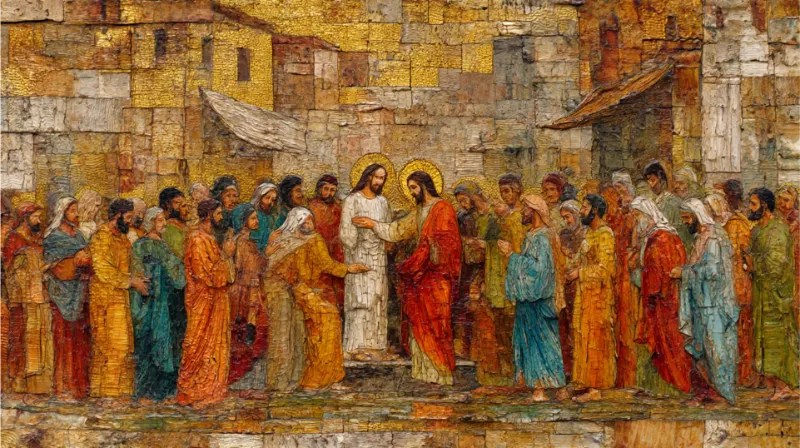
Romans 6:4
“We were therefore buried with him through baptism into death in order that, just as Christ was raised from the dead through the glory of the Father, we too may live a new life.”
Reflection: Paul is answering a question he has just raised: “Shall we go on sinning so that grace may increase?” (6:1). His answer is that those baptized into Christ were baptized into his death (6:3) and buried with him, in order that as Christ was raised, “we too may live a new life.” Verse 2 has already drawn the consequence: “We are those who have died to sin; how can we live in it any longer?”
Romans 6:11
“In the same way, count yourselves dead to sin but alive to God in Christ Jesus.”
Reflection: “In the same way” points back to verse 10, which describes Christ: “The death he died, he died to sin once for all; but the life he lives, he lives to God.” Believers are told to count themselves dead to sin and alive to God as he is. Verse 13 tells them to “offer yourselves to God as those who have been brought from death to life,” and verse 14 adds, “sin shall no longer be your master, because you are not under the law, but under grace.”
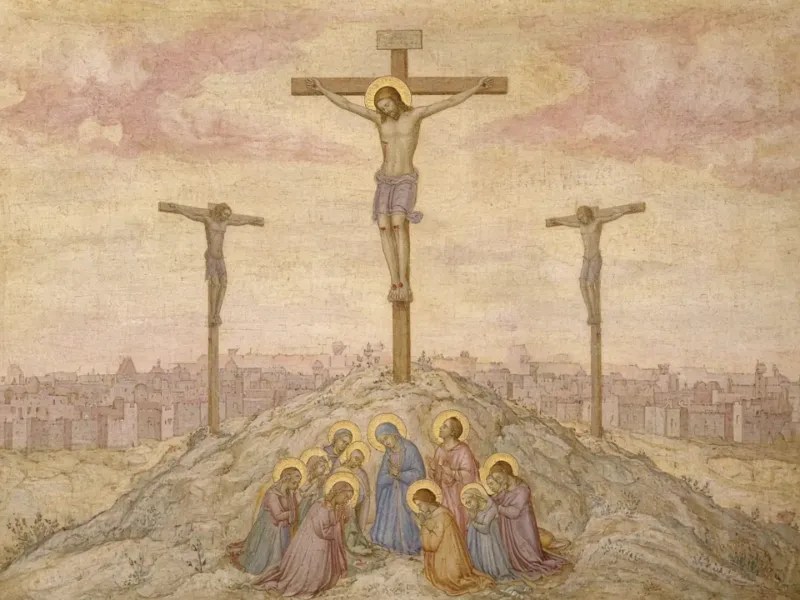
Ephesians 2:4-5
“But because of his great love for us, God, who is rich in mercy, made us alive with Christ even when we were dead in transgressions—it is by grace you have been saved.”
Reflection: The chapter opens with the life before: “dead in your transgressions and sins,” following “the ways of this world” (2:1-2). From verse 4 the verbs belong to God: he “made us alive with Christ” and “raised us up with Christ and seated us with him in the heavenly realms” (2:6). Verse 10 says what the new life is for: “we are God’s handiwork, created in Christ Jesus to do good works, which God prepared in advance for us to do.”
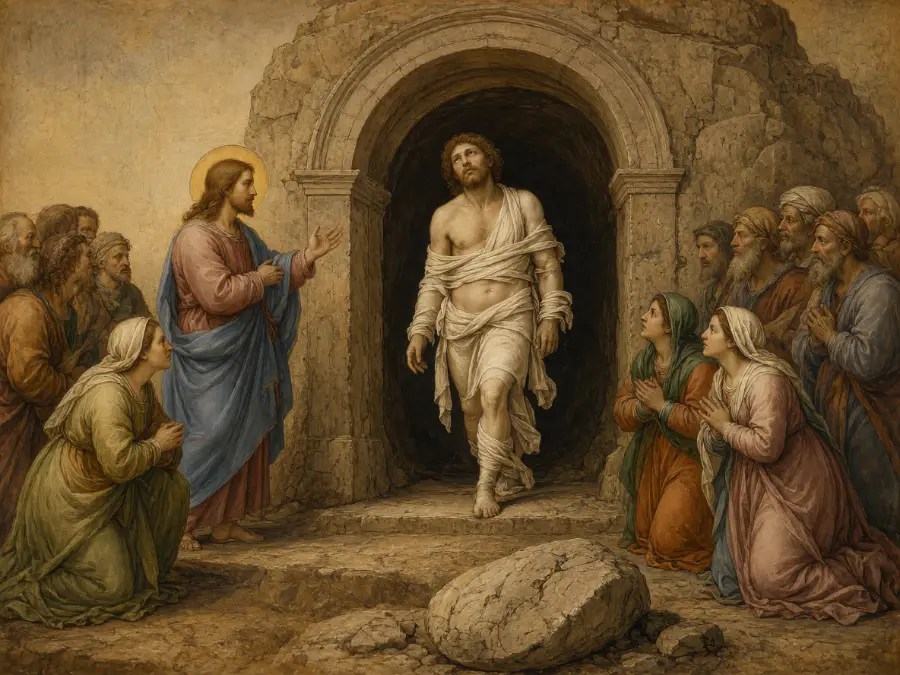
2 Corinthians 5:17
“Therefore, if anyone is in Christ, the new creation has come: The old has gone, the new is here!”
Reflection: The “Therefore” looks back to verses 14 and 15: Christ “died for all, that those who live should no longer live for themselves but for him who died for them and was raised again.” Verse 16 has already said what changes “from now on”: “we regard no one from a worldly point of view.” The NIV reads “the new creation has come,” where the King James Version reads “he is a new creature,” and the next verse says where it comes from: “All this is from God” (5:18).
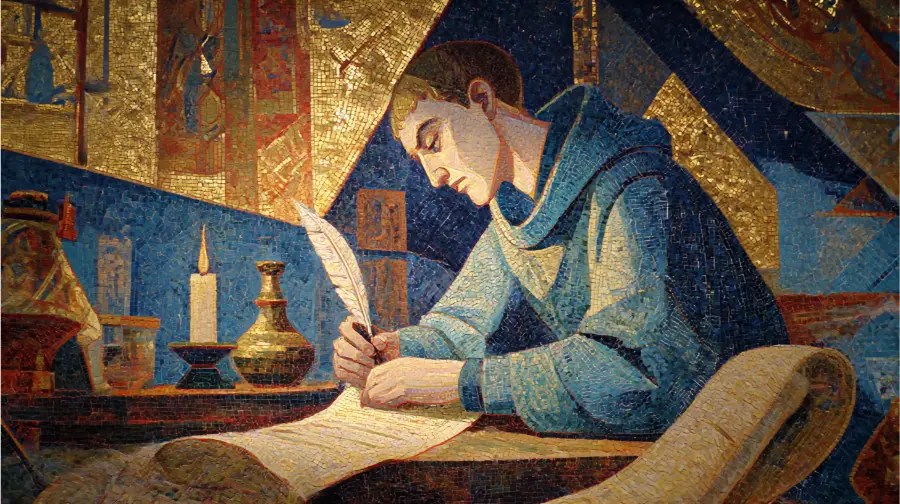
Galatians 2:20
“I have been crucified with Christ and I no longer live, but Christ lives in me. The life I now live in the body, I live by faith in the Son of God, who loved me and gave himself for me.”
Reflection: The argument around this verse is that “a person is not justified by the works of the law, but by faith in Jesus Christ” (2:16). In verse 19 Paul says he “died to the law so that I might live for God,” and here he describes the life that follows in two ways: “Christ lives in me,” and he lives “by faith in the Son of God.” Verse 21 says what is at stake: “if righteousness could be gained through the law, Christ died for nothing!”
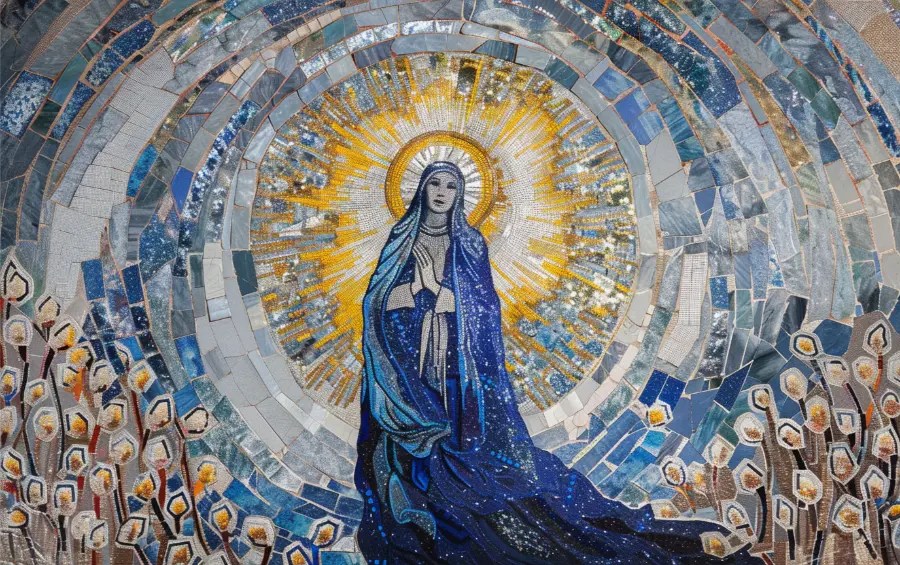
Colossians 3:1-2
“Since, then, you have been raised with Christ, set your hearts on things above, where Christ is, seated at the right hand of God. Set your minds on things above, not on earthly things.”
Reflection: The command to set the heart on things above rests on something already done: “you have been raised with Christ.” Colossians 2:12 has described it as being “buried with him in baptism, in which you were also raised with him through your faith in the working of God.” Verses 3 and 4 say where that life is now and when it will be seen: “your life is now hidden with Christ in God,” and “When Christ, who is your life, appears, then you also will appear with him in glory.”
The new self and life by the Spirit
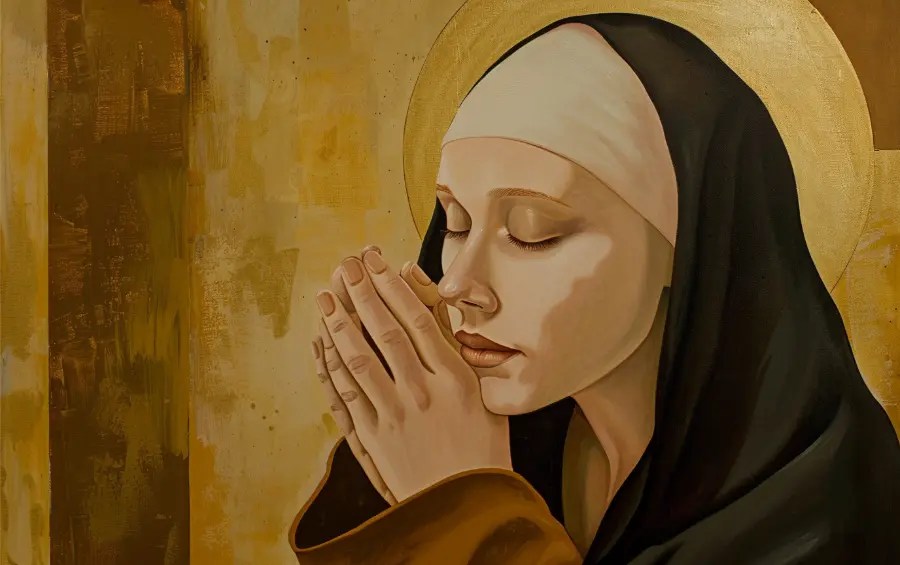
Ephesians 4:22-24
“You were taught, with regard to your former way of life, to put off your old self, which is being corrupted by its deceitful desires; to be made new in the attitude of your minds; and to put on the new self, created to be like God in true righteousness and holiness.”
Reflection: Paul sets this teaching against the life of Gentiles who are “separated from the life of God” (4:18). The readers were taught to put off the old self, “being corrupted by its deceitful desires,” and to put on the new self, “created to be like God in true righteousness and holiness.” The verses that follow say what that looks like: speaking truthfully, working instead of stealing, and being “kind and compassionate to one another, forgiving each other, just as in Christ God forgave you” (4:25-32).
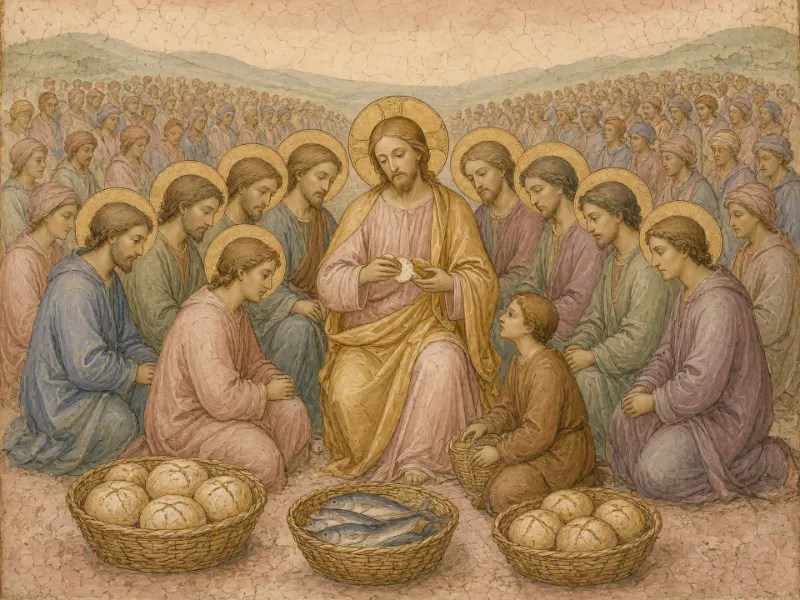
Colossians 3:9-10
“Do not lie to each other, since you have taken off your old self with its practices and have put on the new self, which is being renewed in knowledge in the image of its Creator.”
Reflection: The reason given for not lying is a change already made: the readers “have taken off” the old self and “have put on” the new one. Verse 11 says who shares the new self: “Here there is no Gentile or Jew, circumcised or uncircumcised, barbarian, Scythian, slave or free, but Christ is all, and is in all.” Verse 12 then tells the readers, as “God’s chosen people,” to “clothe yourselves with compassion, kindness, humility, gentleness and patience,” with love put on “over all these virtues” (3:14).
Romans 8:10-11
“But if Christ is in you, then even though your body is subject to death because of sin, the Spirit gives life because of righteousness. And if the Spirit of him who raised Jesus from the dead is living in you, he who raised Christ from the dead will also give life to your mortal bodies because of his Spirit who lives in you.”
Reflection: Romans 8 opens with “the law of the Spirit who gives life” setting believers free “from the law of sin and death” (8:2). Verse 10 speaks of the present: the body is still “subject to death because of sin,” but “the Spirit gives life because of righteousness.” Verse 11 looks ahead to the raising of “your mortal bodies,” and verse 13 says how the life is lived in the meantime: “if by the Spirit you put to death the misdeeds of the body, you will live.”
Galatians 5:22-23
“But the fruit of the Spirit is love, joy, peace, forbearance, kindness, goodness, faithfulness, gentleness and self-control. Against such things there is no law.”
Reflection: Paul sets the fruit of the Spirit against “the acts of the flesh” (5:19-21), and the instruction around both lists is “walk by the Spirit” (5:16). Verse 24 says what has already happened to “Those who belong to Christ Jesus”: they “have crucified the flesh with its passions and desires.” Verse 25 follows: “Since we live by the Spirit, let us keep in step with the Spirit.”
The life Jesus gives
John 5:24
“Very truly I tell you, whoever hears my word and believes him who sent me has eternal life and will not be judged but has crossed over from death to life.”
Reflection: Jesus is answering Jewish leaders who were persecuting him for healing on the Sabbath and for calling God his own Father (5:16-18). Both verbs describe something already true: the believer “has eternal life” and “has crossed over from death to life.” Verse 25 says the time “is coming and has now come when the dead will hear the voice of the Son of God and those who hear will live,” and verse 28 speaks of a time still coming, when “all who are in their graves will hear his voice and come out.”
John 10:10
“The thief comes only to steal and kill and destroy; I have come that they may have life, and have it to the full.”
Reflection: Jesus is speaking to Pharisees (10:1), and the figure is a sheep pen: he is “the gate for the sheep,” and whoever enters through him “will be saved” and “find pasture” (10:7-9). The thief who comes “to steal and kill and destroy” is set against him. In the next verse Jesus calls himself the good shepherd, who “lays down his life for the sheep” (10:11).
John 17:3
“Now this is eternal life: that they know you, the only true God, and Jesus Christ, whom you have sent.”
Reflection: Jesus says this in prayer, looking toward heaven, with the words “Father, the hour has come” (17:1). Verse 2 says the Son was given authority “that he might give eternal life to all those you have given him,” and verse 3 says what that life is: knowing the Father, “the only true God,” and Jesus Christ whom he sent.
The resurrection life to come
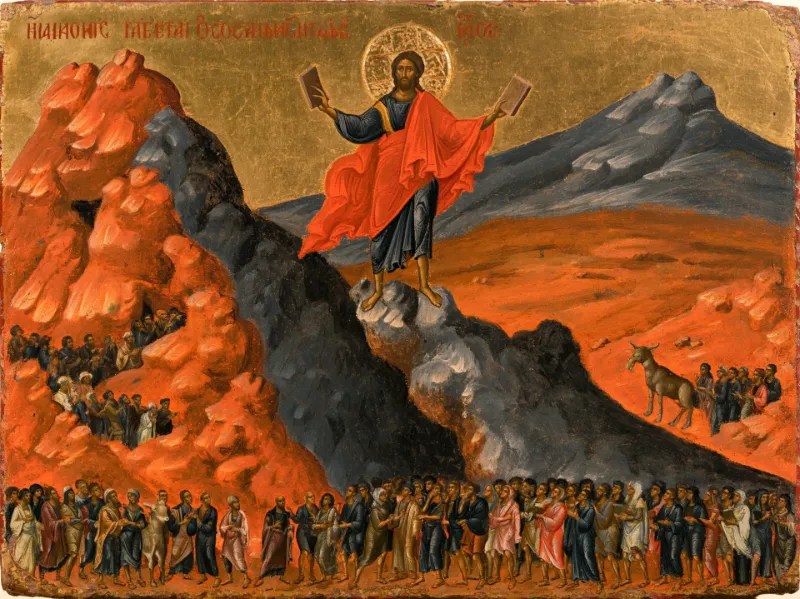
John 11:25-26
“Jesus said to her, ‘I am the resurrection and the life. The one who believes in me will live, even though they die; and whoever lives by believing in me will never die. Do you believe this?’”
Reflection: Lazarus has been in the tomb four days when Jesus arrives (11:17), and Martha has just said she knows her brother “will rise again in the resurrection at the last day” (11:24). Jesus answers in the present tense, “I am the resurrection and the life,” and makes two promises: the believer who dies “will live,” and whoever lives by believing in him “will never die.” Martha replies that she believes he is “the Messiah, the Son of God” (11:27), and Jesus then calls Lazarus out of the tomb (11:43-44).

1 Corinthians 15:22
“For as in Adam all die, so in Christ all will be made alive.”
Reflection: Some in the Corinthian church were saying “that there is no resurrection of the dead” (15:12). Paul sets Christ beside Adam: death came through a man, and “the resurrection of the dead comes also through a man” (15:21). Verse 23 gives the order: “Christ, the firstfruits; then, when he comes, those who belong to him.” Later in the chapter Paul calls Christ “the last Adam, a life-giving spirit” (15:45).

Revelation 21:5
“He who was seated on the throne said, ‘I am making everything new!’ Then he said, ‘Write this down, for these words are trustworthy and true.’”
Reflection: In John’s vision of “a new heaven and a new earth” (21:1), a loud voice from the throne has just said that God will dwell with his people and that “There will be no more death” (21:3-4). Then the one seated on the throne speaks: “I am making everything new!” He tells John to write it down, “for these words are trustworthy and true.”
Baptism and the new life
Romans 6:4 describes believers as buried with Christ through baptism so that they may live a new life, and Colossians 2:12 as buried with him in baptism and raised with him. Churches differ on how the rite and the new life relate.
The Catechism of the Catholic Church says the plunge into the water “symbolizes the catechumen’s burial into Christ’s death, from which he rises up by resurrection with him,” and that baptism “signifies and actually brings about the birth of water and the Spirit” (paragraphs 1214-1215). The Baptist Faith and Message, the confession of the Southern Baptist Convention, describes regeneration as “a change of heart wrought by the Holy Spirit” and calls baptism “an act of obedience symbolizing the believer’s faith,” the believer’s death to sin, “the burial of the old life, and the resurrection to walk in newness of life in Christ Jesus.” Both use the burial and resurrection language of Romans 6; they differ on whether baptism brings about the new birth or is an act of obedience that symbolizes the believer’s death to sin and resurrection to newness of life.


Leave a Reply