
 English
 Chinese
 Dutch
 Arabic
 Spanish
 Portuguese
 Russian
 French
 Italian
 German
 Japanese
Lucifer means “light-bearer”. The word is Latin, made from lux, light, and ferre, to carry, and the Romans used it for the morning star, Venus. It came into the Bible as the Latin translation of the Hebrew helel in Isaiah 14:12, in a taunt against the king of Babylon, and only later did it become a name for the devil.
So the word began as a star, the bright point that hangs low in the east just before the sun comes up. Scripture uses that star twice over: for the proud king who fell, and for Christ, who calls himself “the bright and morning star” (Revelation 22:16). Which of the two a verse means depends on whom it is about.

Where does the name Lucifer appear in the Bible?
In the King James Version it appears just once, at Isaiah 14:12: “How art thou fallen from heaven, O Lucifer, son of the morning! how art thou cut down to the ground, which didst weaken the nations!” The chapter tells us whom it mocks. Israel is to “take up this proverb against the king of Babylon” (Isaiah 14:4), and the song goes on to laugh at a ruler who said, “I will ascend into heaven, I will exalt my throne above the stars of God” (Isaiah 14:13). He wanted to climb above the stars, and he ended in the dust.
Isaiah wrote in Hebrew, and his word is helel, shining one. “Lucifer” is how Jerome’s Latin Bible, the Vulgate, rendered it: “Quomodo cecidisti de caelo, Lucifer, qui mane oriebaris?” The King James Version, like the Geneva Bible of 1599 before it, kept the Latin word instead of translating the Hebrew, and so English readers met Lucifer as if it were a name.
Most English Bibles today translate the Hebrew instead and choose a word for the morning star, as the New International Version does with “morning star, son of the dawn” and the English Standard Version with “O Day Star, son of Dawn”. The New King James Version and the Catholic Douay-Rheims, which follows the Vulgate, keep Lucifer: “O Lucifer, who didst rise in the morning”. So the name appears once in the Bibles of the King James and Douay-Rheims line, and not at all in most modern ones. Luther’s German Bible has no Luzifer either; it reads “du schöner Morgenstern”, you beautiful morning star.

What does lucifer mean in Latin?
In Latin, lucifer began as an everyday adjective meaning light-bringing. Lewis and Short’s Latin Dictionary gives that sense first, and its example is Cicero speaking of the goddess Diana, called on in childbirth as the one who brings a child into the light. As a noun, Lucifer was the morning star, and the Roman poets even used it for a whole day: Propertius promises to come back “paucis me tibi Luciferis”, in a few days.
Since the word carried no evil at all, a Christian could bear it as his own name, and one did. Lucifer, bishop of Cagliari in Sardinia, stood up for Athanasius of Alexandria at the Council of Milan in the 350s, was sent into exile by the emperor Constantius for it, and died in 371.
Jerome’s Vulgate uses the word in several verses, and only one of them is about the king of Babylon:
| Verse | Vulgate Latin | King James Version |
|---|---|---|
| Job 11:17 | orieris ut lucifer | thou shalt be as the morning |
| Job 38:32 | Numquid producis luciferum in tempore suo | Canst thou bring forth Mazzaroth in his season? |
| Psalm 110:3 (109:3 in the Vulgate) | ex utero, ante luciferum, genui te | from the womb of the morning |
| Isaiah 14:12 | Lucifer, qui mane oriebaris | O Lucifer, son of the morning |
| 2 Peter 1:19 | lucifer oriatur in cordibus vestris | the day star arise in your hearts |
In Job 11 a suffering man is promised that he will rise like the morning star, and in Job 38 God asks Job whether he can bring that star out in its season. In 2 Peter it is the day star rising in our hearts, and that is one of the verses that, the Catholic Encyclopedia notes, apply the word to Christ.
The Latin Church went further and gave the word to Christ himself. Every Easter, over the new candle, the Exsultet prays “Flammas eius lucifer matutinus inveniat: Ille, inquam, lucifer, qui nescit occasum”: may the morning star find this flame still burning, that morning star which never sets. So one Latin word names both the fallen king of Babylon, a star that set, and the risen Christ, the star that never will.
What is Lucifer in Greek?
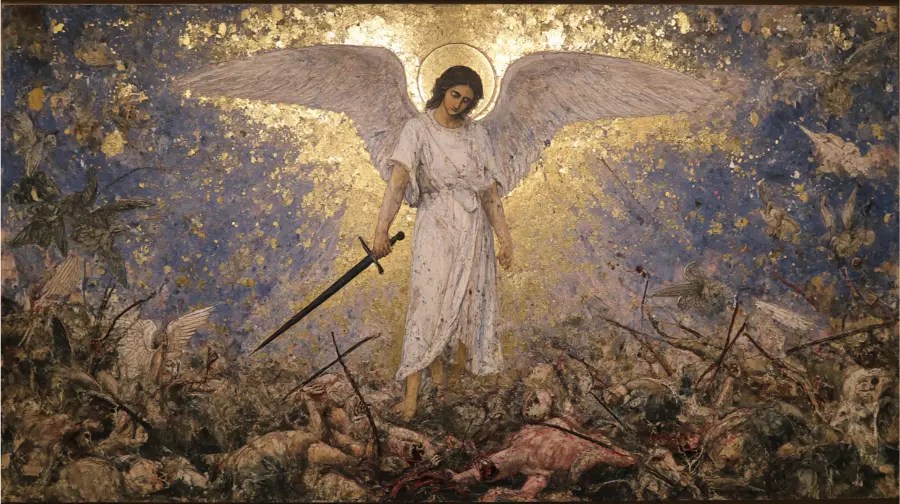
Two Greek words stand behind Lucifer, and the Bible uses neither of them as a name for the devil. The first is heosphoros (ἑωσφόρος), dawn-bringer, from eos, dawn, and pherein, to bring. Homer already used it for the morning star. The Septuagint, the ancient Greek translation of the Hebrew Scriptures, chose it for Isaiah 14:12: “Πῶς ἐξέπεσεν ἐκ τοῦ οὐρανοῦ ὁ Ἑωσφόρος ὁ πρωὶ ἀνατέλλων”. Lancelot Brenton’s English translation of the Septuagint renders the line “How has Lucifer, that rose in the morning, fallen from heaven!” Jerome translated Isaiah from the Hebrew, not from this Greek, and yet he and the Greek translators made the same choice, each reaching for his own language’s everyday name for the morning star. In modern Greek, Eosforos, like Lucifer in English, means both the morning star and the chief of the fallen angels.
The second is phosphoros (φωσφόρος), light-bearer, from phos, light, and pherein. It comes once in the New Testament, in 2 Peter 1:19, where the day star rises “ἐν ταῖς καρδίαις ὑμῶν”, in your hearts. Thayer’s Greek lexicon defines it as the planet Venus and gives its Latin equivalent, Lucifer, and Blue Letter Bible’s outline of the word adds a figurative sense, Christ. So the one verse where it appears is not about Satan at all. Revelation uses different Greek for the same picture when Jesus says, “I am the root and the offspring of David, and the bright and morning star” (Revelation 22:16).
| Language | Word | Meaning | Where |
|---|---|---|---|
| Hebrew | helel | shining one | Isaiah 14:12 |
| Greek | heosphoros | dawn-bringer | Isaiah 14:12 (Septuagint) |
| Greek | phosphoros | light-bearer | 2 Peter 1:19 |
| Latin | lucifer | light-bearer | Job 11:17, Job 38:32, Psalm 110:3, Isaiah 14:12, 2 Peter 1:19 (Vulgate) |
Why is the devil called Lucifer?
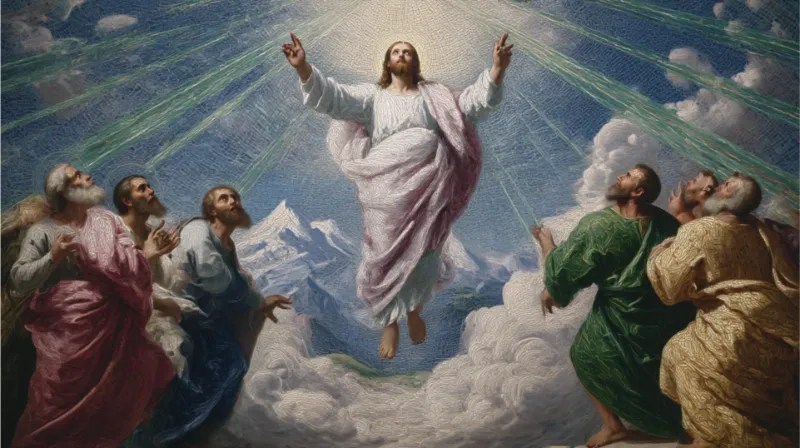
The devil came to be called Lucifer because early Christian writers heard two passages together. They read of the king who wanted to “be like the most High” (Isaiah 14:14) beside the words of Jesus, “I beheld Satan as lightning fall from heaven” (Luke 10:18), and so the fallen star became Satan before his fall. Jerome himself, the Catholic Encyclopedia notes, made Lucifer the name of the chief fallen angel.
John Calvin, among others, did not follow them, and held that the context shows the verse is about the king of Babylon. Whichever reading we take, no verse names the devil Lucifer; the name came by way of interpretation, a story told in how Lucifer became the devil’s name. Both readings, though, hear the same warning in the song, that whoever reaches for God’s throne falls.
What names does the Bible give the devil?
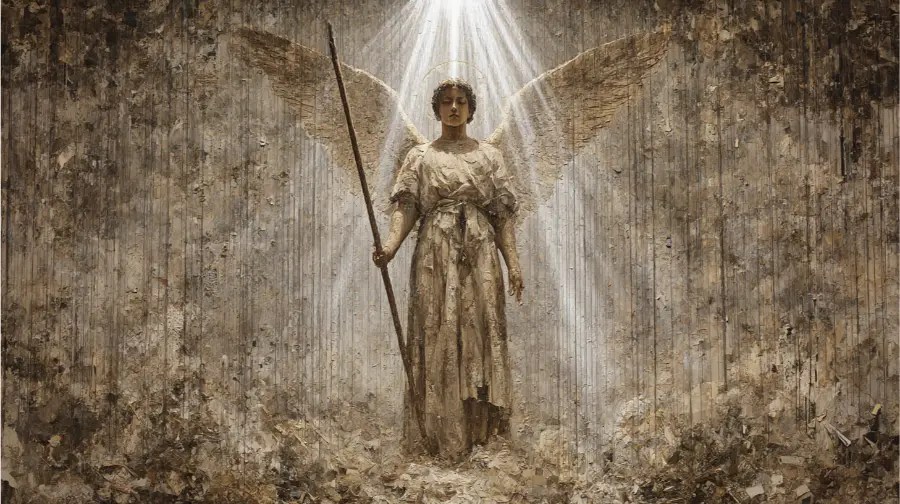
Scripture never calls the devil Lucifer, but it gives him many other names and titles. In the King James Version they include these:
| Name | Verse (KJV) | What the verse says |
|---|---|---|
| Satan | Matthew 4:10 | “Get thee hence, Satan” |
| the devil | 1 Peter 5:8 | “your adversary the devil” |
| the tempter | Matthew 4:3 | “when the tempter came to him” |
| Beelzebub | Matthew 12:24 | “the prince of the devils” |
| that old serpent | Revelation 12:9 | “called the Devil, and Satan” |
| the prince of this world | John 12:31 | “now shall the prince of this world be cast out” |
| the god of this world | 2 Corinthians 4:4 | “hath blinded the minds of them which believe not” |
| the prince of the power of the air | Ephesians 2:2 | “the spirit that now worketh in the children of disobedience” |
| Belial | 2 Corinthians 6:15 | “what concord hath Christ with Belial?” |
Revelation 12:9 gathers several of them into one sentence about “the great dragon”. Satan is a Hebrew word for an adversary, and devil comes from the Greek diabolos, a slanderer or false accuser. Belial comes from a Hebrew word for worthlessness, and Paul sets it against Christ.
So the names Scripture gives him mean adversary, accuser and worthless, and the name of light it keeps for someone else, who says, “I am the root and the offspring of David, and the bright and morning star.”
Related reading
- What does Lucifer mean in Hebrew?
- Why is Lucifer called the morning star?
- What was Lucifer’s name before the fall?
- Was Lucifer ever an archangel?
- How many angels fell with Satan?
- Lucifer and Satan: what is the difference?


Leave a Reply