
 English
 Chinese
 Dutch
 Arabic
 Spanish
 Portuguese
 Russian
 French
 Italian
 German
 Japanese
Lutherans and Presbyterians both come from the Reformation, and both teach that sinners are made right with God by grace through faith. They part on four things: the Lord’s Supper, where Lutherans hold that Christ’s body and blood are present in the bread and wine; predestination; how the church is governed; and how much ceremony belongs in worship.
The sharpest of those differences is about a meal, and it is almost five hundred years old. When Luther and Ulrich Zwingli, the reformer of Zurich, met at Marburg in 1529, they could not agree on how Christ is present in the bread, so they wrote down a request: that each side “display towards the other Christian love, as far as each respective conscience allows.” Lutherans and Presbyterians still begin at the same table, with the same words of Jesus: “Take, eat; this is my body” (Matthew 26:26).
The Lutheran churches grew, in the words of the Evangelical Lutheran Church in America, out of “Martin Luther’s efforts to reform the church” in the sixteenth century, and their chief confession, the Augsburg Confession, was presented to Emperor Charles V in 1530. Presbyterian churches belong to the Reformed tradition shaped by John Calvin in Geneva and carried to Scotland by John Knox. Their classic confession is the Westminster Confession of Faith, with its Larger and Shorter Catechisms (1647), and their name comes from the Greek word for elder.
Lutheran and Presbyterian beliefs side by side
| Topic | Lutheran | Presbyterian |
|---|---|---|
| Began with | Martin Luther | John Calvin in Geneva; John Knox in Scotland |
| Main confessions | Augsburg Confession (1530), Small Catechism, Book of Concord | Westminster Confession and Catechisms (1647) |
| How sinners are saved | By grace, through faith | By grace, through faith |
| Lord’s Supper | Christ’s body and blood present under the bread and wine | Christ received “really and indeed,” but spiritually, by faith |
| Predestination | God chose those who are saved; no one is chosen for damnation | God chose some to life and passed by others |
| Can a believer fall away? | Yes | No: the elect persevere to the end |
| Baptism of infants | Yes; baptism “works forgiveness of sins” | Yes; its effect is not tied to the moment |
| Church government | Varies: bishops in the ELCA, a president in the LCMS | Elders, in sessions, presbyteries and assemblies |
| Worship | Historic liturgy kept | Limited to what Scripture prescribes |
| Largest US churches | ELCA, LCMS | PCUSA, PCA |
Are Presbyterians the same as Reformed Christians?
Presbyterians are one branch of the Reformed family. The Presbyterian Church (U.S.A.) says it “affirms the distinctive beliefs of the Reformed Tradition, which date back to principles articulated by John Calvin in the 16th century.” Its Book of Confessions sets the Scots Confession and the Westminster Confession beside the Heidelberg Catechism and the Second Helvetic Confession. How the Reformed churches fit among other Protestants is the subject of Protestant and Reformed Christians compared.
Lutherans are not Reformed. The two families parted in the Reformation’s first years over the Lord’s Supper, and their confessions still differ on it. In Europe they have since drawn close. With the Leuenberg Agreement of 1973, Protestant churches in Europe recognized one another, and the Communion of Protestant Churches in Europe that grew from it now has 96 Lutheran, Reformed, United and Methodist member churches. In its own words, “a Lutheran pastor can preach from a Reformed pulpit and a Reformed believer can receive communion at a Lutheran service.”
How do Lutherans and Presbyterians understand the Lord’s Supper?
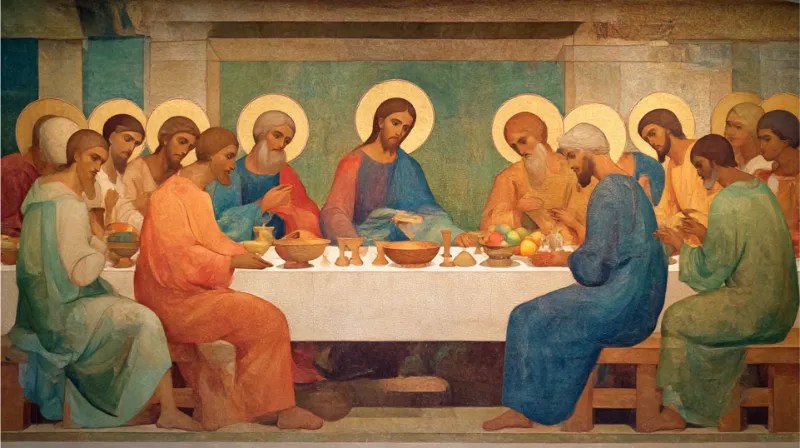
Both churches start from Jesus’ words at the Last Supper: “Take, eat; this is my body” (Matthew 26:26). Both say that Christ is truly present and truly received. They part over how.
Lutherans, in the words of the Formula of Concord, have “received the words of Christ properly and as they read.” Luther’s Small Catechism answers the question “What is the Sacrament of the Altar?” with: “It is the true body and blood of our Lord Jesus Christ, under the bread and wine, for us Christians to eat and to drink, instituted by Christ Himself.” The Augsburg Confession teaches “that the Body and Blood of Christ are truly present, and are distributed to those who eat the Supper of the Lord.” The bread stays bread. The Formula of Concord explains that Lutherans say “under the bread, with the bread, in the bread” to reject the Catholic doctrine of transubstantiation and to describe a “sacramental union” of the bread with the body of Christ. It also teaches that unworthy communicants truly receive Christ’s body and blood, though “to condemnation.”
Presbyterians hold that Christ is received spiritually, by faith. The Westminster Confession says that worthy receivers “inwardly by faith, really and indeed, yet not carnally and corporally but spiritually, receive, and feed upon, Christ crucified, and all benefits of his death.” It then answers the Lutheran phrase directly: the body and blood of Christ are “not corporally or carnally, in, with, or under the bread and wine; yet, as really, but spiritually, present to the faith of believers.” People who come in ignorance or wickedness, in the Westminster view, receive the outward elements but “not the thing signified thereby.”
The disagreement is almost as old as the Reformation. At Marburg in 1529, Luther, who held the bodily presence, and Ulrich Zwingli, the reformer of Zurich, who denied it, signed fifteen articles together. The last of them admits: “we have not been able to agree at this time, whether the true body and blood of Christ are corporally present in the bread and wine.” It asks each side to “display towards the other Christian love, as far as each respective conscience allows.” Zwingli’s view is not the whole Presbyterian one. The Westminster Confession, written more than a century later, also denies a bodily presence, but it holds that believers receive Christ “really and indeed,” though spiritually.
Do Lutherans and Presbyterians believe in predestination?
Both do, and both teach that God’s choice is a free gift. The Lutheran Formula of Concord and the Westminster Confession both cite Paul’s words that God “hath chosen us in him before the foundation of the world” (Ephesians 1:4). The Formula says that God’s election “extends only over the godly, beloved children of God, being a cause of their salvation.” The Westminster Confession says God chose the saved “out of his mere free grace and love, without any foresight of faith, or good works.”
They differ over the lost. The Westminster Confession teaches that “some men and angels are predestinated unto everlasting life; and others foreordained to everlasting death,” and that God was pleased to pass by the rest of mankind “and to ordain them to dishonor and wrath for their sin.” It adds: “Neither are any other redeemed by Christ, effectually called, justified, adopted, sanctified, and saved, but the elect only.” The Formula of Concord rejects any teaching that “some, without regard to their sins, from the mere counsel, purpose, and will of God, are ordained to condemnation so that they cannot be saved.” It holds that Christ “calls to Himself all sinners” and that God “is not willing that any should perish, but that all should come to repentance,” the words of 2 Peter 3:9. Where people are lost, it says, “not God or His election, but their wickedness, is responsible.” The two traditions’ wider differences on grace and the reach of Christ’s death are set out in Calvinism and Lutheranism compared.
Presbyterian churches do not all hold the Westminster chapter in the same way. Officers of the Presbyterian Church in America vow to “sincerely receive and adopt” the Westminster Confession and Catechisms “as containing the system of doctrine taught in the Holy Scriptures.” The PCUSA prints with the Confession a Declaratory Statement added in 1903, which holds the doctrine of God’s decree “in harmony with the doctrine that God desires not the death of any sinner” and states that “no man is condemned except on the ground of his sin.”
Both traditions warn against teaching predestination in a way that frightens believers. The Westminster Confession calls it a “high mystery” to be “handled with special prudence and care,” and promises from it “abundant consolation to all that sincerely obey the gospel.” The Formula of Concord counts it a false use of the doctrine when it is taught so that “troubled Christians cannot comfort themselves therewith.”
Can a Christian lose salvation?
Here the two answer differently. The Augsburg Confession condemns those “who deny that those once justified can lose the Holy Ghost,” so Lutherans teach that a believer can fall from faith. The Westminster Confession says that those whom God has called and sanctified “can neither totally nor finally fall away from the state of grace, but shall certainly persevere therein to the end, and be eternally saved.”
Do both churches baptize babies?
Yes. The Augsburg Confession teaches that baptism is “necessary to salvation” and “that children are to be baptized who, being offered to God through Baptism are received into God’s grace.” The Westminster Confession says that “the infants of one, or both, believing parents, are to be baptized.”
They describe what baptism does in different words. Luther’s Small Catechism says that baptism “works forgiveness of sins, delivers from death and the devil, and gives eternal salvation to all who believe this.” The Westminster Confession calls it a great sin to neglect baptism, yet holds that grace and salvation are not “so inseparably annexed unto it, as that no person can be regenerated, or saved, without it; or, that all that are baptized are undoubtedly regenerated.” It adds that “the efficacy of baptism is not tied to that moment of time wherein it is administered”: the Holy Spirit gives the promised grace to those it belongs to, “in his appointed time.”
How are Lutheran and Presbyterian churches governed?
Presbyterian churches are governed by elders meeting together. The PCUSA describes a polity “in which the authority to make decisions is lodged not in individuals but in groups.” Each congregation elects ruling elders, who sit with the pastor, a teaching elder, in a body called the session. Congregations are joined in presbyteries, presbyteries in synods, and the whole church meets in a General Assembly. The PCA has sessions, presbyteries and a General Assembly, without synods. The Westminster Confession holds that “the Lord Jesus, as King and Head of his church, hath therein appointed a government.”
Lutheran churches are governed in different ways. The Augsburg Confession says that “to the true unity of the Church it is enough to agree concerning the doctrine of the Gospel and the administration of the Sacraments,” and that rites and ceremonies need not be “everywhere alike.” The ELCA has 65 synods, each of which elects a bishop, with a presiding bishop for the whole church. The LCMS is led by a Synod president, and its congregations are grouped in districts.
Is Lutheran worship more liturgical than Presbyterian worship?
Traditionally, yes, and the reason lies in the confessions. The Augsburg Confession says of the Mass that it “is retained among us, and celebrated with the highest reverence. Nearly all the usual ceremonies are also preserved.” Lutherans keep church customs “which may be observed without sin, and which are profitable unto tranquillity and good order in the Church.”
The Westminster Confession sets a stricter rule. God’s worship “is instituted by himself, and so limited by his own revealed will, that he may not be worshiped according to the imaginations and devices of men, or the suggestions of Satan, under any visible representation, or any other way not prescribed in the Holy Scripture.” Under that rule Presbyterian worship has traditionally been plainer, with no images of God.
In the ELCA and the PCUSA, the largest Lutheran and Presbyterian churches in the United States, Sunday worship follows a similar shape. The ELCA describes “a basic pattern for worship among Lutherans”: the people gather, hear God’s word, “share a meal at Christ’s table,” and are sent out. The PCUSA’s Directory for Worship calls the Service for the Lord’s Day “a service of Word and Sacrament” and orders it as gathering, Word, Sacrament and sending.
What do Lutherans and Presbyterians agree on?
They share the ancient creeds. The Augsburg Confession opens by declaring the decree of the Council of Nicaea on the one God in three Persons “true and to be believed without any doubting,” and it confesses Christ’s return “according to the Apostles’ Creed.” The PCUSA’s Book of Confessions begins with the Nicene Creed and the Apostles’ Creed. What Lutherans, Presbyterians and other Christians have believed in common is the subject of the free course Christianity: What Christians Have Believed for 2,000 Years.
They also agree on how a sinner is made right with God. The Augsburg Confession teaches that people “cannot be justified before God by their own strength, merits, or works, but are freely justified for Christ’s sake, through faith.” The Westminster Confession says God justifies “not by infusing righteousness into them, but by pardoning their sins, and by accounting and accepting their persons as righteous.” When Lutheran and Reformed theologians in the United States compared the two teachings in their dialogues, they concluded that “there are no substantive matters concerning justification that divide us.” Both churches baptize infants and celebrate the Lord’s Supper.
Can Lutherans and Presbyterians take Communion together?
It depends on the church. The ELCA and the PCUSA agreed to full communion in 1997 under A Formula of Agreement, which commits them to “authorize and encourage the sharing of the Lord’s Supper among their members” and to exchange ordained ministers. The agreement admits that the sixteenth-century statements on the Supper could not be reconciled, and it treats the differences as “acceptable diversities.”
The LCMS practises closed Communion. Matthew Harrison, the LCMS president, wrote in 2024 that “the New Testament requires unity in doctrine and doctrinal practice,” and that “there are exceptional cases that require pastoral discretion.” In the PCA, the minister may “invite all those who profess the true religion, and are communicants in good standing in any evangelical church,” or only those the session has approved; the session decides which.
Which Lutheran and Presbyterian churches are largest today?
In the United States the two largest Lutheran churches are the Evangelical Lutheran Church in America, formed in 1988, with 2,588,700 baptized and 2,066,620 confirmed members in 8,208 congregations at the end of 2025, and the Lutheran Church–Missouri Synod, with 1,674,315 baptized and 1,328,392 confirmed members in 5,767 congregations in its 2024 annual report. The two largest Presbyterian churches are the Presbyterian Church (U.S.A.), formed in 1983, with 1,019,003 active members in 8,304 congregations in 2025, and the Presbyterian Church in America, with 400,751 members in 1,667 congregations in 2024.
The churches count members in different ways. The PCUSA’s active members are people received by profession of faith, by reaffirmation of faith or by transfer from another church, so the Lutheran confirmed figures are the closer comparison. The PCA figure comes from byFaith, the PCA’s magazine, which notes that only 992 of the 1,667 congregations submitted their statistics.
Worldwide, the Lutheran World Federation says it represents “over 78 million Christians in the Lutheran tradition in 99 countries,” in 153 member churches. The World Communion of Reformed Churches counts “100 million Christians from more than 230 member churches in 109 countries.”
Do Lutheran and Presbyterian churches ordain women?
Some do and some do not, and the line runs through each family. The ELCA and the PCUSA ordain women: the ELCA’s magazine dates the first ordination of a woman by a Lutheran church body in North America to 1970, and the PCUSA marked 70 years of women ministers in 2026, counting from 1956. The LCMS holds that women “may not serve in the office of pastor,” and in the PCA the offices of elder and deacon “are open to men only.”
The two families have argued over the Supper since Marburg. In the ELCA and the PCUSA they now share it, and where they do not, the request made in 1529 still stands: that each side show the other Christian love, “as far as each respective conscience allows.”
Related reading
- PCUSA and PCA compared
- Which is the most conservative Lutheran synod?
- Lutheran and Catholic beliefs compared
- Presbyterian and Baptist churches compared
- Calvinism and Arminianism side by side
- Lutheran and Baptist beliefs compared


Leave a Reply