Berns, A. (2016). Daniel Jütte. The Age of Secrecy: Jews, Christians, and the Economy of Secrets. Translated from the German by Jeremiah Riemer. New Haven: Yale University Press, 2015. 431 pp. AJS Review, 40, 178–180.
Boas, A. V., & Lamelas, I. (2022). The Meaning of ‘Spiritual’ as Integral Health: From Hippocrates of Kos to the Potamius of Lisbon. Religions.
Carlström, C. (2020). Spiritual experiences and altered states of consciousness – Parallels between BDSM and Christianity. Sexualities, 24, 749–766.
Dakin, E. K., Levy, D. L., & Williams, K. (2021). Religious and spiritual journeys of LGBT older adults in rural Southern Appalachia. Journal of Religion Spirituality & Aging, 34, 323–343.
Degbe, S. (2015). Sumsum Akwankyεrε: Emerging Modes of Mediation and Appropriation of Spiritual Power in Sections of Ghanaian Christianity. Journal of Pentecostal Theology, 24, 270–289.
Goguadze, T. (2016). A critical study of modern Orthodox scholarly criticism of western art.
Greenwood, D. (2016). AGAINST THE CHRISTIANS: A NEW EDITION. The Classical Review, 67, 52–53.
Hapugoda, M., & Anandawansa, K. (2023). Spiritual thirdspace and silent faith: reading the parallax between Buddhism and Christianity in the movie Silence (2016). Sri Lanka Journal of Social Sciences.
Hathaway, W., & Yarhouse, M. (2023). The Integration of Psychology & Christianity: A Domain-Based Approach. Perspectives on Science and Christian Faith.
Lloyd, C. E. M., Mengistu, B. S., & Reid, G. (2022). His Main Problem Was Not Being in a Relationship With God: Perceptions of Depression, Help-Seeking, and Treatment in Evangelical Christianity. Frontiers in Psychology, 13.
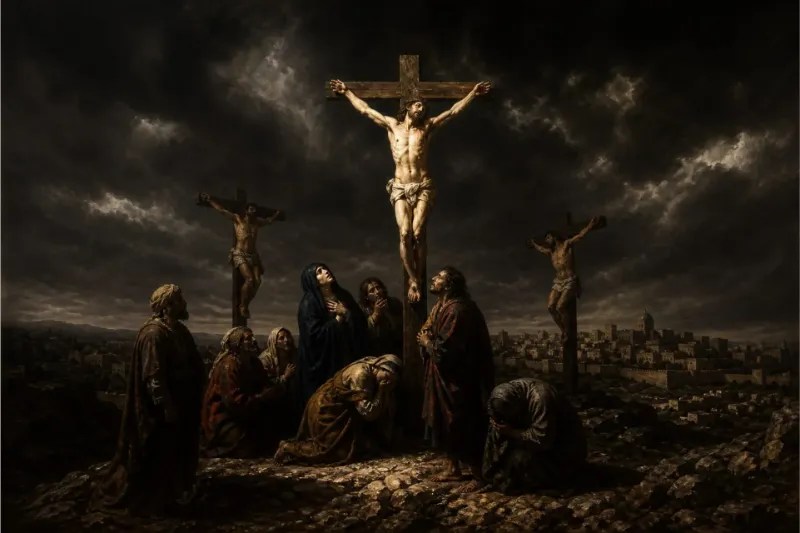
Lushakov, M. (2023). THE EVOLUTION OF IMAGES AND SYMBOLISM OF THE CROSS IN THE CHRISTIANITY. Sophia. Human and Religious Studies Bulletin.
Makarov, N. S. (2024). The Church lexicon as a lexical category. Linguistics & Polyglot Studies.
Nisancioglu, K. (2014). The Rise of the Rich: A New View of Modern World History. The International Journal of Turkish Studies, 20, 130.
皮埃尔·伽桑狄:人文主义、科学与现代哲学的诞生。(2023)。科学与基督信仰视角。
Robert, F. (2014). A Grand View of Women and Men WorkingTogether. 22, 9.
Sablin, I. (2022). A Spiritual Perestroika: Religion in the Late Soviet Parliaments, 1989–1991. Entangled Religions.
Scorgie, G. G., Scorgie, K., Chow, A., & Hsieh, N. (2022). Touched by Love: Spiritual Experience in Chinese Christian Conversion Narratives. Journal of Spiritual Formation & Soul Care, 15, 44–69.
Slieptsov, O., Dyomin, M., Haraborska, Y., & Kravchuk, O. (2024). ARCHITECTURE OF MOSQUES: COMBINATION OF CANONS AND REGIONALISM. Urban Development and Spatial Planning.
Smolina, A. N. (2022). Intertextual Inclusions in Russian Spiritual Epistolary Communication: Typology, Functions, Context. Nauchnyi Dialog.
Steinmetz, A. R., Yuen, K.-M., Bandari, J., & Rabinowitz, R. (2023). HF01-12 军事对现代临床试验发展的影响。Journal of Urology, 209, e259。
Stevens, C. H. (2016). Muscular Christianity: A Comparison and Analysis of the Historic and Modern Muscular Christian Movements.
Strauss, P. (2021). MT Steyn: ’n Moderne Christen-Afrikanerleier? MT Steyn: A modern Christian Afrikaner leader? Tydskrif Vir Geesteswetenskappe.
Talbert, C. H. (2014). Index Of Modern Authors. 246–250.
Vamanu, I., & Guzik, E. (2015). Closer to God: Meanings of Reading in Recent Conversion Narratives within Christianity and Islam. Journal of Religious & Theological Information, 14, 63–78.
Walker, A. C., & Lang, A. S. I. D. (2023). Perceived Religious Pressures as an Antecedent to Self-Reported Religious/Spiritual Development and Well-Being for Christians. Journal of Psychology and Theology, 51, 439–455.
Anisimova, O., & Makarova, I. S. (2023). Mythopoetic Images of Irish Mythology in American Fantasy (the Case of Roger Zelazny’s Chronicles of Amber – Corwin Cycle). Litera.
Banbaji, A. (2021). Melitsah, Rhetoric, and Modern Hebrew Literature: A Study of Haskalah Literary Theory. Prooftexts, 38, 238–277.
Bobylev, B. (2023). After the Flood: biblical allusions in the story The Life of Klim Samgin by M. Gorky (to the 155th anniversary of the birth). Russian Language at School.
Chen, A., Gudipati, P., Longpre, S., Ling, X., & Singh, S. (2021). Evaluating Entity Disambiguation and the Role of Popularity in Retrieval-Based NLP. Annual Meeting of the Association for Computational Linguistics, 4472–4485.
Clines, D. (2021). 希伯来语动词 qdš “神圣”的所谓基本含义:希伯来语比较词典编纂练习。《旧约全书》,1–21。
Donnelly-Lewis, B. (2022). The Origin of the Hebrew nithpaal: A Sociolinguistic Proposal. Journal for Semitics.
England, J. L. (2022). Every Life Is on Fire: How Thermodynamics Explains the Origins of Living Things. Perspectives on Science and Christian Faith.
Ershov, Y. M. (2021). Biblical Motives In The Myth Construction About The Heroic Defense Of Sevastopol.
Ganina, L. G., Madlevskaya, E. L., & Ostrovskii, A. B. (2023). ‘Biblical Images in the Traditional Culture of the Orthodox Peoples of Russia’: Exhibition of the Russian Museum of Ethnography for the 520th Anniversary The Gennady Bible (January  March 2021). Vestnik Slavianskikh Kul’tur [Bulletin of Slavic Cultures](#)(#)(#)(#)(#)(#).
Gregor, K., & Blais, B. (2024). Re-Examining Richard Bauckham’s Argument from Name Popularity in Light of Apocryphal and Talmudic Evidence. Journal for the Study of the New Testament.
Grinchenko, B. (2019). TRANSFORMATION OF UKRAINIAN NAME-GIVING PROCESS: HISTORICAL ANALYSIS.
G.Stork, D., Bourached, A., H.Cann, G., & Griffiths, R.-R. (2021). Computational identification of major actors in paintings through symbols and attributes. Computer Vision and Image Analysis of Art, 1–8.
Heaton, R. D. (2023). The Shepherd of Hermas As Scriptura Non Grata.
Hecht, L. (2023). Are Veggies and Fruits Always Good for You? An Analysis of Biblical Produce in the Book of Genesis. Iggrot Ha’Ari.
J. R. Lamb Studios. (n.d.). Design drawing for stained glass window with Biblical symbols of stories and people.
Jancovic, J. (2023). Before Him Went Pestilence (Hab 3:5): Biblical Lexis and Semantic Field of Epidemics. Old Testament Essays.
Janzen, D. (2004). The Social Meanings of Sacrifice in the Hebrew Bible: A Study of Four Writings.
欧洲法院 2013年7月11日 – C-657/11号案件,D. (2013)。BEST NV。《IIC – 国际知识产权与竞争法评论》,第44卷,第991页。
欧洲法院 2012年7月19日 — C-376/11, D. (2013). Pie Optiek. IIC – 国际知识产权与竞争法评论, 44, 731。
Kalifon, Y. (2012). 希伯来语名词词源:重新审视以色列语言的起源。
Lomachinska, I., Khrypko, S., & Iatsenko, G. (2019). Transformation of Ukrainian Name-giving Process: Historical Analysis. Skhid.
Marion, A., Góra, J., Kracker, O., Fröhr, T., Latajka, R., Sewald, N., & Antes, I. (2017). Amber-Compatible Parametrization Procedure for Peptide-like Compounds: Application to 1, 4- and 1, 5-Substituted Triazole-Based Peptidomimetics. Journal of Chemical Information and Modeling, 58 1, 90–110.
MOHAMMED, A. J., & KADHIM, H. I. (2022). THE IMPACT OF THE JEWISH FAITH IN MODERN HEBREW POETRY “SHABBAT FOR EXAMPLE. Full Text Book of Language and Literature Congress 4.
Morgan, W. (2018). God Mocks: A History of Religious Satire from the Hebrew Prophets to Stephen Colbert by Terry Lindvall (review). Studies in American Humor, 4, 129–132.
Morozova, Ju. G. (2018). Biblical Symbols and Toponyms in the I.A. Bunin’s Story The Rose of Jericho. 39, 76–81.
Nicol, G. G. (2020). Agenda for Change? The Hebrew Bible, Feminism, and Gender Justice. The Expository Times, 131, 519–520.
Pyskach, Þ. (2023). Ehnolinguistic features of family rituals of Transcarpatians in M. Dochinets’s Indents and treasures collection. Linguistic and Conceptual Views of the World.
Renevey, D. (2022). Devotion to the Name of Jesus in Medieval English Literature, c. 1100 – c. 1530.
Ribeiro, M., Malcorra, B., Mota, N. B., Wilkens, R., Hubner, A. V. L. C., Environment, C. R.-C. B. M., Institute, D. M., Norte, F. U., Natal, Brazil, Mobile Brain, R. D., Brain, M., Janeiro, R., Psychiatry, I., Janeiro, F. U., Computer Science, D., Exeter, T. U., Exeter, Uk, ¦ Alegre, P. (2024). 一种结合集成梯度和语言分析的文本分类可解释大语言模型方法。
Richardson, P., & Pihlaja, S. (2018). Killing in the Name. Postscripts: The Journal of Sacred Texts, Cultural Histories, and Contemporary Contexts.
Roman, L., & Roman, I. (2016). Hermeneutics of Biblical Images, Motives and Symbols in I.’s «Old Russ Stories». 75–78.
Saputro, N., Pamungkas, P., Trinugroho, I., Mahulette, Y. C., Sergi, B., & Thye, G. L. (2024). Google Trends, bank popularity and depositors’ fears in Indonesia. Managerial Finance.
SHAMSUTDYNOVA-LEBEDYUK, T. S.-L. T. (2022). BIBLICAL NARRATIVES IN THE WORKS OF HRYHORIY SKOVORODA. Almanac of Ukrainian Studies.
Shobana, H., & Maheshwari, P. (2021). Biblical Virtues in Thearo Short Stories. 5, 26–31.
Unger, M. P. (2019). Ode to a dying God: Debasement of Christian symbols in extreme metal. Metal Music Studies.
Vergari, R. (2021). Toward a Contrastive Semantics of the Biblical Lexicon. The nouns of Rules and Regulations in Biblical Hebrew Historical-narrative Language and their Greek equivalents in the Septuagint.
West, S., Shill, I., Clermont, C. P., PavloviÄÂ, N., Cairns, J., Seselja, B., Hancock, M. V., Roberts, S., Hendricks, S., & Emery, C. (2021). Same name, same game, but is it different? An investigation of female rugby union match events in Canadian Varsity players. International Journal of Sports Science & Coaching, 17, 1119–1127.
Ying-bo, Z. (2011). A Biblical Archetypal Approach to Katherine Anne Porter’s Stories.
Zelenkov, A. I., & Yahela, Y. A. (2022). 赫拉利的宏观历史概念:流行起源与学术地位。《白俄罗斯国立大学学报:历史学》。
Ã’Ñâ€Ã‘‚юú, Æ. ÃÅ¡. (2021). BIBLICAL MOTIFS IN NEOMYTHOLOGY OF POST-APOCALYPTIC FILMS OF THE XXI CENTURY: WAYWARD PINES. 158–167.
åрøÿúþ, á. ÃÂ., ÛþüðчøýÑÂúðÑÂ, ÃËœ. ÃÂ., & ïцõýúþ, Ó. î. (2019). Transformation of Ukrainian Name-giving Process: Historical Analysis.