
 Spanish
 English
 Chinese
 Dutch
 Arabic
 Portuguese
 Russian
 French
 Italian
 German
 Japanese
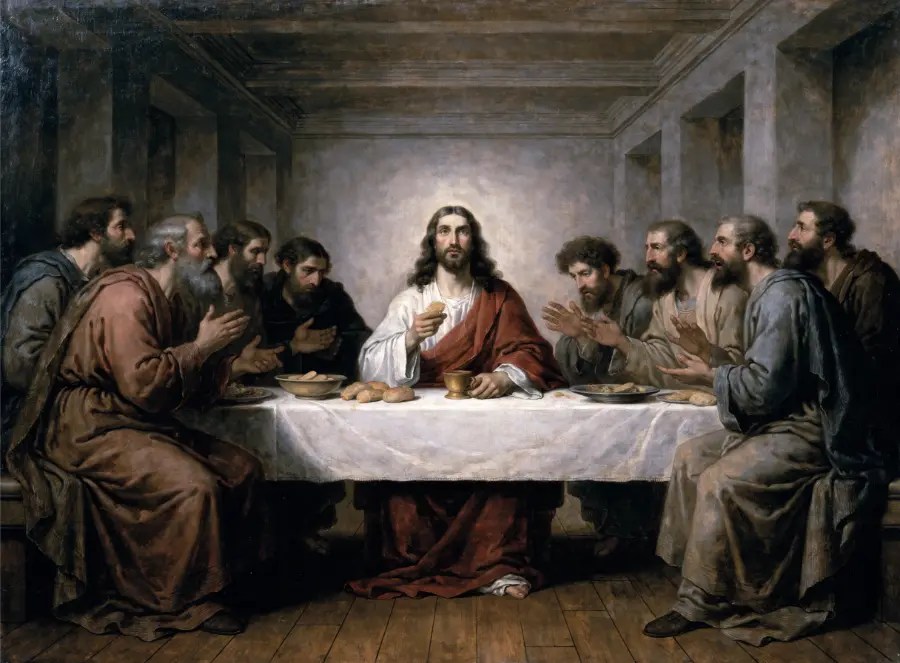
Transubstantiation is the Catholic Church’s word for what happens to the bread and wine at Mass. When the priest speaks Christ’s words over them, the Church teaches, the whole substance of the bread becomes Christ’s body and the whole substance of the wine becomes his blood, while everything we can see and taste stays as it was. The host still looks like bread and tastes like bread, and a Catholic bows before it as Christ.
Eastern Orthodox and Coptic Orthodox Christians also believe the bread and wine truly become Christ’s body and blood, though the Orthodox would rather leave the change a mystery than explain it. Lutherans believe Christ’s body and blood are truly present with bread that is still bread. Anglicans, Methodists and Presbyterians say we receive Christ by faith, in a heavenly and spiritual way, while most Baptists, Pentecostals and many other evangelicals keep the Supper as a memorial. Quakers and the Salvation Army keep no service of bread and wine at all.
Every one of these churches starts from the same words on the same night, “Take, eat; this is my body” (Matthew 26:26). What divides us is a question the crowd put to Jesus himself, when he told them that the bread he would give was his flesh: “How can this man give us his flesh to eat?” (John 6:52). Christians have been answering that “how” ever since, and transubstantiation is the Catholic answer.
| Iglesia | Qué sucede con el pan y el vino | En sus propias palabras |
|---|---|---|
| Católica | Their whole substance becomes Christ’s body and blood; only the appearances remain | “Fittingly and properly called transubstantiation” |
| Ortodoxa oriental | Truly changed; how is a mystery | “His true Body and Blood mystically present” |
| Ortodoxa copta | Truly changed | “The bread that is transubstantiated to the Body of Christ” |
| Luterana | Christ’s body and blood are present with bread and wine that remain | “Truly and essentially present”; “the unchanged essence of the bread” |
| Anglicana y Episcopal | Christ is received by faith; transubstantiation is rejected | “Only after an heavenly and spiritual manner” |
| Metodista | The Anglican teaching, kept almost word for word | “Only after a heavenly and spiritual manner” |
| Presbiteriana y Reformada | Still bread and wine; believers feed on Christ spiritually | “Not after a corporal and carnal manner, but by faith” |
| Iglesia Unida de Cristo | The bread is not changed; Christ is truly present | “Christ is truly and rightly present” |
| Iglesia del Nazareno | Christ is present by the Spirit | “A means of grace in which Christ is present by the Spirit” |
| Discípulos de Cristo | Christ is met in the bread and cup; how is not defined | “The living Christ is met and received” |
| Los adventistas del séptimo día | Christ is present; how is not defined | “Present to meet and strengthen His people” |
| Bautista del Sur | Un símbolo y memorial | “A symbolic act of obedience” |
| Nondenominational (Gateway Church) | A remembrance | “A commemoration of the death of the Lord” |
| Asambleas de Dios | Un símbolo y memorial | “A memorial of his suffering and death” |
| Pentecostales del Nombre de Jesús | Emblems, with a spiritual blessing | “Emblems of His broken body and shed blood” |
| Iglesias de Cristo | Eaten every Sunday; no statement on what the bread is | “Each member considers this weekly appointment as binding” |
| Menonita | A sign and a remembrance | “A sign by which the church thankfully remembers” |
| Amish | Bread and wine, in remembrance | “Observe it in remembrance of Him” |
| Quaker | No outward rite; every meal a remembrance | “At every meal and every meeting with others” |
| Ejército de Salvación | No outward rite | “One sacramental meal, not administered ritually” |
| Santos de los Últimos Días | Bread and water, in remembrance | “In remembrance of Jesus Christ’s atoning sacrifice” |
| testigos de Jehová | Emblems, unchanged | “Not miraculously changed into or mixed with his literal flesh and blood” |
Nuestra herramienta gratuita, Comparar denominaciones cristianas, sets any two of 23 churches side by side on what happens at Communion and on 54 other questions.
What does transubstantiation mean?
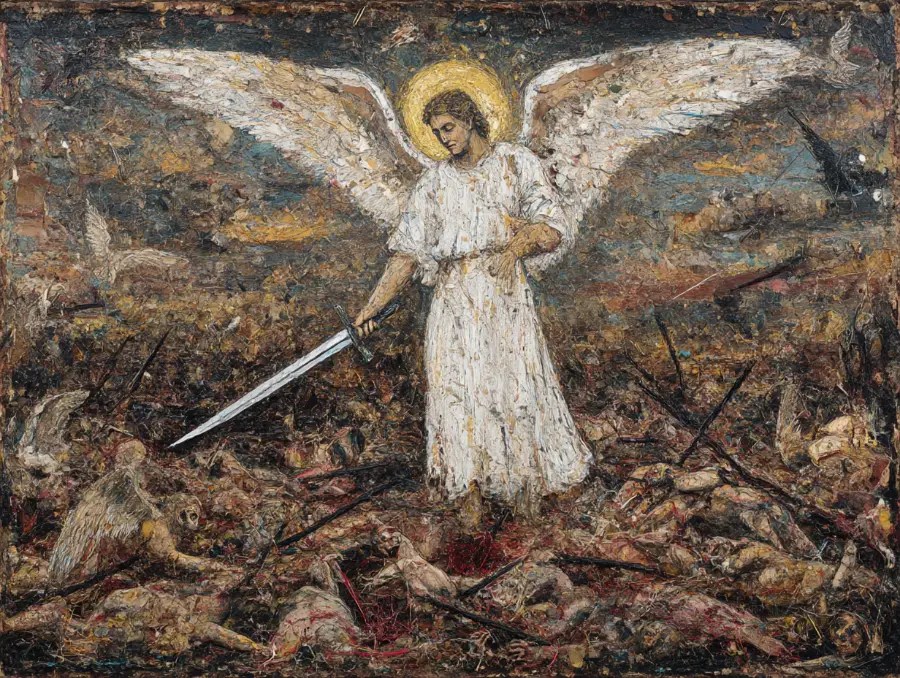
The Catechism of the Catholic Church gives the teaching in the words of the Council of Trent: “by the consecration of the bread and wine there takes place a change of the whole substance of the bread into the substance of the body of Christ our Lord and of the whole substance of the wine into the substance of his blood. This change the holy Catholic Church has fittingly and properly called transubstantiation” (paragraph 1376). The word to listen for is substance. In the language the medieval teachers used, a thing’s substance is what it is, and its accidents are what our senses meet in it, the colour, the taste, the shape. Thomas Aquinas began from what anyone at the altar can see for himself: “It is evident to sense that all the accidents of the bread and wine remain after the consecration.” The look and the taste stay. What the bread is, the Church says, does not.
Why would God leave the bread looking like bread? Aquinas gave three reasons, and the first is the one any of us would give: “it is not customary, but horrible, for men to eat human flesh, and to drink blood.” Because Christ is there, Catholics worship him there, and the Catechism says they show their faith “by, among other ways, genuflecting or bowing deeply as a sign of adoration of the Lord” (paragraph 1378). Saint Ambrose said it long before anyone had the word, in a line the Catechism still quotes: “Be convinced that this is not what nature has formed, but what the blessing has consecrated.”
Is transubstantiation the same as the Real Presence?
No. The two are close, but the Real Presence is the belief that Christ is truly there, and transubstantiation is the Catholic account of how. The Catechism holds that “the whole Christ is truly, really, and substantially contained” in the sacrament (paragraph 1374), and other churches share that belief without the Catholic account of it. The Episcopal Church’s dictionary defines the Real Presence as “The belief that Eucharistic bread and wine are not mere symbols, but are infused with the real presence of Christ’s body and blood,” and says that Anglican worship “affirms that Christ is really present in the Eucharist and allows for differing views on how that occurs.” So when an Orthodox priest, a Lutheran pastor and many Anglicans tell us Christ is really present at the altar, they mean it. Lutherans and the Anglican Articles go on to reject the Catholic account of the substance of the bread, and the Orthodox, who have used the word themselves, would still rather not explain the change.

Is transubstantiation in the Bible?
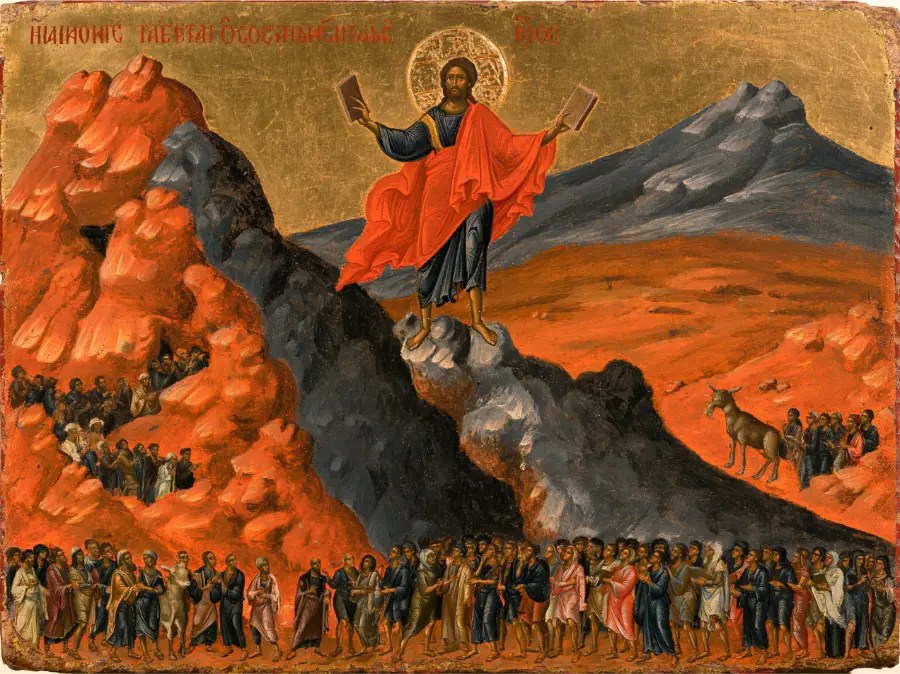
The word is not; it came into use in the eleventh century. The churches that hold the teaching say the thing itself is there, in what Jesus said. “Take, eat; this is my body,” he told his disciples, and over the cup, “For this is my blood of the new testament, which is shed for many for the remission of sins” (Matthew 26:26, 28). In John 6 he went further: “Except ye eat the flesh of the Son of man, and drink his blood, ye have no life in you,” and “For my flesh is meat indeed, and my blood is drink indeed” (John 6:53, 55). The Coptic Orthodox Church reads its Communion straight from that chapter: “He who eats My Flesh, and drinks My Blood abides in Me, and I in him.”
Many who heard Jesus that day could not bear it. “This is an hard saying; who can hear it?” they said, and “From that time many of his disciples went back, and walked no more with him” (John 6:60, 66). The Catechism does not soften it: “The first announcement of the Eucharist divided the disciples” (paragraph 1336).
The churches that read these words another way go to Scripture too. Paul keeps calling it bread. “The bread which we break, is it not the communion of the body of Christ?” he asks (1 Corinthians 10:16), and he tells the Corinthians to “eat of that bread” (1 Corinthians 11:28). Martin Luther made exactly that point in the Smalcald Articles of 1537, that “there is, and remains, bread, as Paul himself calls it.” The Church of England’s Thirty-nine Articles say that transubstantiation “cannot be proved by holy Writ; but is repugnant to the plain words of Scripture,” and the Baptist confession of 1689 sets against it a verse about Christ in heaven, “Whom the heaven must receive until the times of restitution of all things” (Acts 3:21). Jehovah’s Witnesses hear a figure of speech, “Jesus was teaching by using a metaphor,” and they add that drinking real blood would have broken “God’s law against consuming blood” (Genesis 9:4). The passages all these churches read are gathered in our Versículos bíblicos sobre la comunión.
When did transubstantiation become Church teaching?
Long before anyone had the word, Ignatius of Antioch, writing to the church at Smyrna, warned against people who “confess not the Eucharist to be the flesh of our Saviour Jesus Christ, which suffered for our sins.” Justin Martyr, explaining the faith to the Emperor Antoninus, wrote of the bread and cup, “For not as common bread and common drink do we receive these.” Neither of them uses the word, and neither tries to say how.
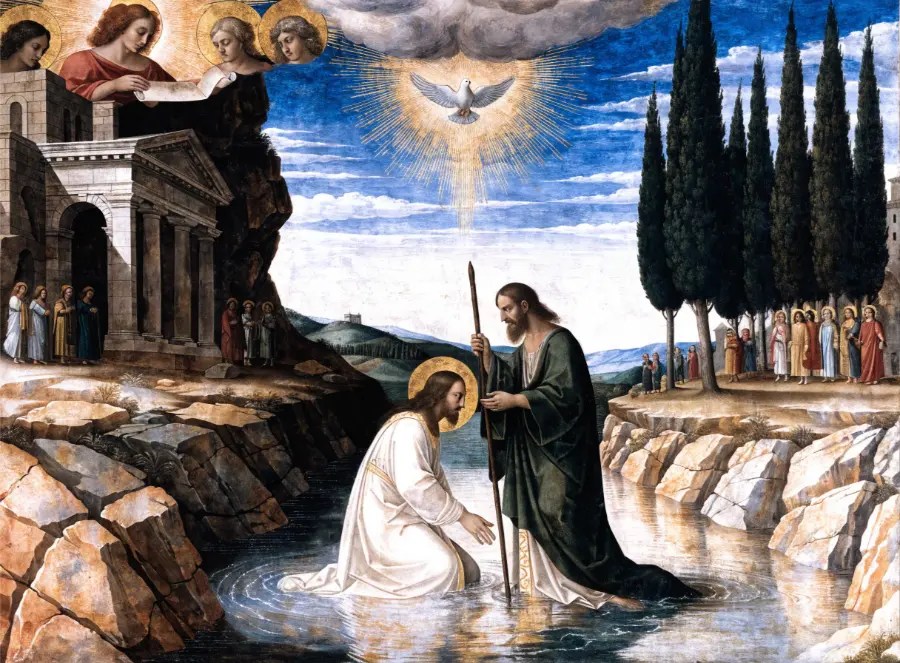
The word itself came out of a quarrel in the eleventh century, when Berengar of Tours denied the change of the bread and then, as the Catholic Encyclopedia of 1909 tells it, made “a sincere retractation” before Pope Gregory VII “at a synod held in Rome in 1079”. The same work says that “The term transubstantiation seems to have been first used by Hildebert of Tours (about 1079).” In 1215 the Fourth Lateran Council wrote the teaching into its confession of faith, saying that Christ’s body and blood are present in the sacrament, “the bread and wine having been changed in substance, by God’s power, into his body and blood”. Aquinas then gave the account of substance and accidents we met above.
When the Reformers rejected it, the Council of Trent answered them on 11 October 1551, in its thirteenth session, whose decree on the Eucharist we have in full in English. Its fourth chapter is headed “On Transubstantiation,” and the words the Catechism uses today come from there.
Do Orthodox Christians believe in transubstantiation?
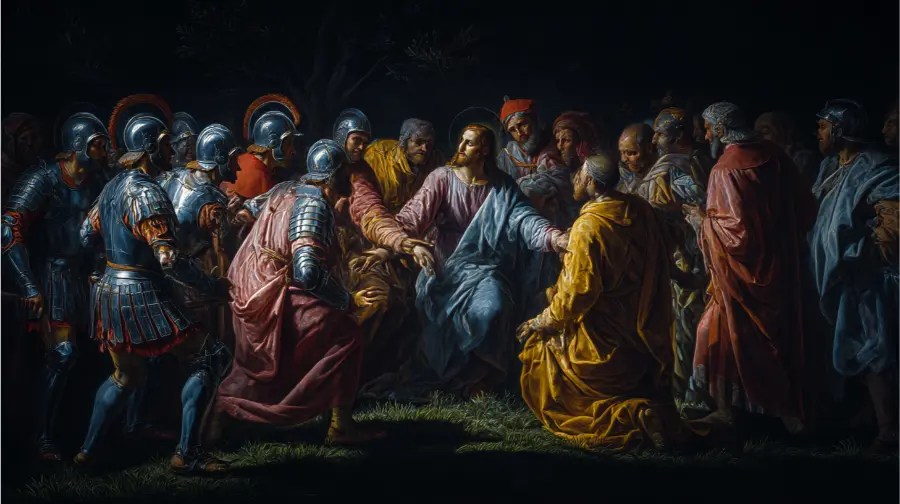
They believe the bread and wine become Christ’s body and blood, and they have used the word, though the Orthodox Church in America would rather not explain the change. Its book The Orthodox Faith teaches that the Eucharist “is strictly understood as being the real presence of Christ, His true Body and Blood mystically present in the bread and wine which are offered to the Father in his name and consecrated by the divine Spirit of God.” The explanations, it says, “often became too rationalistic and too closely connected with certain human philosophies,” and it reminds us that “in Orthodoxy what is real is not opposed to what is symbolical or mystical or spiritual.” When an Orthodox Christian calls the gifts a mystery, he is not calling them less than real.
Yet in 1672 an Orthodox synod in Jerusalem, in the Confession of Dositheus, spoke in words any Catholic would know: “the bread is transmuted, transubstantiated, converted and transformed into the true Body Itself of the Lord.” In the same breath it said the word explains nothing about how, for “by the word ‘transubstantiation’ the manner is not explained,” and the change “is altogether incomprehensible and impossible, except by God Himself.”
The Coptic Orthodox Church uses the word plainly. Bishop Mettaous teaches that “The Sacrament of Communion is a Holy Sacrament by which the believer eats the Holy Body and Precious Blood of Jesus Christ, presented by the Bread and Wine,” and that whoever comes to receive it “strongly believes in the transubstantiation of the Bread to the Body of Christ.”
Do Lutherans believe in transubstantiation or consubstantiation?
Neither, if we let them speak for themselves, though “consubstantiation” is the label others most often give them. The Formula of Concord of 1577 says, “We believe, teach, and confess that in the Holy Supper the body and blood of Christ are truly and essentially present, and are truly distributed and received with the bread and wine.” It rejects the teaching “that in the Holy Supper the bread and wine lose their substance and natural essence.” Lutherans say Christ’s body is “under the bread, with the bread, in the bread,” and the Formula says why they put it that way: so that transubstantiation “may be rejected and the sacramental union of the unchanged essence of the bread and of the body of Christ indicated.” Sacramental union is their own name for it, and the word consubstantiation is nowhere in the Formula.
Lutherans and the Reformed quarrelled over who receives Christ’s body, and how. The Formula puts the old argument as a question, whether Christ’s body and blood are “received with the mouth by all those who use this Sacrament, whether they be worthy or unworthy,” and answers it in a line: “The Sacramentarians say, No; we say, Yes.” How all this sits beside the Catholic teaching is set out in our Comparación luterana y católica.

What do Anglicans, Methodists and Presbyterians believe?
The confessions these churches grew from teach that Christ truly gives himself in the Supper and that the bread and wine stay bread and wine. Not every Anglican today holds it in just those terms, since Anglican worship, in the Episcopal Church’s words, “allows for differing views on how that occurs.” The Church of England’s Thirty-nine Articles, agreed in 1562 and confirmed in 1571, say in Article XXVIII, “The Body of Christ is given, taken, and eaten, in the Supper, only after an heavenly and spiritual manner. And the mean whereby the Body of Christ is received and eaten in the Supper is Faith.” The Episcopal Church’s dictionary calls transubstantiation “A Roman Catholic doctrine that differs from Episcopal and Anglican theology.”
Methodists kept that article almost word for word. The United Methodist Church’s Articles of Religion say in Article XVIII that the body of Christ is eaten “only after a heavenly and spiritual manner” and that “the mean whereby the body of Christ is received and eaten in the Supper is faith.” The Church of the Nazarene, which also comes from the Wesleyan stream, teaches that “The Lord’s Supper is a means of grace in which Christ is present by the Spirit.”
Presbyterians say it in the Westminster Confession. It says of the bread and wine that “in substance and nature, they still remain truly and only bread and wine, as they were before,” and yet Christ is “as really, but spiritually, present to the faith of believers in that ordinance, as the elements themselves are to their outward senses.” The Heidelberg Catechism, which the United Church of Christ keeps on its own website, asks it outright: “Are the bread and wine changed into the real body and blood of Christ? No.” The United Church of Christ itself calls Communion “a living and effective sign of Christ’s sacrifice in which Christ is truly and rightly present to those who eat and drink.”
Two other churches speak of Christ’s presence and leave the how undefined. The Christian Church (Disciples of Christ), which shares the Supper in weekly worship, says that “Through the power of the Holy Spirit, the living Christ is met and received in the sharing of the bread and the cup, representative of the body and blood of Jesus.” Seventh-day Adventists confess in their sixteenth Fundamental Belief that the Supper is “a participation in the emblems of the body and blood of Jesus,” and that “In this experience of communion Christ is present to meet and strengthen His people.”
Which churches see Communion as a symbol or memorial?
A great many churches start from what Jesus said as he broke the bread, “this do in remembrance of me” (Luke 22:19), and from Paul’s “ye do shew the Lord’s death till he come” (1 Corinthians 11:26). For them the Supper is how we remember the cross and wait for his coming, and the bread and cup are the signs we remember by. The Southern Baptist Convention’s Baptist Faith and Message says that “The Lord’s Supper is a symbolic act of obedience whereby members of the church, through partaking of the bread and the fruit of the vine, memorialize the death of the Redeemer and anticipate His second coming.” Not every Baptist puts it that way: Reformed Baptists who hold the Second London Confession of 1689 say that worthy receivers “spiritually receive, and feed upon Christ crucified,” much as Westminster does. Among nondenominational churches, Gateway Church, a large church in Texas, says that “Communion (or the Lord’s Supper) is a commemoration of the death of the Lord and is done in remembrance of Him until He comes again.”
Pentecostals keep the same memorial and speak of a blessing in it. The Assemblies of God calls the Supper “the symbol expressing our sharing the divine nature of our Lord Jesus Christ” and “a memorial of his suffering and death.” Oneness Pentecostals in the United Pentecostal Church International teach “the use of literal bread and the fruit of the vine, which are partaken of literally, as emblems of His broken body and shed blood,” though they add that there is “a spiritual significance and blessing” in it. The Churches of Christ remember him at the table every Sunday. They have “no creed in the usual sense of the word,” and so no statement on what the bread is, but they do say how often they eat it: “A central part of the worship is the eating of the Lord’s supper (Acts 20:7). Unless providentially hindered, each member considers this weekly appointment as binding.”
Mennonites and the Amish speak of remembrance too. Mennonite Church USA confesses that “the Lord’s Supper is a sign by which the church thankfully remembers the new covenant which Jesus established by his death.” The Amish keep the Dordrecht Confession of 1632, which says Christ instituted the Supper “with bread and wine,” “commanding them to observe it in remembrance of Him.”
Latter-day Saints and Jehovah’s Witnesses use that same word, remembrance, each in their own way. Latter-day Saints use bread and water, and their church teaches that “Today the sacrament is an ordinance in which Church members partake of bread and water in remembrance of Jesus Christ’s atoning sacrifice.” Jehovah’s Witnesses keep their Memorial once a year and teach that the bread and wine “are emblems, or symbols, of Christ’s flesh and blood. They are not miraculously changed into or mixed with his literal flesh and blood, as some feel.” For them, “The observance is not a sacrament, or a religious practice that imparts merit such as grace or the forgiveness of sins.”
Which churches have no Communion service?
Quakers and Salvationists keep no outward rite of bread and wine, and both look for the Supper in the whole of life. Britain Yearly Meeting’s Quaker faith and practice says, “We interpret the words and actions of Jesus near the end of his life as an invitation to recall and re-enact the self-giving nature of God’s love at every meal and every meeting with others, and to allow our own lives to be broken open and poured out for the life of the world.” The Salvation Army says that “Early in our history, The Salvation Army was led of God not to observe specific sacraments,” and its Handbook of Doctrine confesses “one sacramental meal, not administered ritually, but presided over by Christ himself at any table where he is received and honoured.”
Back in John 6, when so many had walked away, Jesus turned to the twelve and asked, “Will ye also go away?” Peter’s answer says nothing about how. It says whom he trusted, and Christians on every side of this question can still say it with him: “Lord, to whom shall we go? thou hast the words of eternal life” (John 6:67–68).

Lecturas relacionadas
- Compare denominaciones cristianas: lo que enseñan 23 iglesias sobre 55 preguntas
- What Lutherans believe about grace, baptism and the Lord’s Supper
- Ortodoxos frente a católicos: en qué se diferencian las dos iglesias
- Anglicanos frente a católicos: por qué la Iglesia de Inglaterra no es católica romana
- Creencias bautistas vs. católicas sobre el bautismo, la Comunión y la salvación
- Oraciones antes y después de la Comunión


Deja una respuesta