
 English
 Chinese
 Dutch
 Arabic
 Spanish
 Portuguese
 Russian
 French
 Italian
 German
 Japanese
The KJV never says gratitude or grateful. It says thanks 73 times, thanksgiving 28, thank 27 and thankful 3, and with the rarer forms its thank words come to 138: 68 in the Old Testament, 70 in the New. The NIV does use gratitude, twice, and grateful three times, and once more in the title of Psalm 100.
So the old English Bible has no word for gratitude, and yet it is full of thanks. The reason lies in a Greek word. Charis means grace, and it can also mean thanks. Hebrews 12:28 shows it plainly: the King James Version says “let us have grace”, and the Reina-Valera 1960 says tengamos gratitud, “let us be thankful”. Both are faithful to the Greek. What God gives freely, we hand back to him as thanks, and the New Testament can name both with one word.
How many times is each thank word used in the King James Version?
| Word | Times | Verses | Old / New Testament |
|---|---|---|---|
| thanks | 73 | 71 | 36 / 37 |
| thanksgiving | 28 | 27 | 20 / 8 |
| thank | 27 | 26 | 8 / 19 |
| thanked | 3 | 3 | 1 / 2 |
| thankful | 3 | 3 | 1 / 2 |
| thanksgivings | 2 | 2 | 1 / 1 |
| thanking | 1 | 1 | 1 / 0 |
| thankfulness | 1 | 1 | 0 / 1 |
| gratitude, grateful | 0 | 0 | 0 / 0 |
| All thank words | 138 | 133 | 68 / 70 |
Two more words grow from the same root. Unthankful comes twice: once for the people God is kind to anyway (Luke 6:35), and once in Paul’s list of vices (2 Timothy 3:2). Thankworthy comes once, in 1 Peter 2:19. With those the total is 141. A few uses of thank mean credit more than gratitude, as when Jesus asks, “For if ye love them which love you, what thank have ye?” (Luke 6:32).
The New Testament is a little over a quarter of the Bible, 7,957 of its 31,102 verses, and it holds half of the thank words. Verse for verse, it speaks of thanks about three times as often as the Old. The gospel of grace sets people thanking.
If you count for yourself on BibleGateway, your totals will run higher, because it counts verses rather than uses and also returns verses that match only a heading or a related form of the word. These are whole words in the 66 books of the King James text, each form on its own, so thanks leaves out thanksgiving.
Is the word gratitude in the Bible?
Not in the King James Version, which says thanks, thankful and thanksgiving throughout. Modern translations sometimes choose grateful or gratitude for the same Hebrew and Greek words, and every Bible lands somewhere different, because those words also carry praise, confession and grace:
| Bible | Word | Times (verses) |
|---|---|---|
| King James Version | gratitude, grateful | 0 |
| King James Version | thank words | 138 (133) |
| NIV | grateful | 3 (3), and the title of Psalm 100 |
| NIV | gratitude | 2 (2) |
| Almeida Revista e Corrigida | gratidão | 0 |
| Almeida Revista e Corrigida | graças | 79 (78) |
| Nova Versão Internacional | gratidão | 20 (18) |
| Reina-Valera 1960 | gratitud | 2 (2) |
| Reina-Valera 1960 | gracias | 83 (80) |
The NIV is grateful in Psalm 147:7, Jonah 2:9 and Romans 16:4, and once more in the title it gives Psalm 100, “For giving grateful praise”. The Hebrew title calls it a psalm for the todah, the thank offering; the King James Version prints “A Psalm of praise.” Whatever the heading, the psalm itself is an invitation to come in thankful: “Enter into his gates with thanksgiving, and into his courts with praise: be thankful unto him, and bless his name” (Psalm 100:4). The NIV’s two uses of gratitude are Colossians 3:16 and Acts 24:3.
The second is flattery. Tertullus has come to accuse Paul before the governor Felix, and he opens by buttering up the judge: “We accept it always, and in all places, most noble Felix, with all thankfulness” (Acts 24:3). It is the only thankfulness in the whole King James Version. Thanks can be bent into a tool, and the Bible shows us that too.
How many times does the word gratitude appear in the Almeida Bible?
Never in its verses. The Almeida Revista e Corrigida (the 2009 edition on BibleGateway) has gratidão only in an editors’ heading over Psalm 116. For thanks it says graças, 79 times in 78 verses, 13 in the Old Testament and 66 in the New. Nineteen of those are in the phrase ação de graças or ações de graças. A search for the word on BibleGateway shows 93 results, because 15 of them match only a heading. It says agradecidos once, for “be ye thankful” in Colossians 3:15, and agradecimento for the flattery of Acts 24:3.
In the Psalms the Almeida says graças only four times, where the King James Version has a thank word 32 times. It often turns the Hebrew call to give thanks into a call to praise. Where the King James Version reads “O give thanks unto the LORD” at Psalm 107:1 and Psalm 136:1, the Almeida has Louvai ao Senhor, “Praise the Lord”. Thanks and praise sit so close in Hebrew that a translator can reach for either.
The Nova Versão Internacional uses gratidão 20 times in 18 verses. BibleGateway shows 19 results, because two verses use the word twice and one result, 1 Corinthians 1:4, does not contain it. Most name the thank offering: Leviticus 7:12–15 and 22:29, 2 Chronicles 29:31 and 33:16, Psalms 50:14, 50:23, 56:12 and 116:17, and Amos 4:5. Others name songs of thanks, in 1 Chronicles 16:7, Psalm 26:7 and Jonah 2:9. In the New Testament the word comes at Acts 24:3, 2 Corinthians 9:12, Colossians 2:7 and Colossians 3:16.
How many times does the word thanks appear in the Reina-Valera 1960?
The Reina-Valera 1960 says gracias 83 times in 80 verses, 21 in the Old Testament and 62 in the New, and 25 of them are in the phrase acción de gracias or acciones de gracias, five of those for the thank offering of Leviticus. BibleGateway shows 88 results, because eight match only an editors’ heading. Agradecidos comes twice, in Judges 8:35 and Colossians 3:15.
Gratitud comes only twice. One is the flattery of Acts 24:3. The other is Hebrews 12:28, where the Spanish says “let us be thankful” and the English says “let us have grace”, because the Greek charis means both.
Like the Almeida, the Reina-Valera says gracias only four times in the Psalms. Psalm 136:1 opens Alabad a Jehová, “Praise the LORD”.
What does gratitude mean in the Bible?
In the Old Testament the main verb for giving thanks is yadah. Strong’s dictionary explains it as “literally, to use (i.e. hold out) the hand”, and so to worship with hands held out. The King James Version translates it “praise”, “give thanks” and “confess”, as each verse needs. Judah is named from it. When he was born, his mother Leah said, “Now will I praise the LORD”, and “therefore she called his name Judah” (Genesis 29:35). The noun from the same root, todah, means thanksgiving, the thank offering, and even the choir that sang it. To give thanks in Hebrew is to open your hands toward God.
In the New Testament the verb is eucharisteō, “to be grateful, feel thankful” and “give thanks”, and the noun is eucharistia, “thankfulness” and “the giving of thanks”. Both carry charis inside them, and charis on its own can mean thanks. Thayer’s Greek lexicon lists “thanks (for benefits, services, favors)” among its senses, with verses such as “But thanks be to God, which giveth us the victory through our Lord Jesus Christ” (1 Corinthians 15:57). Grace given and thanks returned are, in Greek, one word.
That is why the Bible treats thanks as more than good manners. When the gift is not returned, something in us goes dark. Paul counts ingratitude among the marks of people who turned away from God: “when they knew God, they glorified him not as God, neither were thankful; but became vain in their imaginations, and their foolish heart was darkened” (Romans 1:21).
Which books of the Bible mention thanks the most?
| Book | Thank words | Per 100 verses |
|---|---|---|
| Psalms | 32 | 1.3 |
| Luke | 10 | 0.9 |
| 1 Chronicles | 9 | 1.0 |
| 1 Corinthians | 8 | 1.8 |
| Nehemiah | 8 | 2.0 |
| Romans | 7 | 1.6 |
| 2 Corinthians | 7 | 2.7 |
| Colossians | 6 | 6.3 |
The Psalms hold the most, 32 of the King James Version’s 138. Paul is close behind: the thirteen letters that carry his name, Romans to Philemon, hold 45 between them, about a third of the total, in only 2,033 verses. Among them 1 Corinthians has the most, eight. Little Colossians, at 95 verses, uses thank words more densely than any other book of the Bible, six times, about once every sixteen verses. Luke has ten, more than Matthew, Mark and John together.
Paul begins most of his letters by thanking God for the people he is writing to. “I thank my God always on your behalf, for the grace of God which is given you by Jesus Christ,” he tells the Corinthians (1 Corinthians 1:4), grace and thanks in one breath, and Romans, Ephesians, Philippians, Colossians, both letters to the Thessalonians, 2 Timothy and Philemon open the same way. Galatians has no thank word anywhere. Paul skips the thanks and goes straight to his alarm: “I marvel that ye are so soon removed from him that called you into the grace of Christ unto another gospel” (Galatians 1:6). Where grace was being traded away, he had no thanks to give.
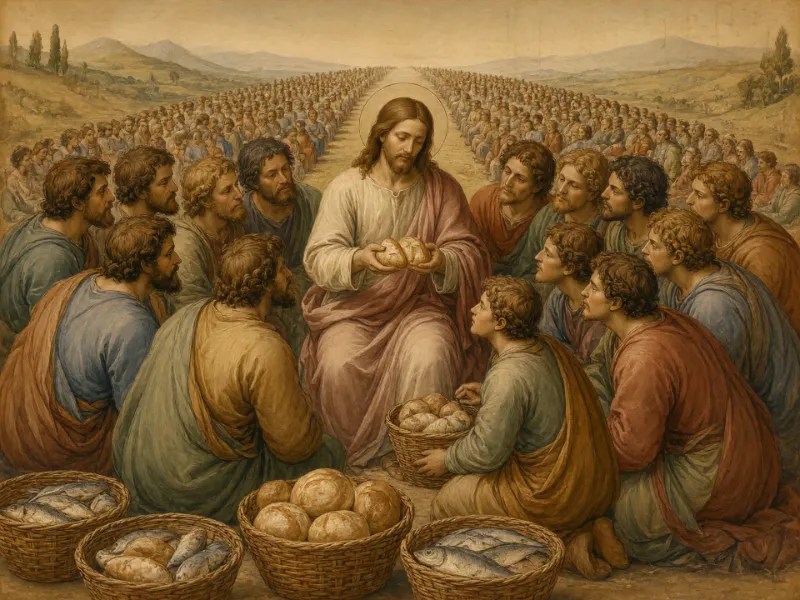
How many times does the Bible tell us to give thanks?
The words “give thanks” come 35 times in the King James Version, in 34 verses, 20 of them in the Psalms. Fourteen are direct calls, like “O give thanks unto the LORD; for he is good: for his mercy endureth for ever” (Psalm 136:1). The other 21 are vows, reports and purposes, such as David’s “Therefore I will give thanks unto thee, O LORD, among the heathen” (2 Samuel 22:50). “Be thankful” comes twice, in Psalm 100:4 and Colossians 3:15.
Psalm 136 keeps calling. It opens and closes with “O give thanks”, and every one of its 26 verses ends with the same line: “for his mercy endureth for ever.” Twenty-six times the singers are reminded why.
The New Testament often asks in other words, and it asks for thanks in every circumstance. “In every thing give thanks: for this is the will of God in Christ Jesus concerning you,” Paul writes to the Thessalonians (1 Thessalonians 5:18). He tells the Philippians to bring their worries to God with thanks: “Be careful for nothing; but in every thing by prayer and supplication with thanksgiving let your requests be made known unto God” (Philippians 4:6). To the Colossians he says, “And let the peace of God rule in your hearts, to the which also ye are called in one body; and be ye thankful” (Colossians 3:15), and a verse later, “And whatsoever ye do in word or deed, do all in the name of the Lord Jesus, giving thanks to God and the Father by him” (Colossians 3:17). The Ephesians hear the widest call of all: “Giving thanks always for all things unto God and the Father in the name of our Lord Jesus Christ” (Ephesians 5:20).
That can sound hard to someone in grief or pain. Paul does not ask anyone to call evil good. “In every thing” means thanks offered in the middle of every situation, and Philippians 4:6 sets it beside honest requests. We may ask God for help and thank him in the same prayer. The verses are printed in full, with others, in Bible verses about thankfulness, and short prayers that put them into words are in prayers of thanks to God.
What was the thank offering in Israel?
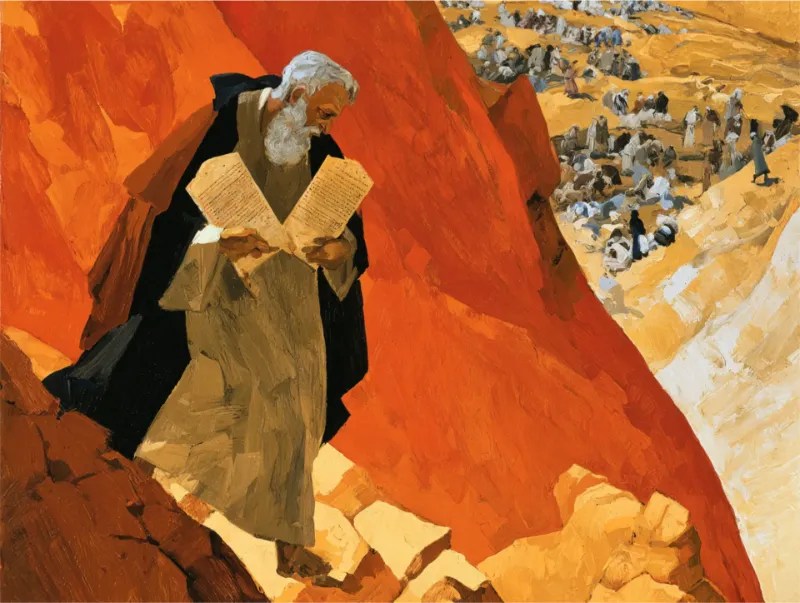
The law of Moses gave thanks its own sacrifice. The thank offering was a kind of peace offering: “If he offer it for a thanksgiving, then he shall offer with the sacrifice of thanksgiving unleavened cakes mingled with oil” (Leviticus 7:12), with leavened bread besides, and the meat “shall be eaten the same day that it is offered; he shall not leave any of it until the morning” (Leviticus 7:15). Thanks was a meal, eaten fresh. The psalms take up the same words: “Offer unto God thanksgiving; and pay thy vows unto the most High” (Psalm 50:14), and “I will offer to thee the sacrifice of thanksgiving, and will call upon the name of the LORD” (Psalm 116:17). Jonah, praying from inside the fish, promised the same: “But I will sacrifice unto thee with the voice of thanksgiving” (Jonah 2:9).
Thanks was also a daily duty of worship. David appointed Levites “to record, and to thank and praise the LORD God of Israel” (1 Chronicles 16:4), and their duty was “to stand every morning to thank and praise the LORD, and likewise at even” (1 Chronicles 23:30). When the walls of Jerusalem were rebuilt, Nehemiah “appointed two great companies of them that gave thanks” to walk the walls in procession (Nehemiah 12:31). Daniel kept the habit even after the king’s decree against prayer was signed: “he kneeled upon his knees three times a day, and prayed, and gave thanks before his God, as he did aforetime” (Daniel 6:10). The decree changed nothing about his day.
One rabbinic teaching sets this offering above all others. The midrash Leviticus Rabbah records it in the name of Rabbi Menahem of Galya: “In the future, all the offerings will be abolished but the thanks offering will not be abolished. All the prayers will be abolished, but the thanksgiving [prayer] will not be abolished.” The rabbis read it from Jeremiah 33:11, which promises that people will again bring thank offerings to the house of the LORD; the King James Version calls them “the sacrifice of praise”. When everything else is finished, thanks remains.
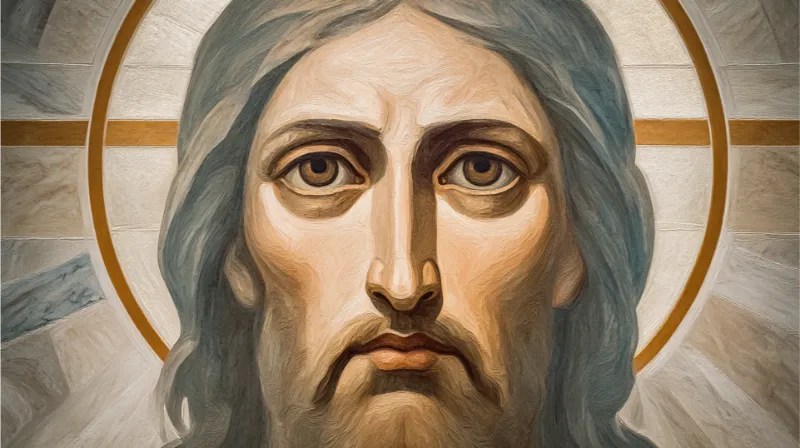
How did Jesus give thanks?
Aloud, and often. “I thank thee, O Father, Lord of heaven and earth, because thou hast hid these things from the wise and prudent, and hast revealed them unto babes” (Matthew 11:25). Before feeding the five thousand, “Jesus took the loaves; and when he had given thanks, he distributed to the disciples” (John 6:11). At the open tomb of Lazarus he said, “Father, I thank thee that thou hast heard me” (John 11:41). At the Last Supper “he took bread, and gave thanks, and brake it, and gave unto them, saying, This is my body which is given for you” (Luke 22:19), and over the cup “he took the cup, and gave thanks, and gave it to them” (Matthew 26:27). He gave thanks over bread he called his own body.
His best-known lesson on thanks is the ten lepers of Luke 17:11–19. All ten asked for mercy, and all ten were cleansed on the road. “And one of them, when he saw that he was healed, turned back, and with a loud voice glorified God, And fell down on his face at his feet, giving him thanks: and he was a Samaritan.” Jesus asked, “Were there not ten cleansed? but where are the nine?” Ten received the gift. One brought it back as thanks, and to him Jesus said, “Arise, go thy way: thy faith hath made thee whole.”
Why is Communion called the Eucharist?
Because eucharistia is the Greek for thanksgiving, and every account of the Last Supper has Jesus giving thanks. Paul passes on what he received in those words: “the Lord Jesus the same night in which he was betrayed took bread: And when he had given thanks, he brake it” (1 Corinthians 11:23–24). On the night of his betrayal, Jesus gave thanks. The Catechism of the Catholic Church explains the name: “Eucharist, because it is an action of thanksgiving to God.” The Didache, an early church manual that the Catholic Encyclopedia places in the first century or else in some backwater of church life, already calls the meal by that word: “Now concerning the Thanksgiving (Eucharist), thus give thanks.”
Many Protestant churches prefer the name Paul uses in 1 Corinthians 11:20, the Lord’s Supper, and the Catechism lists that name too. Whatever a church calls the meal and however it understands it, the words of thanks over the bread come from the same Gospel accounts. And the old name still carries charis inside it: grace given at the table, and thanks returned.


Leave a Reply