
 English
 Chinese
 Dutch
 Arabic
 Spanish
 Portuguese
 Russian
 French
 Italian
 German
 Japanese
Jesus was born in Bethlehem because it was David’s home town, and the ruler God promised was to come from there. The prophet Micah had named the town (Micah 5:2), and Luke tells how it came about: a Roman census sent Joseph there “because he was of the house and lineage of David” (Luke 2:4).
David was out with his father’s sheep at Bethlehem when the prophet Samuel came to anoint him, so the town knew shepherds long before it knew a king. When the tribes of Israel made him king, they reminded him of what God had said: “Thou shalt feed my people Israel” (2 Samuel 5:2). The promise made to a shepherd king came true among shepherds. On the night Jesus was born there were shepherds in the fields near Bethlehem again, and the angel told them, “For unto you is born this day in the city of David a Saviour, which is Christ the Lord” (Luke 2:11).
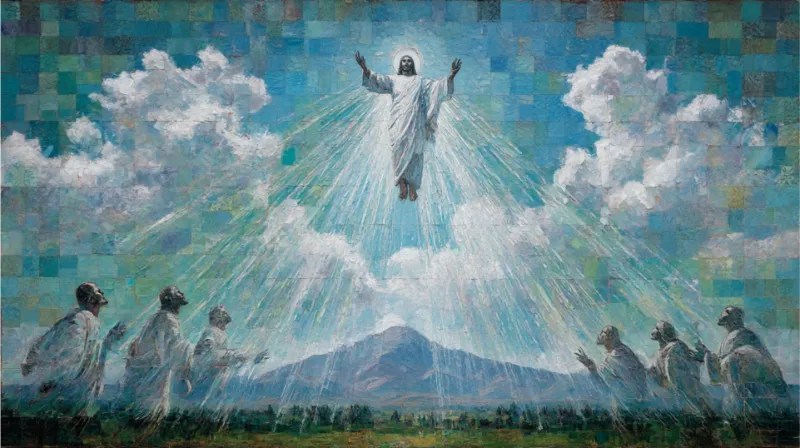
What did Micah prophesy about Bethlehem?
Micah preached in Judah “in the days of Jotham, Ahaz, and Hezekiah, kings of Judah” (Micah 1:1), in Isaiah’s time. In the middle of warnings of siege and of exile to Babylon (Micah 4:10), he turned to Bethlehem, about 9 to 10 km (5 to 6 miles) south of Jerusalem, and spoke to it by name:
“But thou, Bethlehem Ephratah, though thou be little among the thousands of Judah, yet out of thee shall he come forth unto me that is to be ruler in Israel; whose goings forth have been from of old, from everlasting.” (Micah 5:2)
Ephratah is an old name for the same place, and Micah adds it so that his hearers know which Bethlehem he means, since there was a second one, in Zebulun in the north. He calls the town little, and it was a village; how many people lived there is weighed in how big Bethlehem was when Jesus was born. Out of that village God promised a ruler whose goings forth were “from of old, from everlasting”, the one who was before all ages coming out of one of Judah’s little places. Micah goes on to speak of a birth, for Israel would be given up “until the time that she which travaileth hath brought forth” (Micah 5:3), and he says what kind of ruler this child will be: “he shall stand and feed in the strength of the Lord, in the majesty of the name of the Lord his God” (Micah 5:4). The king from Bethlehem would feed his people as a shepherd feeds his flock, as David had.
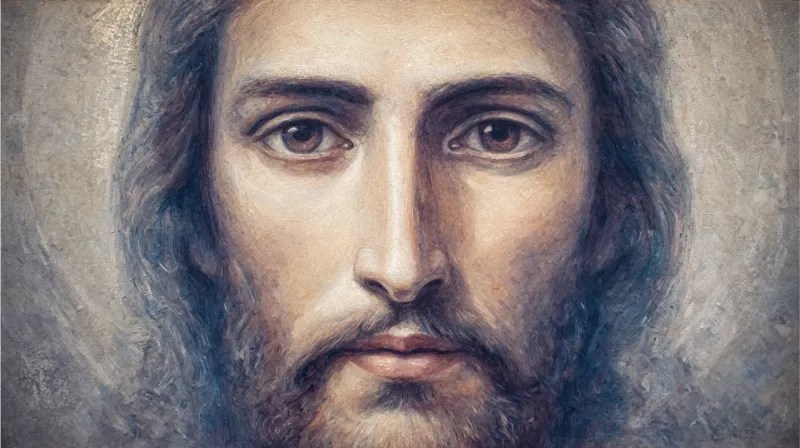
Why was Bethlehem called the city of David?
In most of the Old Testament, “the city of David” means somewhere else: the fortress of Zion in Jerusalem, which David captured. “The strong hold of Zion: the same is the city of David” (2 Samuel 5:7). Luke gives the title to Bethlehem instead, twice in one chapter (Luke 2:4, 11), and in doing so he takes us back past the palace to the town where the shepherd boy began.
David’s family lived there, and he grew up there as the youngest son of Jesse: “Now David was the son of that Ephrathite of Bethlehemjudah, whose name was Jesse” (1 Samuel 17:12). When God rejected Saul as king, he sent Samuel to Bethlehem with a horn of oil: “I will send thee to Jesse the Bethlehemite: for I have provided me a king among his sons” (1 Samuel 16:1). Jesse made seven of his sons pass before the prophet, and none of them was chosen. The one God wanted was still in the fields: “There remaineth yet the youngest, and, behold, he keepeth the sheep” (1 Samuel 16:11). Samuel anointed him there, among his brothers, a boy called in from the flock.
The family line ran through Bethlehem too. Matthew’s list of Jesus’ ancestors names “Booz”, the King James spelling of Boaz, the Bethlehem farmer who married Ruth: “Booz begat Obed of Ruth; and Obed begat Jesse; And Jesse begat David the king” (Matthew 1:5–6). Ruth was a woman of Moab, a foreign widow who came to Bethlehem with Naomi “in the beginning of barley harvest” (Ruth 1:22), and God wrote her into the family of the Messiah. The town’s Hebrew name, Beth Lechem, means “house of bread”, and what Christians have heard in that name is told in why Jesus was laid in a manger.
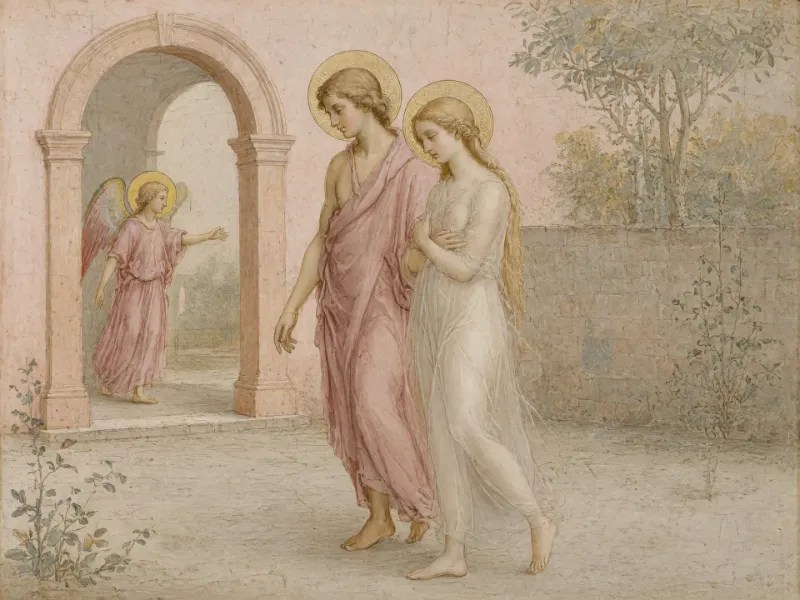
How did Matthew and the scribes read Micah’s prophecy?
The chief priests and scribes read it as the answer to a simple question, where the Christ would be born. When the wise men came asking for the newborn King of the Jews, Herod “demanded of them where Christ should be born” (Matthew 2:4). They answered at once: “In Bethlehem of Judaea: for thus it is written by the prophet” (Matthew 2:5). They quoted Micah, and Matthew gives the last line of their answer in words that recall David: “for out of thee shall come a Governor, that shall rule my people Israel” (Matthew 2:6).
Matthew heard a shepherd in Micah’s ruler. His word for “rule”, poimainō, means to tend a flock, and the New American Bible translates the line “who is to shepherd my people Israel”, pointing the reader back to God’s word to David, “Thou shalt feed my people Israel.” The ruler Micah promised and the boy Samuel called in from the sheep meet in a single line of Matthew.
The crowds in Jerusalem knew the prophecy as well, and some of them turned it against Jesus. When others said of him, “This is the Christ”, they answered, “Shall Christ come out of Galilee? Hath not the scripture said, That Christ cometh of the seed of David, and out of the town of Bethlehem, where David was?” (John 7:41–42). They knew where he had grown up and did not know where he had been born, and the scripture they quoted against him was on his side.
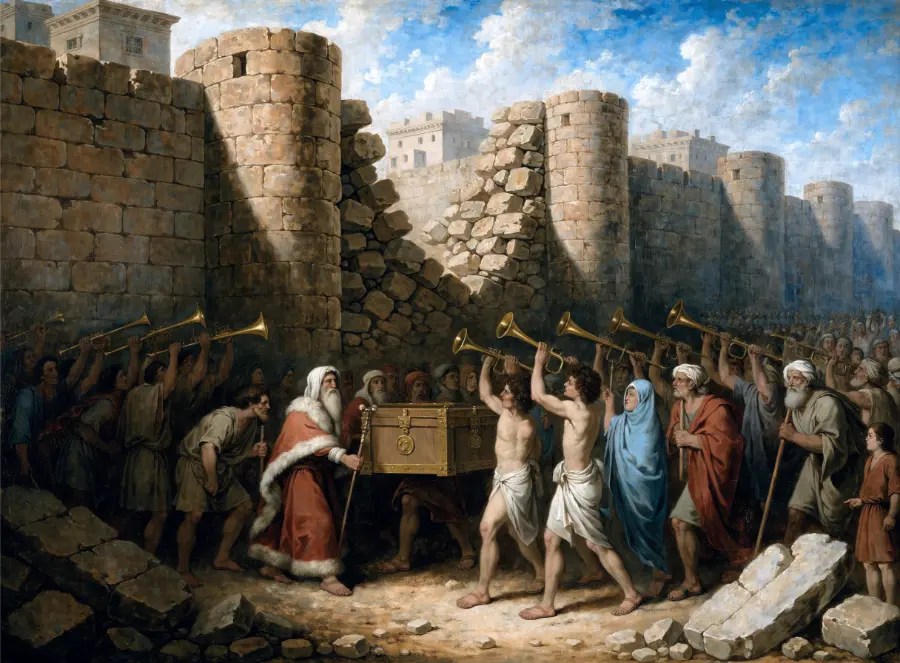
How do Jewish readers understand Micah 5:2?
Jewish teachers have long heard in Micah’s words the Messiah of David’s line, and Christians reading the verse are in old company. In Hebrew Bibles it is numbered Micah 5:1. The Aramaic Targum, a Jewish translation of the prophets made for synagogue and home when Aramaic had become the people’s language, puts the word Messiah, meshicha, into the verse itself: from Bethlehem, it says, the Messiah shall come forth before God. Rashi, the eleventh-century commentator from Troyes in France, explains the words “from you shall emerge for Me” as “the Messiah, son of David”, and for Micah’s “from of old” he points to a line of the Psalms: “Before the sun his name is Yinnon”.
Why did Micah call the town little? In Rashi’s reading, Bethlehem should have counted for least among Judah’s clans “because of the stigma of Ruth the Moabitess in you.” Yet the next note in his commentary gives that same town the Messiah. The foreign widow some would have held against Bethlehem is the very woman God placed in David’s line. Christians believe that the son of David foretold by Micah was born there in the days of Herod. Rashi, writing more than a thousand years after that birth, spoke of the King Messiah as one who is yet to come.
Why did Mary and Joseph go to Bethlehem?
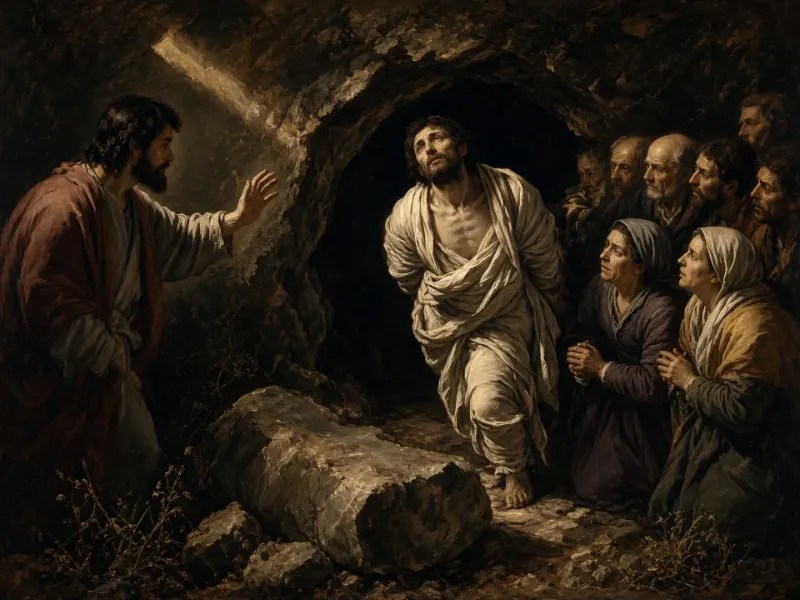
Luke says an emperor’s order sent them: “there went out a decree from Caesar Augustus that all the world should be taxed… And all went to be taxed, every one into his own city” (Luke 2:1, 3). Joseph’s own city was Bethlehem, because he belonged to David’s family, and he went there with Mary, who was expecting her child (Luke 2:4–5).
Augustus counted his subjects for his treasury, and by that order a family from Nazareth came to the town Micah had named some seven hundred years before, in time for the child to be born there. The emperor never knew whose word he was keeping. Matthew tells of no journey at all: he begins with the child already born in Bethlehem and ends with the family settling in Nazareth, and how his account and Luke’s fit together is shown in where Jesus was born and where he grew up.
Which promise did God keep in Bethlehem?
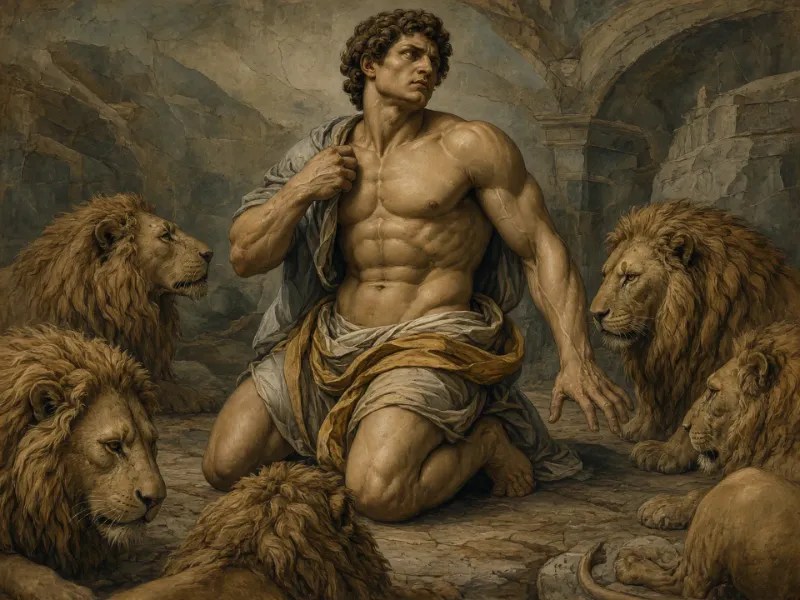
In Bethlehem God kept his promise in the very town he had named, and he kept it in his own way. He had called a shepherd boy from his father’s flock there to feed his people, and about a thousand years later he sent his Son to be born in the same town, and the first to hear of it were men out in the fields with their sheep.
The son of David born in Bethlehem still feeds his flock, and we are that flock now: the frightened, the foreign, the poor, fed as Micah said he would feed them, “in the strength of the Lord”. He knows each of us, as he said a shepherd knows his own: “he calleth his own sheep by name, and leadeth them out” (John 10:3).
Related reading
- Where was Jesus born, Bethlehem or Nazareth?
- How big was Bethlehem when Jesus was born?
- Who were the shepherds in the Nativity story?
- Which Isaiah verses foretell Jesus’ birth?
- Why Jesus was born in a manger
- When was Jesus born?


Leave a Reply