
 English
 Chinese
 Dutch
 Arabic
 Spanish
 Portuguese
 Russian
 French
 Italian
 German
 Japanese
“Not today, Satan” is a joking way to say the devil will not win today. People say it to turn down a temptation or to face a hard day. The drag performer Bianca Del Rio made it famous on RuPaul’s Drag Race in 2014. It is not a Bible verse, though it echoes Jesus’ words to the devil.
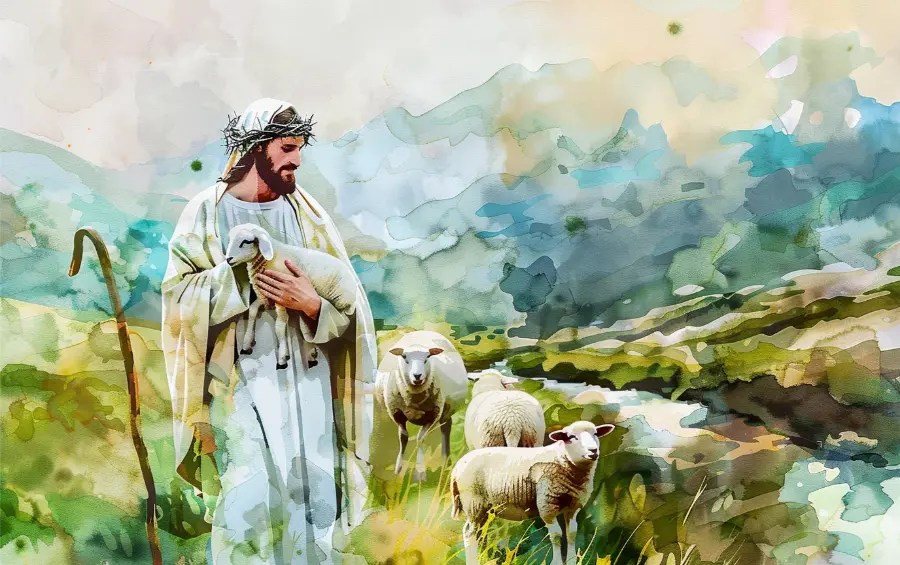
The best word in it may be “today”. When Jesus sent the devil away in the wilderness, Luke says the devil left him “for a season.” The fight was not over for good, even for him. We say no today, and tomorrow we ask for the grace to say it again.
What does “Not today, Satan” mean?
It is a refusal with a time limit. You are not claiming to have beaten the devil for good, only to have held him off until tomorrow, and that modesty is part of the joke. When Official London Theatre explained Del Rio’s catchphrase in 2019, it said the phrase means that Satan “will not get in your way and stop you from achieving today.”
The Satan in the phrase can be the devil himself or anything that threatens to spoil the day: a craving, a traffic jam, a gloomy morning. A Houston magazine pictured its readers muttering it while merging onto the I-10 freeway. Many Christians say it with more weight, as a short refusal of a real temptation. Heather Riggleman, writing for Crosswalk in 2021, teased the habit: avoid “failure, shame, or temptation,” she wrote, and you have “earned the right to proudly declare the phrase,” at least “according to today’s Christian view.”
Where does “Not today, Satan” come from?
It became famous through Bianca Del Rio, the drag persona of the comedian Roy Haylock, who comes from New Orleans. She competed in the sixth season of RuPaul’s Drag Race in 2014, and TV Guide reported on 20 May 2014 that she had been named the winner the night before. She “stormed through season six,” a New Orleans arts site later recalled, leaving “a trail of withering one-liners behind her,” and this one stuck. In Official London Theatre’s words, the line “became Bianca’s catchphrase throughout season six.”
Did she invent it? Accounts differ. Houstonia wrote in 2018 that she “coined the phrase.” Official London Theatre says she “popularised” it, and Fox News that it “was made popular by” her. Nobody records when, or by whom, the words were first spoken, or names the episode in which she first used them.
How the phrase spread
| Year | What happened | Reported by |
|---|---|---|
| 2014 | Del Rio uses the line on season six of RuPaul’s Drag Race and wins on 19 May | TV Guide; Official London Theatre |
| 2016 | Her stand-up tour, Not Today Satan, plays Europe, Australia and the United States | Pop+Smart NOLA |
| 2017 | The tour plays ten British dates in February; the slogan sells on merchandise | Attitude; Fox News |
| 2018 | A Houston magazine assumes its readers have heard it | Houstonia |
| 2021 | A Christian site calls it widely popular in Christian circles, on mugs, key chains and T-shirts | Crosswalk |
If you remember “Not today” on its own, as a line from the screen, you may be thinking of Game of Thrones. There, “What do we say to the god of death?” is Syrio Forel’s famous line, as Time called it in 2019, and Arya Stark’s answer is “Not today.”
Is “Not today, Satan” in the Bible?
No. The words are nowhere in Scripture, but they sound like Jesus in the wilderness. The devil tempted him three times, and each time Jesus answered, “It is written.” After the third temptation, the offer of “all the kingdoms of the world,” he sent the tempter away: “Get thee hence, Satan: for it is written, Thou shalt worship the Lord thy God, and him only shalt thou serve” (Matthew 4:10). His refusal stood on the word of God. Why the Son of God could be tempted at all is a question of its own, answered in can Jesus be tempted?
Luke closes the same scene with a line that suits the “today” in the phrase: “And when the devil had ended all the temptation, he departed from him for a season” (Luke 4:13). The refusal held, and Luke does not pretend the devil was gone for good. If the tempter came back to the Lord, he will come back to us.
Jesus named Satan again when he rebuked a friend. He had told the disciples that he must suffer and be killed in Jerusalem, and Peter “began to rebuke him, saying, Be it far from thee, Lord.” Jesus turned and said, “Get thee behind me, Satan: thou art an offence unto me: for thou savourest not the things that be of God, but those that be of men” (Matthew 16:22–23). This time the temptation came through someone who loved him. Riggleman traces the phrase to this rebuke.
The apostles turn the same refusal into a command for every believer. “Submit yourselves therefore to God. Resist the devil, and he will flee from you,” James writes (James 4:7). Notice the order: first we bow to God, then we stand against the devil. Peter warns, “Be sober, be vigilant; because your adversary the devil, as a roaring lion, walketh about, seeking whom he may devour,” and goes on, “Whom resist stedfast in the faith” (1 Peter 5:8–9). Paul is briefer still: “Neither give place to the devil” (Ephesians 4:27).
Have Christians said anything like it before?
Yes, for centuries, at the very start of Christian life. Before anyone is baptised, they say no to Satan. “Baptism in the Church begins with the rejection of Satan and the acceptance of Christ,” the Orthodox Church in America teaches. The Catechism of the Catholic Church says that before baptism the candidate “explicitly renounces Satan” (1237). In the Church of England’s Book of Common Prayer of 1662, the priest asks the godparents, “Dost thou, in the name of this Child, renounce the devil and all his works,” and they answer, “I renounce them all.”
A shorter, sharper formula is cut into the Medal of Saint Benedict. Around its edge run the initials of a Latin verse that begins “Vade retro Satana,” which the Catholic Encyclopedia of 1913 translates “Begone, Satan, do not suggest to me thy vanities — evil are the things thou profferest, drink thou thy own poison.” The full words go back to a manuscript written in 1415. Their meaning had been forgotten by 1647, when an investigation at the Abbey of Metten in Bavaria found the letters painted on its walls. The medal’s words and how they are prayed are explained in the Saint Benedict prayer against evil.

Is it all right for a Christian to say “Not today, Satan”?
Christians disagree, and each side has a verse. Many say it as a quick act of the resistance James commands. Bayless Conley, in his devotional Answers for Each Day, argues from James 4:7 that the verse “does not say, ‘Pray that God will resist the devil for you.’” On that reading, you may tell the devil no out loud.
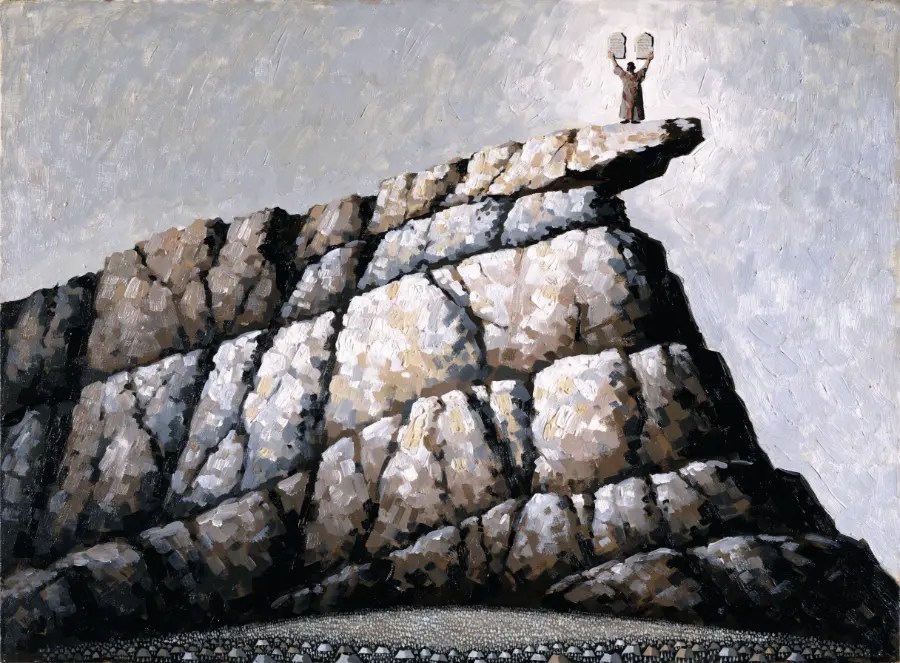
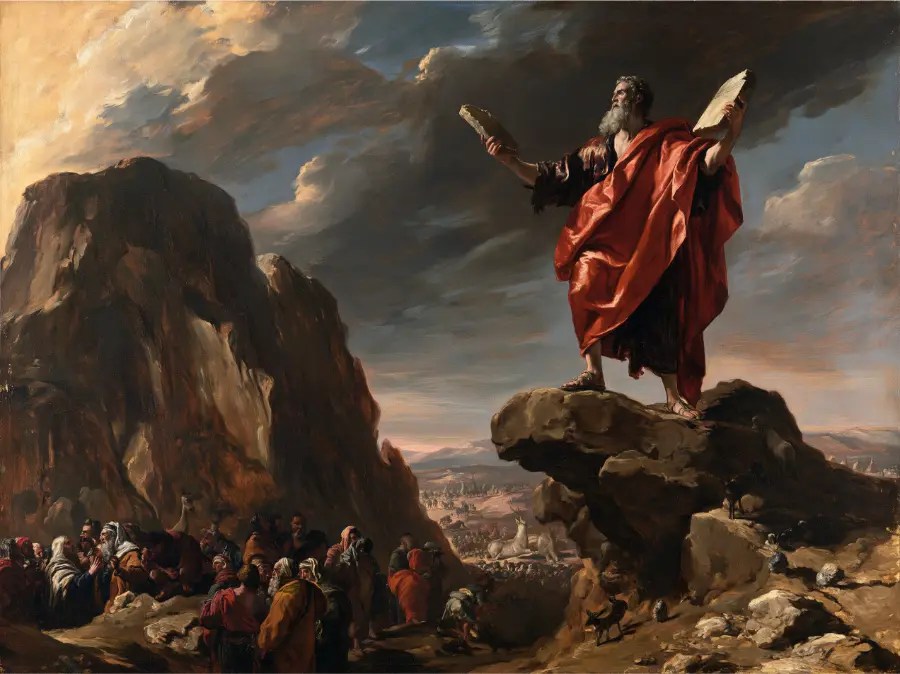
Others point to the letter of Jude. When the archangel Michael disputed with the devil over the body of Moses, he “durst not bring against him a railing accusation, but said, The Lord rebuke thee” (Jude 9). Michael’s words echo Zechariah 3:2, where the Lord says to Satan, “The Lord rebuke thee, O Satan.” Verse By Verse Ministry reads Jude as forbidding believers to rebuke Satan at all: “not even the most powerful archangel Michael had authority to rebuke the enemy.” Conley answers that Jude was writing against people who “speak evil of dignitaries,” not against resisting the devil.
Some who allow the phrase still worry about how it is used. Riggleman says the question “seems like a gray area.” She warns, “We should never cheapen God’s words or His sacrifice,” and urges believers in trouble to turn “to the Word of God instead of some trending phrase or hashtag.” Whether any light-hearted religious phrase is fitting is a wider question, taken up in whether saying “Oh my God” is a sin.
Michael and James stand closer than the argument suggests. Michael left the rebuke to the Lord, and James tells us to submit to God before we resist. Said as a prayer, the old refusal rests on a promise for the day you are in: “Resist the devil, and he will flee from you” (James 4:7).


Leave a Reply