
 English
 Chinese
 Dutch
 Arabic
 Spanish
 Portuguese
 Russian
 French
 Italian
 German
 Japanese
In the Bible, choosing a husband or wife is a matter of faith and character. Paul lets a widow remarry on one condition, that the man “must belong to the Lord” (1 Corinthians 7:39), and Proverbs praises a woman who fears the Lord above charm and beauty (Proverbs 31:30).
Proverbs 18:22 and 19:14 call a good wife favor and a gift from the Lord. Genesis 24 tells how Abraham’s servant prayed at a spring while seeking a wife for Isaac, and Song of Songs 2:7 warns against stirring up love before its time.
A spouse as a gift from God

Genesis 2:18
“The Lord God said, “It is not good for the man to be alone. I will make a helper suitable for him.””
Reflection: God says this before the woman is made. The animals are then brought to the man to be named, and “for Adam no suitable helper was found” (2:20). When God brings the woman to him, the man’s first words are “bone of my bones and flesh of my flesh,” and verse 24 draws from the scene the pattern of a man leaving his father and mother and being united to his wife.

Proverbs 18:22
“He who finds a wife finds what is good and receives favor from the Lord.”
Reflection: The proverb puts two things in one line: the man finds a wife, and in finding her he “receives favor from the Lord.” Proverbs also names the opposite outcome in 21:9: “Better to live on a corner of the roof than share a house with a quarrelsome wife.”
Proverbs 19:14
“Houses and wealth are inherited from parents, but a prudent wife is from the Lord.”
Reflection: The saying sets what parents can hand down, houses and wealth, against a prudent wife, who comes “from the Lord.” The verse before it names the opposite case: “a quarrelsome wife is like the constant dripping of a leaky roof.”
Character that Proverbs, Ruth and Peter praise in a wife

Proverbs 31:10
“A wife of noble character who can find? She is worth far more than rubies.”
Reflection: The question opens the poem that closes Proverbs, which describes a wife’s work, trade, household and speech through verse 31. The next verses give the first measure of her worth: “Her husband has full confidence in her and lacks nothing of value. She brings him good, not harm, all the days of her life.”
Proverbs 31:30
“Charm is deceptive, and beauty is fleeting; but a woman who fears the Lord is to be praised.”
Reflection: Near the end of the same poem, charm is called deceptive and beauty fleeting, and praise goes to the woman “who fears the Lord.” Verse 31 adds that her own works should “bring her praise at the city gate,” where the town’s business was done in public.

Ruth 3:11
“And now, my daughter, don’t be afraid. I will do for you all you ask. All the people of my town know that you are a woman of noble character.”
Reflection: Boaz says this to Ruth, a Moabite widow, after praising her for not running “after the younger men, whether rich or poor” (3:10). He had heard of her before: in chapter 2 he tells her he has been told “all about what you have done for your mother-in-law since the death of your husband.” In both chapters Boaz speaks of what Ruth has done, and her reputation is known to the whole town.
1 Peter 3:3-4
“Your beauty should not come from outward adornment, such as elaborate hairstyles and the wearing of gold jewelry or fine clothes. Rather, it should be that of your inner self, the unfading beauty of a gentle and quiet spirit, which is of great worth in God’s sight.”
Reflection: Peter writes to women who are already married, some of them to husbands who “do not believe the word” (3:1). He sets elaborate hairstyles, gold and fine clothes against “the unfading beauty of a gentle and quiet spirit,” which God values, and in verse 7 tells husbands to treat their wives as “heirs with you of the gracious gift of life.”
The character asked of every believer

Galatians 5:22-23
“But the fruit of the Spirit is love, joy, peace, forbearance, kindness, goodness, faithfulness, gentleness and self-control. Against such things there is no law.”
Reflection: Paul sets this list against the “acts of the flesh” in verses 19-21, which include “hatred, discord, jealousy, fits of rage, selfish ambition.” The letter is written to churches, and neither list mentions marriage. Verse 16 frames the pair: “walk by the Spirit, and you will not gratify the desires of the flesh.”

Colossians 3:12
“Therefore, as God’s chosen people, holy and dearly loved, clothe yourselves with compassion, kindness, humility, gentleness and patience.”
Reflection: Paul addresses the church at Colossae as “God’s chosen people” and tells them to put on these qualities like clothing. The next verses add forgiveness and love, “which binds them all together in perfect unity,” and a few verses later (3:18-19) he turns to wives and husbands, telling husbands to love their wives “and do not be harsh with them.”
1 Corinthians 13:4-7
“Love is patient, love is kind. It does not envy, it does not boast, it is not proud. It does not dishonor others, it is not self-seeking, it is not easily angered, it keeps no record of wrongs. Love does not delight in evil but rejoices with the truth. It always protects, always trusts, always hopes, always perseveres.”
Reflection: The chapter opens by setting love above tongues, prophecy, knowledge and a faith that can move mountains: without love, Paul says, “I am nothing.” What follows describes love by what it does and refuses to do, down to keeping “no record of wrongs.” Its setting is a church, though nothing in the list is limited to church life.
Marrying a fellow believer

1 Corinthians 7:39
“A woman is bound to her husband as long as he lives. But if her husband dies, she is free to marry anyone she wishes, but he must belong to the Lord.”
Reflection: Paul is speaking of a widow. She may marry “anyone she wishes,” with one condition attached, and in verse 40 he adds his own judgment that she is happier if she stays unmarried. Earlier in the chapter he calls both choices right: “he who marries the virgin does right, but he who does not marry her does better” (7:38), and to the unmarried he says, “it is better to marry than to burn with passion” (7:9).

2 Corinthians 6:14
“Do not be yoked together with unbelievers. For what do righteousness and wickedness have in common? Or what fellowship can light have with darkness?”
Reflection: Paul’s command is general. The pairs that follow are righteousness and wickedness, light and darkness, Christ and Belial, “the temple of God and idols,” and the paragraph ends with “Come out from them and be separate” (6:17). Marriage is not named in the passage.
Asking God for guidance
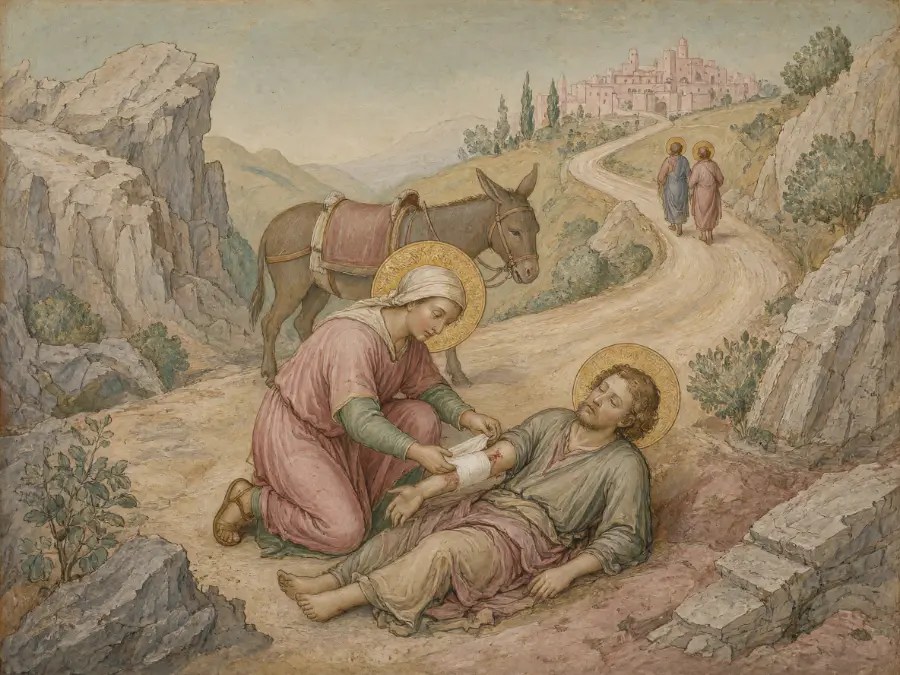
Genesis 24:12-14
“Then he prayed, “Lord, God of my master Abraham, make me successful today, and show kindness to my master Abraham. See, I am standing beside this spring, and the daughters of the townspeople are coming out to draw water. May it be that when I say to a young woman, ‘Please let down your jar that I may have a drink,’ and she says, ‘Drink, and I’ll water your camels too’—let her be the one you have chosen for your servant Isaac. By this I will know that you have shown kindness to my master.””
Reflection: Abraham had made his servant swear not to take a wife for Isaac “from the daughters of the Canaanites” but from Abraham’s own relatives (24:3-4). At the spring the servant asks for a sign, and the sign is an act of generosity to a stranger: a woman who offers to water his camels as well. Rebekah arrives “before he had finished praying” (24:15), and her father and brother agree, “This is from the Lord” (24:50). When her mother and brother ask to keep her “ten days or so” and the servant wants to leave at once, they put the question to her, “Will you go with this man?” She answers, “I will go” (24:55-58).
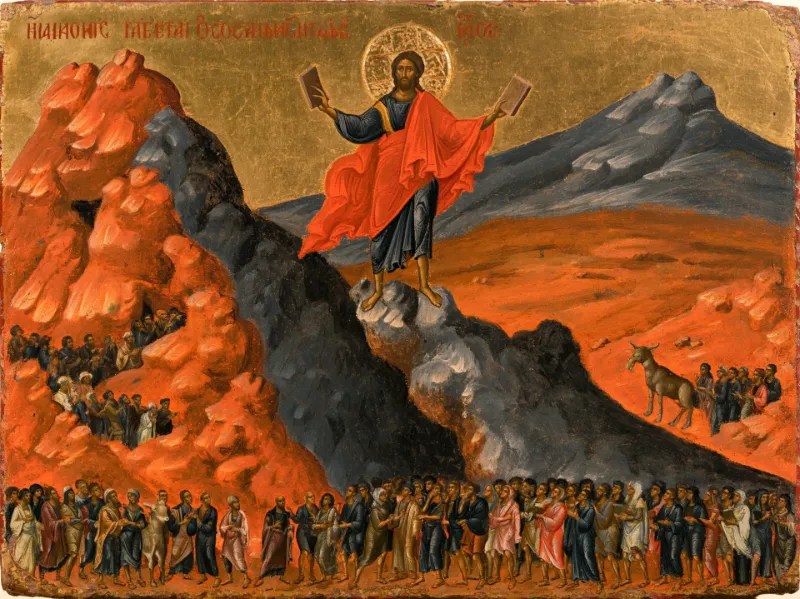
James 1:5
“If any of you lacks wisdom, you should ask God, who gives generously to all without finding fault, and it will be given to you.”
Reflection: The promise is open to anyone who lacks wisdom, and God gives it “without finding fault.” The next verse adds a condition: “when you ask, you must believe and not doubt,” because the one who doubts is “like a wave of the sea, blown and tossed by the wind.”

Proverbs 3:5-6
“Trust in the Lord with all your heart and lean not on your own understanding; in all your ways submit to him, and he will make your paths straight.”
Reflection: The contrast is between leaning on one’s own understanding and submitting to God “in all your ways.” Verse 7 restates it: “Do not be wise in your own eyes; fear the Lord and shun evil.”
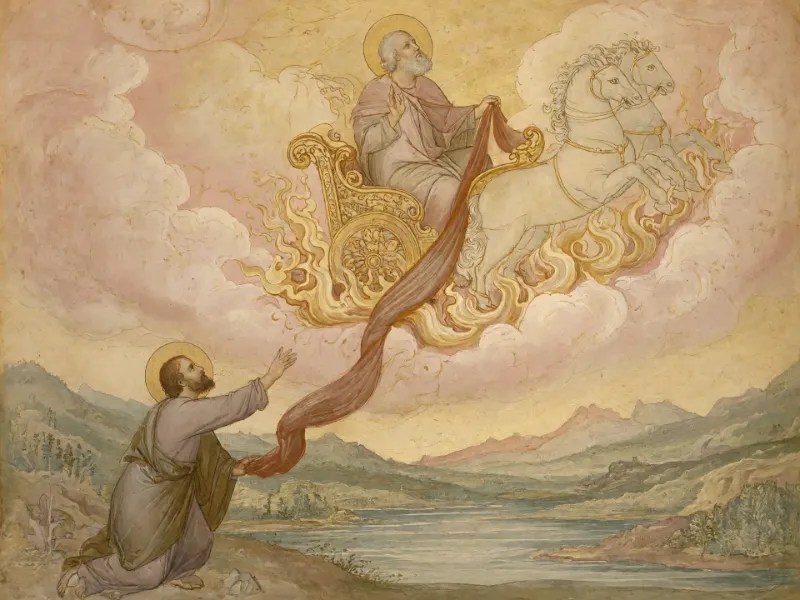
Psalm 32:8
“I will instruct you and teach you in the way you should go; I will counsel you with my loving eye on you.”
Reflection: Psalm 32, headed “Of David,” begins with the blessing of the one whose sin is forgiven and with David’s account of confessing it. At verse 8 an unnamed speaker promises to instruct, and verse 9 warns against being “like the horse or the mule, which have no understanding but must be controlled by bit and bridle.” The guidance is offered to someone willing to be taught.
Not rushing into love
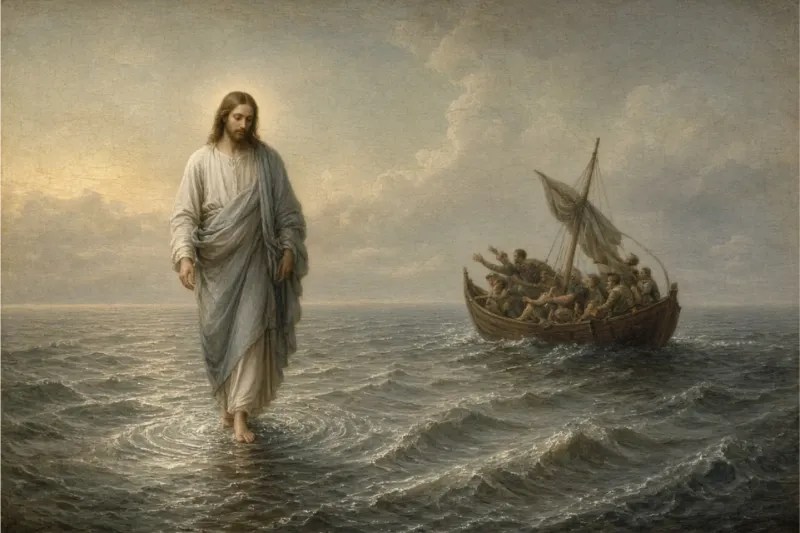
Song of Songs 2:7
“Daughters of Jerusalem, I charge you by the gazelles and by the does of the field: Do not arouse or awaken love until it so desires.”
Reflection: The charge to the daughters of Jerusalem comes three times in the Song, here and at 3:5 and 8:4, each time ending “Do not arouse or awaken love until it so desires.” The book is a set of love poems that delight in the lovers, and the warning about timing stands inside them.


Leave a Reply