
 English
 Chinese
 Dutch
 Arabic
 Spanish
 Portuguese
 Russian
 French
 Italian
 German
 Japanese
Only two of the four Gospels tell the story of Jesus’ birth, and they tell it from different sides.
Matthew follows Joseph, who is told what to do in dreams. Luke follows Mary, who asks the angel how this will happen. Mark and John have no birth narrative. Where the two accounts agree, and each scene in order, is set out in where the Christmas story is in the Bible.
What was promised before
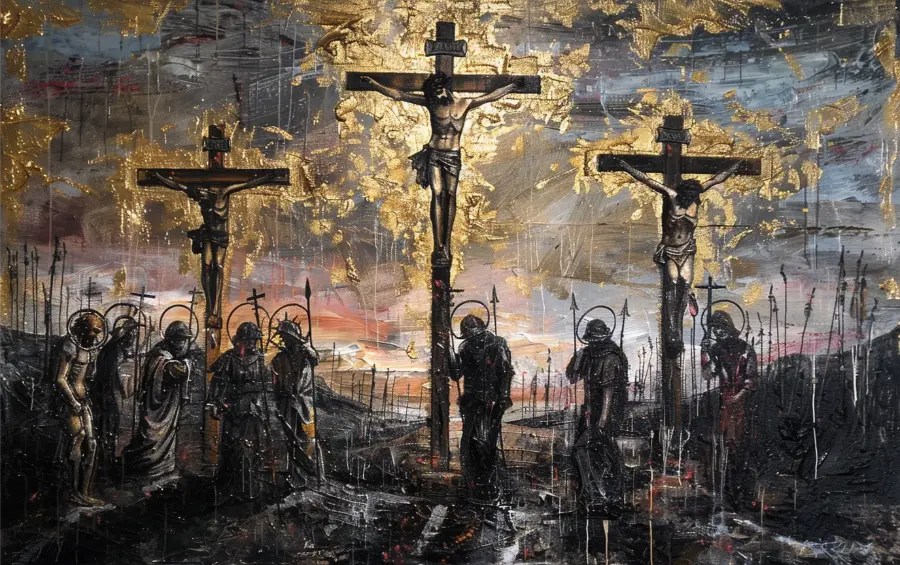
Isaiah 7:14
“Therefore the Lord himself will give you a sign: The virgin will conceive and give birth to a son, and will call him Immanuel.”
Reflection: Isaiah gave this sign to King Ahaz while Aram and Israel threatened Jerusalem, and two verses later he dates it: before the boy knows right from wrong, “the land of the two kings you dread will be laid waste” (7:16). The Hebrew word is almah, which the note in the Catholic New American Bible calls “a young woman of marriageable age”; the Septuagint, the Greek translation, has parthenos, virgin, and Matthew 1:23 follows it. Christians read the verse in more than one way. That same Catholic note reads the sign as reassurance to Ahaz, and the Catechism sees in Mary’s conception “the fulfilment of the divine promise given through the prophet Isaiah” (497); John Calvin read the child as Christ alone, since he is called “God with us.” The verse in its setting is covered in which Isaiah verses foretell Jesus’ birth.
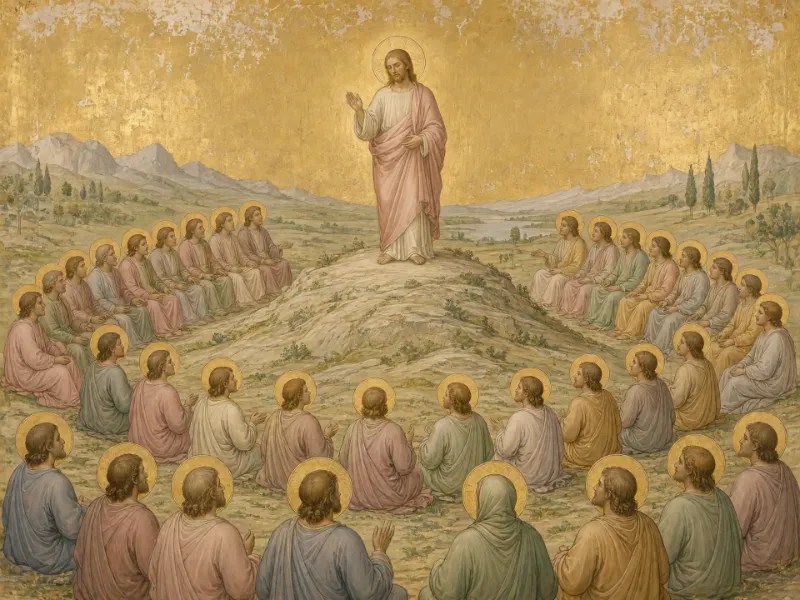
Micah 5:2
“But you, Bethlehem Ephrathah, though you are small among the clans of Judah, out of you will come for me one who will be ruler over Israel, whose origins are from of old, from ancient times.”
Reflection: Ephrathah is an old name joined to Bethlehem. Rachel was buried “on the way to Ephrath (that is, Bethlehem)” (Genesis 35:19), and David was “the son of an Ephrathite named Jesse, who was from Bethlehem in Judah” (1 Samuel 17:12). Micah promises a ruler from David’s own small town.
Isaiah 9:6
“For to us a child is born, to us a son is given, and the government will be on his shoulders. And he will be called Wonderful Counselor, Mighty God, Everlasting Father, Prince of Peace.”
Reflection: The child is given four titles, and the next verse places him on David’s throne with a government and peace that will have no end (9:7).
Luke’s account, which follows Mary
Luke 1:26-28
“In the sixth month of Elizabeth’s pregnancy, God sent the angel Gabriel to Nazareth, a town in Galilee, to a virgin pledged to be married to a man named Joseph, a descendant of David. The virgin’s name was Mary. The angel went to her and said, ‘Greetings, you who are highly favored! The Lord is with you.’”
Reflection: Luke gives the month, the town and the man Mary was pledged to before he gives her name. He places events this way throughout, by time, place and family (compare 1:5; 2:1-2).
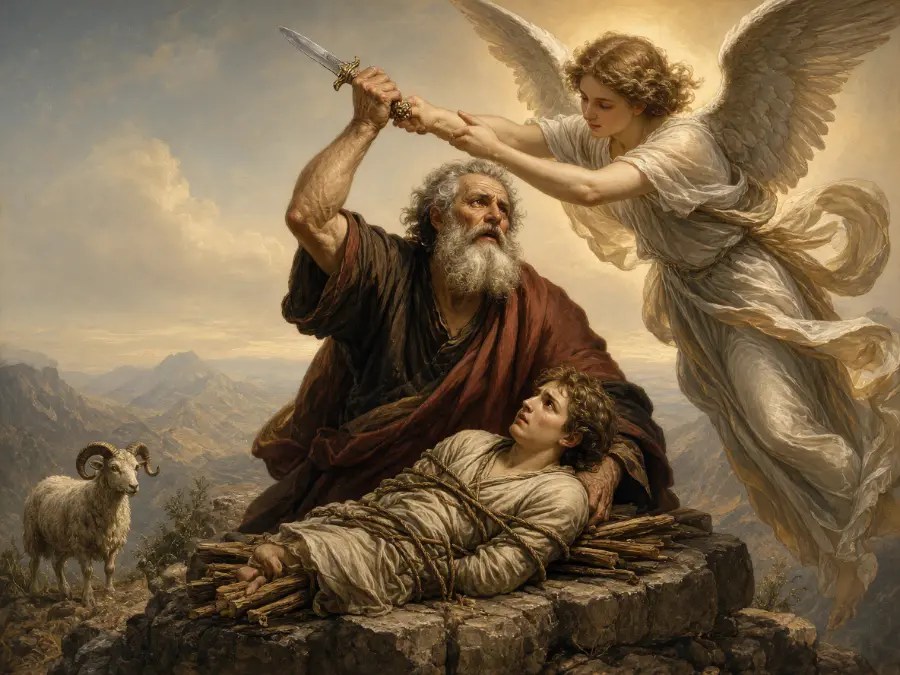
Luke 1:30-33
“But the angel said to her, ‘Do not be afraid, Mary; you have found favor with God. You will conceive and give birth to a son, and you are to call him Jesus. He will be great and will be called the Son of the Most High. The Lord God will give him the throne of his father David, and he will reign over Jacob’s descendants forever; his kingdom will never end.’”
Reflection: Mary asks how this will be, “since I am a virgin” (1:34), and the angel answers her. When Zechariah asked, “How can I be sure of this?” a few verses earlier, he was made unable to speak (1:18-20).
Luke 2:4-5
“So Joseph also went up from the town of Nazareth in Galilee to Judea, to Bethlehem the town of David, because he belonged to the house and line of David. He went there to register with Mary, who was pledged to be married to him and was expecting a child.”
Reflection: The journey was for the census described in 2:1-3, when “everyone went to their own town to register.” Luke adds that Mary made the journey while she “was expecting a child.”

Luke 2:6-7
“While they were there, the time came for the baby to be born, and she gave birth to her firstborn, a son. She wrapped him in cloths and placed him in a manger, because there was no guest room available for them.”
Reflection: The word behind guest room is kataluma, and Luke uses it again for the room where the Last Supper is held (22:11). For the inn in the parable of the good Samaritan he uses a different word (10:34). The King James Version’s “no room for them in the inn” translates the same word.
Matthew’s account, which follows Joseph
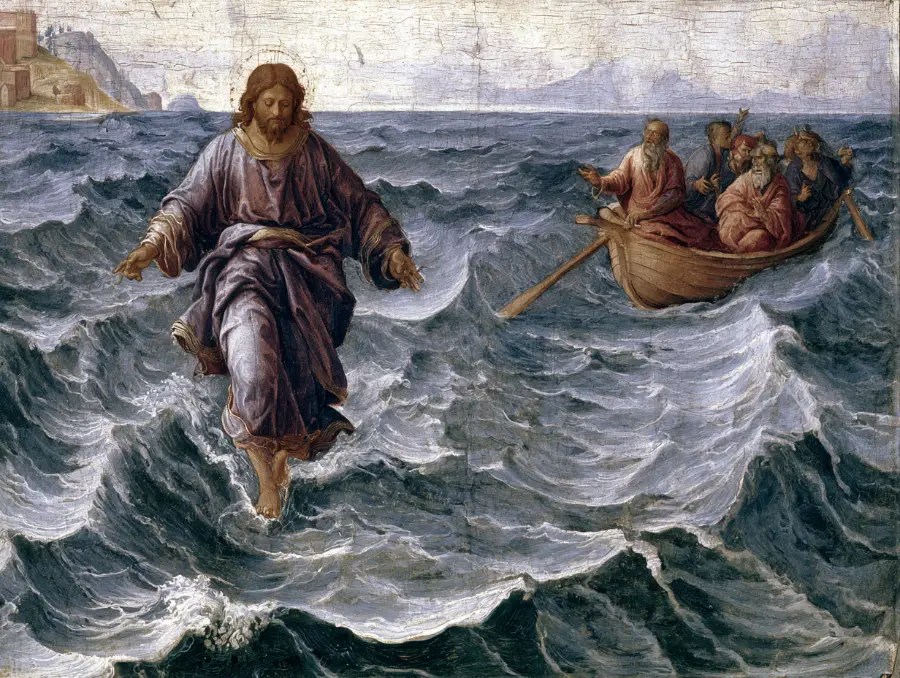
Matthew 1:20-21
“But after he had considered this, an angel of the Lord appeared to him in a dream and said, ‘Joseph son of David, do not be afraid to take Mary home as your wife, because what is conceived in her is from the Holy Spirit. She will give birth to a son, and you are to give him the name Jesus, because he will save his people from their sins.’”
Reflection: Joseph had already decided to divorce Mary quietly because he “did not want to expose her to public disgrace” (1:19). The angel comes after that decision and tells him to take her home as his wife.
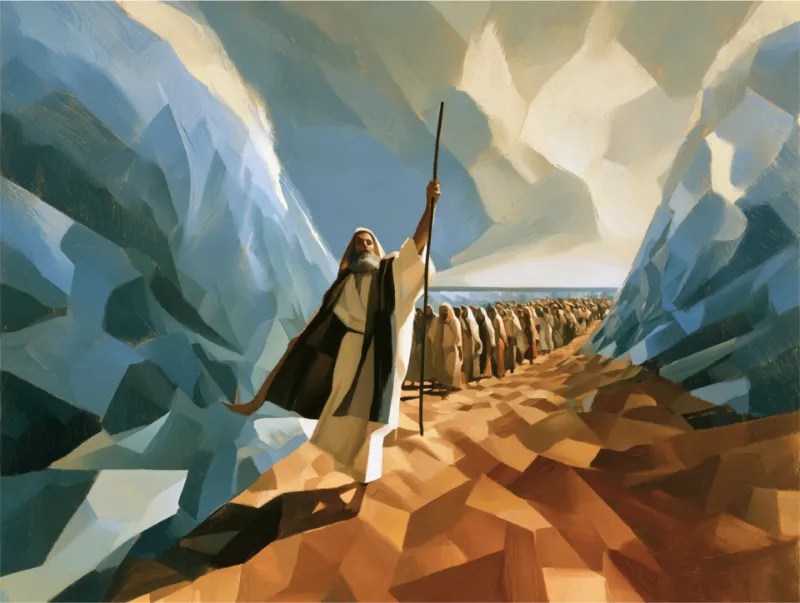
Matthew 1:22-23
“All this took place to fulfill what the Lord had said through the prophet: ‘The virgin will conceive and give birth to a son, and they will call him Immanuel’ (which means ‘God with us’).”
Reflection: Matthew quotes Isaiah 7:14 in the Greek form that reads virgin, and he translates Immanuel for his readers: “God with us.”
Matthew 1:24-25
“When Joseph woke up, he did what the angel of the Lord had commanded him and took Mary home as his wife. But he did not consummate their marriage until she gave birth to a son. And he gave him the name Jesus.”
Reflection: Joseph is told what to do in four dreams, and each time Matthew reports what he did next (1:24; 2:14, 21, 22). Matthew gives him no spoken words.
Who was told, and who came
Luke 2:11-12
“Today in the town of David a Savior has been born to you; he is the Messiah, the Lord. This will be a sign to you: You will find a baby wrapped in cloths and lying in a manger.”
Reflection: The sign is a baby lying in a manger, which the shepherds had to go into Bethlehem to find. They “hurried off and found Mary and Joseph, and the baby” (2:16).
Luke 2:13-14
“Suddenly a great company of the heavenly host appeared with the angel, praising God and saying, ‘Glory to God in the highest heaven, and on earth peace to those on whom his favor rests.’”
Reflection: The critical Greek texts, such as Westcott and Hort’s and the SBL edition, end with eudokias, which gives “to those on whom his favor rests.” The Textus Receptus behind the King James Version has eudokia, one letter shorter, and so the KJV reads “good will toward men.”
Luke 2:17-18
“When they had seen him, they spread the word concerning what had been told them about this child, and all who heard it were amazed at what the shepherds said to them.”
Reflection: The shepherds are the first people in Luke’s account to spread the word about the child. The next verse turns to Mary, who “treasured up all these things and pondered them in her heart” (2:19).
Matthew 2:1-2
“After Jesus was born in Bethlehem in Judea, during the time of King Herod, Magi from the east came to Jerusalem and asked, ‘Where is the one who has been born king of the Jews? We saw his star when it rose and have come to worship him.’”
Reflection: The Greek word magoi named a priestly caste among the Medes and Persians, known for astrology and the interpreting of dreams. Matthew does not call them kings and does not say how many there were; some early Christian writers spoke of three, the Catholic Encyclopedia notes, “very likely influenced by the number of gifts.”
Matthew 2:5-6
“‘In Bethlehem in Judea,’ they replied, ‘for this is what the prophet has written: “But you, Bethlehem, in the land of Judah, are by no means least among the rulers of Judah; for out of you will come a ruler who will shepherd my people Israel.”‘”
Reflection: The chief priests and teachers of the law answer Herod from Micah 5:2, but where Micah calls Bethlehem “small among the clans of Judah,” their quotation says it is “by no means least.” The last line, “a ruler who will shepherd my people Israel,” echoes what the Lord said to David: “You will shepherd my people Israel” (2 Samuel 5:2).
Matthew 2:11
“On coming to the house, they saw the child with his mother Mary, and they bowed down and worshiped him. Then they opened their treasures and presented him with gifts of gold, frankincense and myrrh.”
Reflection: Matthew says the Magi came to a house and found the child with his mother. When they did not return, Herod gave orders to kill the boys of Bethlehem “who were two years old and under, in accordance with the time he had learned from the Magi” (2:16).
What the rest of the New Testament says about it
John 1:14
“The Word became flesh and made his dwelling among us. We have seen his glory, the glory of the one and only Son, who came from the Father, full of grace and truth.”
Reflection: John has no birth narrative, and this verse states what the birth meant. The verb for made his dwelling, skēnoō, comes from the Greek word for a tent, and means to pitch a tent or to tabernacle.
Galatians 4:4-5
“But when the set time had fully come, God sent his Son, born of a woman, born under the law, to redeem those under the law, that we might receive adoption to sonship.”
Reflection: Paul does not tell the story of the birth. In this letter he gives it one phrase, “born of a woman, born under the law,” and joins it at once to its purpose: “to redeem those under the law.”
Philippians 2:6-7
“Who, being in very nature God, did not consider equality with God something to be used to his own advantage; rather, he made himself nothing by taking the very nature of a servant, being made in human likeness.”
Reflection: Made himself nothing translates kenoō, a verb meaning to empty. Paul writes it to show the Philippians the mindset he asks of them: “have the same mindset as Christ Jesus” (2:5).


Leave a Reply