
 English
 Chinese
 Dutch
 Arabic
 Spanish
 Portuguese
 Russian
 French
 Italian
 German
 Japanese
Scripture describes the Spirit as a helper sent to stand beside believers, who teaches them, lives in them, gives gifts for the common good and brings power to bear witness.
In John’s Gospel Jesus calls the Spirit the parakletos, a Greek word for someone called to another person’s side, used for an advocate in court. English Bibles have translated it Comforter, Counselor, Advocate, Helper and, in The Message, Friend. Jesus calls the Spirit “another advocate” (John 14:16), and 1 John 2:1 uses the same word for Jesus himself. The nineteen verses below cover the word Jesus used, the Spirit as wind and breath, what the Spirit does, where he lives, the gifts, and the fruit and power.
The word Jesus used
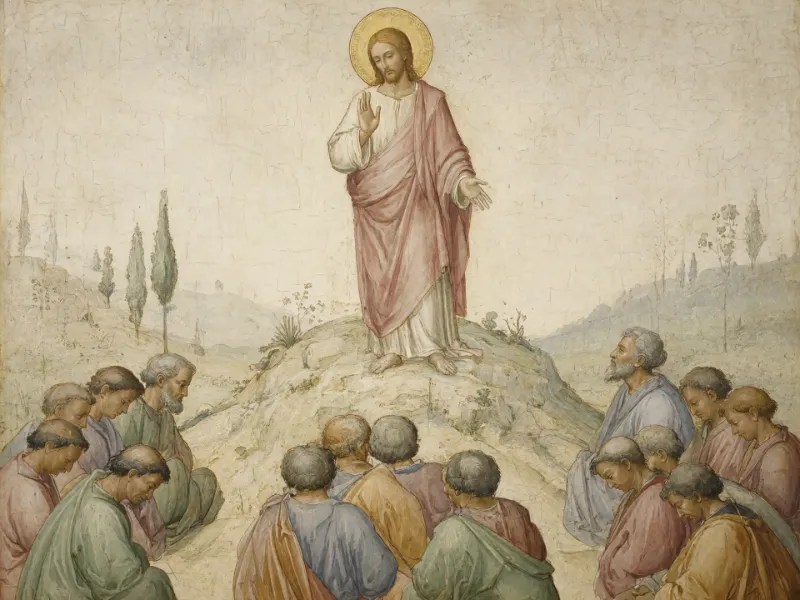
John 14:16
“And I will ask the Father, and he will give you another advocate to help you and be with you forever.”
Reflection: Jesus says this on the night before his death. “Another” advocate implies there has already been one, and 1 John 2:1 uses the same word for Jesus: “we have an advocate with the Father—Jesus Christ, the Righteous One.” This one is promised to stay forever.
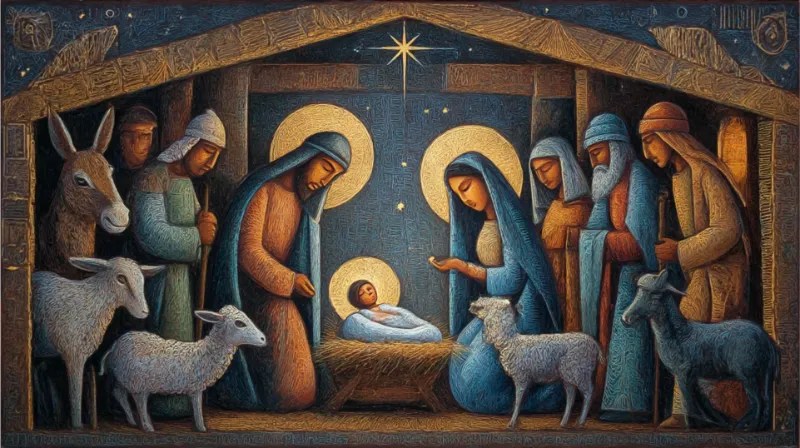
John 14:26
“But the Advocate, the Holy Spirit, whom the Father will send in my name, will teach you all things and will remind you of everything I have said to you.”
Reflection: The Spirit is sent in Jesus’ name, and his teaching is tied to what Jesus has already said: he “will remind you of everything I have said to you.”
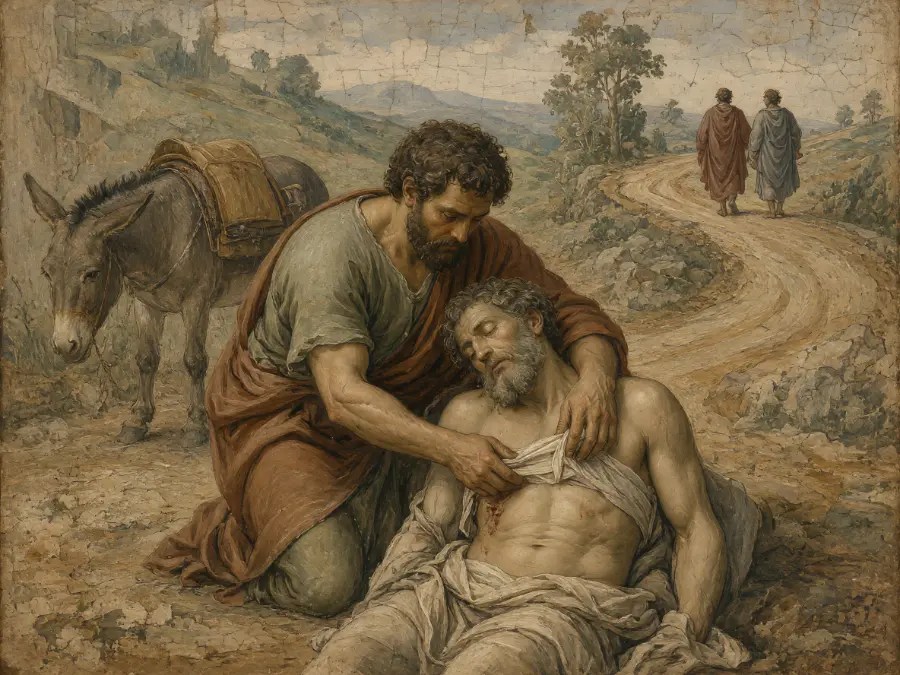
John 16:13
“But when he, the Spirit of truth, comes, he will guide you into all the truth. He will not speak on his own; he will speak only what he hears.”
Reflection: Jesus says the Spirit will not speak on his own, and the next verse says why: “He will glorify me because it is from me that he will receive what he will make known to you” (16:14).
The word underneath it, which means wind
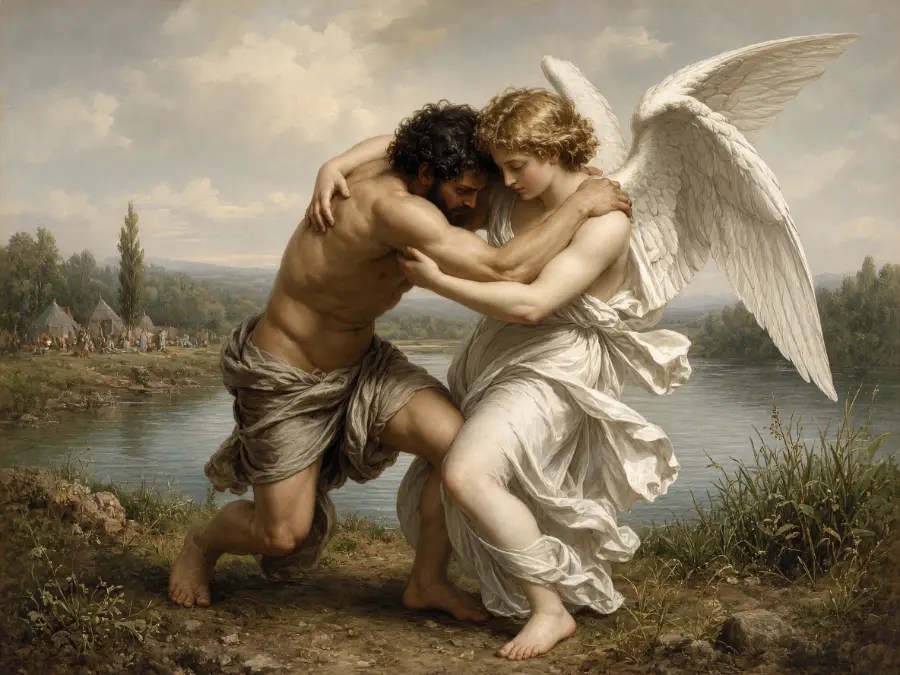
John 3:8
“The wind blows wherever it pleases. You hear its sound, but you cannot tell where it comes from or where it is going. So it is with everyone born of the Spirit.”
Reflection: The Greek word pneuma means wind, breath and spirit, and it appears twice in this verse, translated first as wind and then as Spirit. Jesus says this to Nicodemus while explaining what it means to be born again (3:3-7).
Ezekiel 36:26
“I will give you a new heart and put a new spirit in you; I will remove from you your heart of stone and give you a heart of flesh.”
Reflection: The next verse says what the new spirit is: “I will put my Spirit in you and move you to follow my decrees” (36:27). The promise was made to Israel in exile, with a return to their own land (36:24).
Romans 8:11
“And if the Spirit of him who raised Jesus from the dead is living in you, he who raised Christ from the dead will also give life to your mortal bodies.”
Reflection: Paul links the Spirit to a past event, raising Jesus from the dead, and to a future one, giving life to mortal bodies. The same Spirit is said to do both.
What the Spirit is said to do
Romans 8:26
“In the same way, the Spirit helps us in our weakness. We do not know what we ought to pray for, but the Spirit himself intercedes for us through wordless groans.”
Reflection: The help begins with a weakness Paul names directly: not knowing what to pray for. The Spirit’s intercession is “in accordance with the will of God” (8:27).

Romans 8:14
“For those who are led by the Spirit of God are the children of God.”
Reflection: The next verse describes the Spirit they received: it “does not make you slaves, so that you live in fear again”; it “brought about your adoption to sonship” (8:15).

Romans 5:5
“And hope does not put us to shame, because God’s love has been poured out into our hearts through the Holy Spirit, who has been given to us.”
Reflection: The verb is in the Greek perfect tense, “has been poured out,” which describes something already done with lasting effect. Paul gives it as the reason hope “does not put us to shame.”
Galatians 4:6
“Because you are his sons, God sent the Spirit of his Son into our hearts, the Spirit who calls out, ‘Abba, Father.’”
Reflection: Here the Spirit is the one who calls out “Abba, Father”; in Romans 8:15 it is believers who cry it. Abba is the Aramaic word Jesus used in Gethsemane (Mark 14:36), kept untranslated in a Greek letter.
Where the Spirit is said to live

1 Corinthians 3:16
“Don’t you know that you yourselves are God’s temple and that God’s Spirit dwells in your midst?”
Reflection: The “you” is plural in Greek, so the temple Paul means is the congregation. Paul is writing to a church divided into factions (1:10-12; 3:3-4).
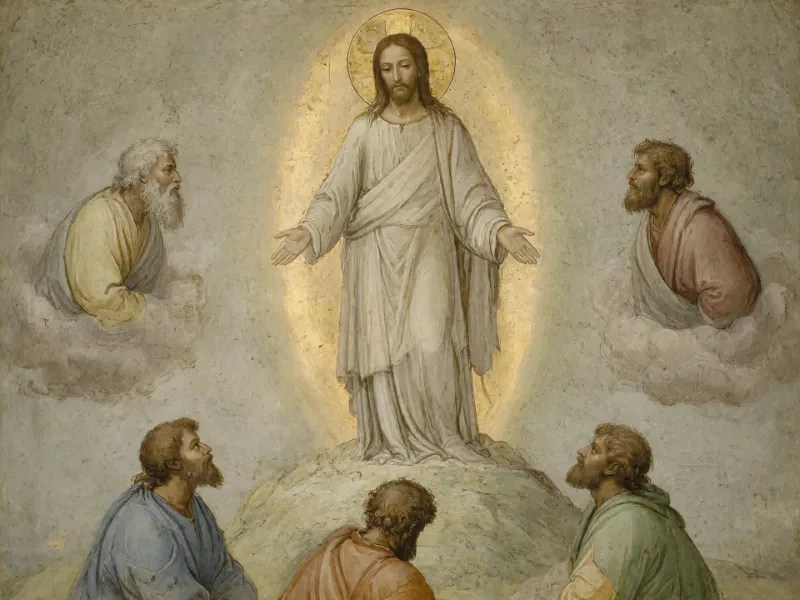
1 Corinthians 6:19
“Do you not know that your bodies are temples of the Holy Spirit, who is in you, whom you have received from God? You are not your own.”
Reflection: Three chapters later Paul uses the temple picture again, this time for the body, in a passage about sexual immorality (6:18). He adds, “You are not your own,” and verse 20 gives the reason: “you were bought at a price.”

Ephesians 1:13-14
“…you were marked in him with a seal, the promised Holy Spirit, who is a deposit guaranteeing our inheritance.”
Reflection: The word translated deposit, arrabōn, was used for part of a payment given in advance as security for the rest. A seal marked ownership. Paul uses both to describe the Spirit as a guarantee of what is still to come.
The gifts, and what they are for
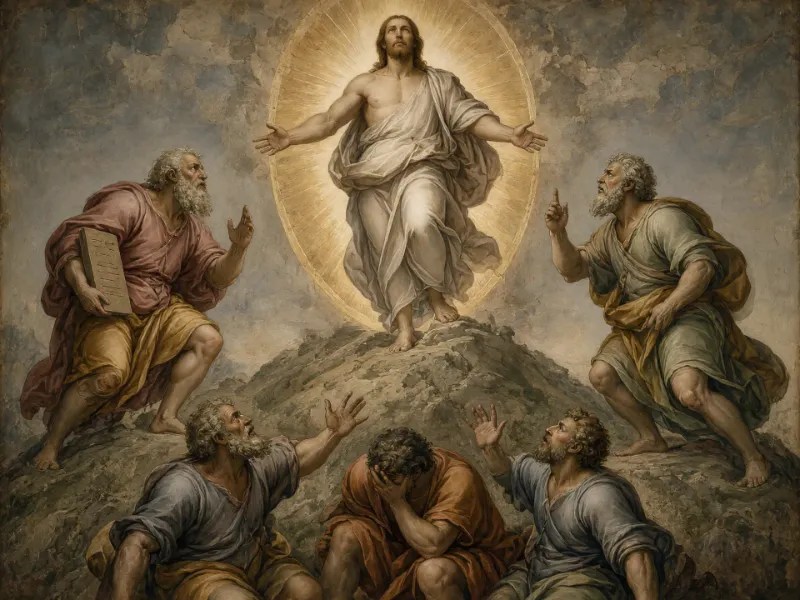
1 Corinthians 12:4-7
“There are different kinds of gifts, but the same Spirit distributes them. There are different kinds of service, but the same Lord. There are different kinds of working, but in all of them and in everyone it is the same God at work. Now to each one the manifestation of the Spirit is given for the common good.”
Reflection: Paul says “the same” three times: the same Spirit, the same Lord, the same God. Verse 7 gives the purpose of the gifts: “for the common good.”
1 Corinthians 12:13
“For we were all baptized by one Spirit so as to form one body—whether Jews or Gentiles, slave or free—and we were all given the one Spirit to drink.”
Reflection: Paul uses two pictures, being baptized by one Spirit and being given one Spirit to drink, and applies both to “all.” The verse puts Jews and Gentiles, slave and free, in one body.
1 Peter 4:10
“Each of you should use whatever gift you have received to serve others, as faithful stewards of God’s grace in its various forms.”
Reflection: A steward managed a household on behalf of its owner. Peter uses the word for people entrusted with “God’s grace in its various forms,” and the gift is to be used “to serve others.”
Ephesians 4:3
“Make every effort to keep the unity of the Spirit through the bond of peace.”
Reflection: Paul asks them to keep a unity that already exists. The next verses list what they share: one body, one Spirit, one hope, one Lord, one faith, one baptism, and one God and Father of all (4:4-6).
The fruit, and the power
Galatians 5:22-23
“But the fruit of the Spirit is love, joy, peace, forbearance, kindness, goodness, faithfulness, gentleness and self-control.”
Reflection: Fruit is singular in Greek: one fruit with nine qualities. Paul sets it against “the acts of the flesh” listed just before (5:19-21), which are plural.

Acts 1:8
“But you will receive power when the Holy Spirit comes on you; and you will be my witnesses in Jerusalem, and in all Judea and Samaria, and to the ends of the earth.”
Reflection: The power comes with a task: to be witnesses, first in Jerusalem and then to the ends of the earth. The rest of Acts follows roughly that order.
What the vocabulary keeps telling us
The words Scripture uses for the Spirit come from different parts of life. Parakletos comes from the courtroom, pneuma means wind and breath as well as spirit, and arrabōn is a business word for a first payment. In Galatians the Spirit cries out “Abba, Father,” the word Jesus used in prayer.
Across these passages the Spirit is a gift. God’s love “has been poured out” through him (Romans 5:5), believers are “led” by him (Romans 8:14), and his gifts are given “for the common good” (1 Corinthians 12:7) and are to be used “to serve others” (1 Peter 4:10). For how the Spirit shapes a church’s worship, see Bible verses about worship.


Leave a Reply