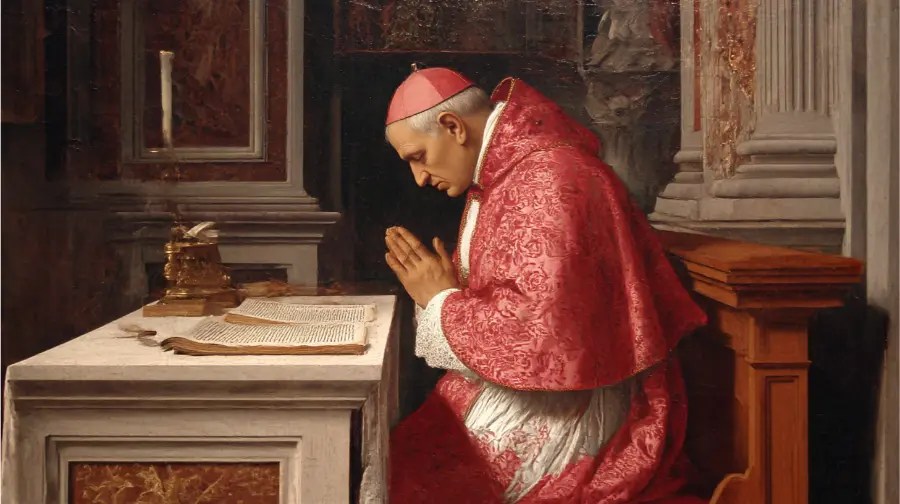
Is Dominic een Bijbelse naam met spirituele betekenis?


  • The name Dominic is not found in the Bible, but it became significant in Christian tradition thanks to Saint Dominic, the founder of the Dominican Order.
  • Dominic means “belonging to the Lord,” which aligns with biblical themes of devotion and service to God.
  • Dominic has Latin roots, not Hebrew, but it shares thematic elements with names in the Bible that denote belonging to God.
  • Christians can apply the meaning of Dominic by embracing their identity in Christ, living with divine purpose, and striving for stewardship and unity within the Church.
This entry is part 38 of 226 in the series Namen en hun Bijbelse betekenissen

Komt de naam Dominic voor in de Bijbel?

De naam Dominic komt in zijn exacte vorm niet voor in de Bijbel. Noch het Oude Testament, noch het Nieuwe Testament bevat een personage genaamd Dominic. Deze afwezigheid is niet verrassend als we kijken naar de historische en taalkundige context van de bijbelse verhalen.

De Bijbel werd, zoals u weet, oorspronkelijk geschreven in het Hebreeuws, Aramees en Grieks, en bevat voornamelijk namen van Semitische en Grieks-Romeinse oorsprong. Dominic daarentegen is een naam met Latijnse wortels, die pas veel later in de christelijke geschiedenis populair werd.

But the absence of the name Dominic in the Bible doesn’t diminish its significance in Christian tradition. In fact, it’s a beautiful example of how our faith has grown and evolved over the centuries, incorporating new elements while remaining true to its core principles.

De naam Dominic kreeg aanzien in christelijke kringen grotendeels dankzij de heilige Dominicus, de stichter van de dominicanenorde in de 13e eeuw. Dit illustreert hoe namen lang na het bijbelse tijdperk een belangrijke rol kunnen gaan spelen in religieuze contexten.

Psychologically it’s interesting to consider why people might assume or hope that a name like Dominic appears in the Bible. Perhaps it’s a desire for a direct connection to scripture, a way of feeling more intimately linked to the foundational texts of our faith. This yearning for connection is a deeply human trait, reflecting our need for belonging and meaning.

Although the name Dominic itself isn’t in the Bible, its meaning resonates with biblical themes. As we’ll discuss in more detail later, Dominic means “belonging to the Lord,” which aligns beautifully with many biblical concepts of devotion and service to God.

In onze zoektocht naar bijbelse verbanden zien we dat, hoewel specifieke namen misschien niet voorkomen, de kwaliteiten en deugden die ze vertegenwoordigen dat vaak wel doen. De Bijbel staat vol met verhalen van individuen die aan God zijn toegewijd en Hem trouw dienen – precies de essentie van wat de naam Dominic vertegenwoordigt.

So, Although we can’t point to a biblical character named Dominic, we can see the spirit of the name reflected in many biblical figures. This reminds us that the power of a name often lies not in its literal presence in scripture, but in how it embodies timeless spiritual truths.

While Dominic isn’t found in the Bible, its absence doesn’t diminish its spiritual significance. Instead, it invites us to reflect on how our faith tradition has grown and evolved, always finding new ways to express ancient truths. The name Dominic, with its rich meaning and association with devoted servants of God, stands as a testament to the ongoing vitality of our faith.

Wat is de betekenis van de naam Dominic?

The name Dominic is derived from the Latin name Dominicus, which means “of the Lord” or “belonging to God.” More specifically, it comes from the Latin word “dominus,” meaning “master” or “lord.” This etymology reveals the deeply spiritual connotations embedded in the name.

Dominic heten betekent aangewezen zijn als iemand die in dienst staat van God. Deze betekenis resoneert krachtig met het christelijke concept van roeping – het idee dat ieder van ons geroepen is om God op onze eigen unieke manier te dienen.

Psychologisch gezien kunnen namen een grote rol spelen bij het vormen van identiteit en zelfperceptie. Voor iemand die Dominic heet, kan de betekenis van de naam dienen als een constante herinnering aan hun verbinding met het goddelijke, wat mogelijk hun spirituele reis en levenskeuzes beïnvloedt.

Historically, the name gained prominence in Christian circles largely due to Saint Dominic, the founder of the Dominican Order in the 13th century. Saint Dominic’s life of service and dedication to spreading the Gospel exemplified the meaning of his name. His influence led to the name becoming popular among Catholics, particularly in countries with strong Catholic traditions.

It’s fascinating to consider how a name’s meaning can shape cultural and religious practices. In many Catholic families, choosing the name Dominic for a child might be seen as a way of dedicating that child to God, or expressing hope for their spiritual future. This practice reflects the deep human desire to connect our everyday lives with our spiritual beliefs.

The meaning of Dominic also carries implications of leadership and responsibility. To belong to the Lord, in the Christian tradition, is not just about passive ownership but active service. This aligns with Jesus’ teachings about servant leadership, where true greatness comes from serving others.

Vanuit een breder spiritueel perspectief is het concept van toebehoren aan God niet uniek voor het christendom. Vele religieuze en filosofische tradities spreken over het overgeven van jezelf aan een hogere macht of het afstemmen van jezelf op het goddelijke. De naam Dominic kan dan ook worden gezien als een samenvatting van een universeel spiritueel streven.

In onze moderne context, waarin individualiteit en onafhankelijkheid vaak worden gewaardeerd, biedt een naam die aangeeft dat men bij iets groters hoort dan zichzelf een interessant tegenwicht. Het herinnert ons aan de menselijke behoefte aan verbinding, niet alleen met elkaar, maar ook met het transcendente.

I find it intriguing to consider how carrying a name with such a powerful meaning might impact a person’s psychological development. It could instill a sense of purpose, foster a strong spiritual identity, or even create internal conflict if the individual struggles with faith.

Heeft Dominic Hebreeuwse oorsprong?

To address this directly: No, the name Dominic does not have Hebrew origins. As we discussed earlier, Dominic is a name with Latin roots, derived from “Dominicus,” meaning “of the Lord” or “belonging to God.” Its etymology is firmly planted in the Latin language, which was the lingua franca of the Roman Empire and later, the official language of the Roman Catholic Church.

Maar dit eenvoudige antwoord opent een genuanceerdere discussie over de aard van namen, hun oorsprong en hoe ze door culturen en talen reizen.

While Dominic isn’t Hebrew in origin, the concept it represents – belonging to God – is present in Hebrew thought and in the Hebrew Bible. The Hebrew name “Elijah,” for instance, means “My God is Yahweh,” expressing a similar sentiment of divine belonging.

Psychologically it’s interesting to consider why one might wonder about Hebrew origins for a name like Dominic. Perhaps it stems from an understanding of the Bible’s Hebrew roots and a desire to connect Christian names with this ancient tradition. This yearning for connection, for tracing our spiritual lineage back to its sources, is a deeply human impulse.

It’s also worth considering the historical context. During the time when the name Dominic came into use, particularly in the medieval period, there was a rich interplay between Latin, Hebrew, and Greek in religious and scholarly circles. The Church Fathers often engaged with Hebrew texts and concepts, creating a intellectual environment where ideas and linguistic elements from different traditions mingled.

Veel christelijke namen hebben inderdaad Hebreeuwse wortels, vooral die namen die rechtstreeks zijn ontleend aan bijbelse personages. Namen als Michael, David en Sarah zijn van Hebreeuwse oorsprong en zijn op grote schaal overgenomen in christelijke culturen. Deze prevalentie van namen van Hebreeuwse oorsprong in de christelijke traditie zou kunnen leiden tot de aanname dat andere christelijke namen, zoals Dominic, ook Hebreeuwse wortels zouden kunnen hebben.

From a broader perspective, this question invites us to reflect on the nature of language and cultural exchange. Languages and names don’t exist in isolation; they influence each other, borrow from each other, and evolve together. While Dominic isn’t Hebrew, its meaning resonates with Hebrew concepts, demonstrating how spiritual ideas can transcend linguistic boundaries.

I find it fascinating to consider how our names connect us to history and tradition. Even when a name like Dominic doesn’t have direct Hebrew origins, the very act of questioning its roots reveals a desire to understand our place in a larger historical and spiritual narrative.

In onze geglobaliseerde wereld reizen namen vaak ver weg van hun oorsprong. Een naam als Dominic, van Latijnse oorsprong, kan worden gebruikt in culturen met sterke Hebreeuwse invloeden, waardoor nieuwe associaties en betekenissen ontstaan.

While Dominic doesn’t have Hebrew origins, this exploration reminds us of the vast web of linguistic and cultural influences that shape our spiritual traditions. It invites us to appreciate the complex history behind our names and the ways in which different linguistic and cultural streams have flowed together to create the diverse tapestry of Christian tradition. The fact that we can ask this question – wondering about the Hebrew origins of a Latin name – is itself a testament to the beautiful complexity of our shared spiritual heritage.

Zijn er bijbelse figuren met namen die lijken op Dominic?

Your question about biblical figures with names similar to Dominic leads us on an intriguing exploration of biblical onomastics – the study of names in the Bible. Although we won’t find the name Dominic itself in scripture, as we’ve discussed, there are some names and figures that bear similarities in either meaning or linguistic structure.

Let’s consider names that share a similar meaning to Dominic. As we’ve established, Dominic means “belonging to the Lord” or “of the Lord.” In the Bible, we find several names that carry a similar sense of belonging or dedication to God.

One prominent example is the name Obadiah, which in Hebrew means “servant of Yahweh” or “worshipper of Yahweh.” This name appears several times in the Old Testament, most notably as the name of a minor prophet. The concept of being a servant of God aligns closely with the idea of belonging to the Lord, as implied by the name Dominic.

Another name worth mentioning is Elijah, which means “my God is Yahweh.” While not identical in meaning to Dominic, it carries a strong sense of allegiance and belonging to God. Elijah, as you know, was one of the most major prophets in the Old Testament, known for his unwavering faith and dramatic confrontations with the prophets of Baal.

In the New Testament, we encounter the name Theophilus, which in Greek means “friend of God” or “loved by God.” While this name appears only in Luke’s dedications at the beginnings of the Gospel of Luke and Acts, its meaning resonates with the concept of a close relatie met God, akin to the belonging implied by Dominic.

From a structural perspective, we might consider names ending in “-icus” or “-ic” in their Latin forms, as Dominic does (Dominicus). While not common in the Bible, we do find names like Tychicus, mentioned by Paul in several of his letters. But this similarity is more about the Latin form of the name rather than its original biblical context.

Psychologically, it’s fascinating to consider why we seek these connections between modern names and biblical figures. Perhaps it’s a way of finding our place in the grand narrative of faith, of connecting our personal stories with the overarching story of God’s interaction with humanity. This desire for connection, for rootedness in tradition, is a deeply human trait.

De zoektocht naar soortgelijke namen in de Bijbel weerspiegelt ons begrip van namen als meer dan louter labels. In bijbelse tijden, en in veel culturen vandaag de dag, worden namen gezien als dragers van betekenis, bestemming of karakter. Door onze namen te koppelen aan bijbelse precedenten, proberen we ze wellicht te voorzien van een diepere betekenis.

Hoewel we in de Bijbel misschien geen exacte parallellen met Dominic vinden, zijn de kwaliteiten die met de naam worden geassocieerd – toewijding aan God, dienstbaarheid, toebehoren aan het goddelijke – aanwezig bij vele bijbelse personages. We zien deze eigenschappen bij figuren als Samuel, die vanaf zijn kindertijd aan God was toegewijd, of bij de discipelen die alles achterlieten om Jezus te volgen.

Vanuit een breder perspectief herinnert deze verkenning ons aan het enorme web van namen en betekenissen in de Bijbel. Elke naam vertelt een verhaal, draagt een hoop uit of weerspiegelt een aspect van het geloof. Hoewel Dominic niet direct voorkomt, is de geest ervan – het toebehoren aan God en in Zijn dienst staan – overal in de Schrift aanwezig.

Although we don’t find names exactly like Dominic in the Bible, we do encounter figures whose names carry similar meanings of belonging to and serving God. This reflection on biblical names invites us to consider the deeper significance of our own names and how they might call us to live out our faith. It reminds us that, regardless of the specific name we bear, we are all called to belong to God and to serve Him in our unique ways.

Welke spirituele betekenis zou de naam Dominic voor christenen kunnen hebben?

Let’s recall that Dominic means “belonging to the Lord” or “of the Lord.” This meaning alone carries immense spiritual weight. In the Christian tradition, the concept of belonging to God is central. We see this echoed in passages like 1 Corinthians 6:19-20, which reminds believers that they are not their own, but have been bought with a price. The name Dominic, then, can serve as a constant reminder of this fundamental Christian truth – that our lives are not our own, but are dedicated to God.

This idea of belonging to God isn’t about ownership in a restrictive sense, but rather about identity and purpose. For a Christian named Dominic, or for any Christian reflecting on this name, it can inspire a deep sense of security and meaning. Psychologically, this can be incredibly powerful. In a world where many struggle with questions of identity and purpose, the name Dominic points to a powerful answer – we find our true selves in belonging to God.

The concept of being “of the Lord” implies a call to service. In Christian theology, belonging to God isn’t a passive state but an active vocation. We’re reminded of Jesus’ words in Matthew 20:26-28, where He speaks of greatness in terms of service. The name Dominic, then, can be seen as a call to live out this servant leadership, to embody Christ’s example in daily life.

Historically, the name gained major spiritual connotations through Saint Dominic, the founder of the Dominican Order. His life of preaching, teaching, and service exemplified what it means to be “of the Lord.” For many Christians, especially Catholics, the name Dominic might evoke this legacy of dedicated service and intellectual pursuit in the name of faith.

From a more mystical perspective, the name Dominic can be seen as an invitation to deep spiritual intimacy with God. To belong to the Lord implies a close, personal relationship. It echoes the sentiment expressed in the Song of Songs, where the beloved declares, “I am my beloved’s and my beloved is mine” (Song of Songs 6:3). This aspect of the name can inspire a rich prayer life and a sense of God’s constant presence.

Psychologically, carrying a name with such explicit spiritual meaning can shape one’s self-concept and life choices. It might instill a sense of responsibility, a desire to live up to the name’s meaning. At the same time, it can provide comfort, a reminder that one is claimed and loved by God.

In the context of Christian community, the name Dominic can serve as a reminder of our collective identity as the people of God. It resonates with Peter’s words in 1 Peter 2:9, describing believers as “a chosen people, a royal priesthood, a holy nation, God’s special possession.” The name thus carries not just individual but communal significance.

For parents choosing this name for their child, it can be an act of dedication, a way of entrusting their child to God’s care and purpose. It expresses a hope and a prayer for the child’s spiritual journey.

In onze moderne context, waarin seculiere waarden vaak de nadruk leggen op individuele autonomie, biedt de naam Dominic een tegen-cultureel perspectief. Het spreekt van het vinden van vrijheid in overgave aan God, van het ontdekken van ons ware zelf door onszelf te verliezen in een goddelijk doel.

Lastly, the name Dominic can serve as a beautiful reminder of God’s initiative in our spiritual lives. We belong to God not primarily because of our choice, but because of His choice to claim us. This echoes the words of 1 John 4:19, “We love because he first loved us.”

De naam Dominic draagt een rijke spirituele betekenis voor christenen. Het spreekt van identiteit, doel, dienstbaarheid en een intieme relatie met God. Of men nu deze naam draagt of simpelweg reflecteert op de betekenis ervan, het biedt een krachtige meditatie over wat het betekent om een leven te leiden dat aan God is toegewijd. In een wereld die vaak wordt gekenmerkt door fragmentatie en verlies van betekenis, wijst de naam Dominic op de integrerende, doelgevende kracht van het geloof.

I appreciate your thoughtful questions about the name Dominic and its significance in Christian culture. Let us explore these questions together with the wisdom of faith and the insights of psychology. I’ll do my best to provide detailed responses in the style you’ve requested, drawing on the available information and my understanding of Christian history and tradition.

The story of how the name Dominic gained popularity in Christian culture is a beautiful testament to the power of faith, dedication, and divine providence. The name Dominic, which comes from the Latin “Dominicus” meaning “belonging to the Lord,” truly embodies the spirit of devotion that has characterized many great Christian figures throughout history.

The popularity of the name Dominic in Christian culture can be largely attributed to one remarkable individual: Saint Dominic de Guzmán, the founder of the Dominican Order. Born in Spain around 1170, Dominic’s life and work had a powerful impact on the Church and Christian society, which in turn led to the widespread adoption of his name.

Dominic de Guzmán leefde in een tijd van grote spirituele en intellectuele onrust in Europa. Zijn antwoord op de uitdagingen van zijn tijd was het stichten van een nieuwe religieuze orde die zich wijdde aan het prediken van het Evangelie en het bestrijden van ketterij door middel van onderwijs en het goede voorbeeld. De Orde der Predikheren, zoals de Dominicanen officieel bekendstaan, verspreidde zich snel door Europa en daarbuiten, en droeg de naam en erfenis van hun stichter met zich mee.

As the Dominican Order grew in influence and prestige, so too did the popularity of the name Dominic. Parents began naming their children after this great saint, hoping to imbue them with his virtues of wisdom, courage, and devotion to God. The Dominicans’ emphasis on education and scholarship also contributed to the name’s appeal among the learned classes.

The timing of Saint Dominic’s life and work coincided with a period in European history when surnames were becoming more common. Many families adopted “Dominic” or its variants as a surname, further spreading the name throughout Christian society.

Psychologisch gezien kunnen we de populariteit van de naam Dominic begrijpen als een vorm van sociaal leren en modelleren. Naarmate mensen de deugden en prestaties observeerden die geassocieerd werden met de heilige Dominicus en zijn volgelingen, verlangden zij er op natuurlijke wijze naar om deze kwaliteiten na te volgen. Een kind vernoemen naar zo'n gerespecteerd figuur werd gezien als een manier om het kind te inspireren en te begeleiden naar een leven van geloof en dienstbaarheid.

De verspreiding van de naam Dominic bleef niet beperkt tot katholieke landen. Naarmate de protestantse Reformatie zich ontvouwde, behielden sommige protestantse gemeenschappen waardering voor heiligen van vóór de Reformatie, waaronder Dominicus. Hierdoor kon de naam zijn populariteit behouden, zelfs in gebieden die zich hadden afgekeerd van katholieke tradities.

In onze moderne wereld zien we nog steeds de blijvende aantrekkingskracht van de naam Dominic. Het dient als een herinnering aan ons christelijk erfgoed en de tijdloze waarden van geloof, leren en dienstbaarheid aan anderen. De populariteit van deze naam in de christelijke cultuur is een prachtig voorbeeld van hoe een enkel leven, geleefd in toewijding aan God, een rimpeleffect kan hebben dat eeuwen en continenten overspant.

Zijn er heiligen of belangrijke christelijke figuren genaamd Dominic?

De naam Dominic is door verschillende heiligen en belangrijke figuren gedragen gedurende de christelijke geschiedenis. Hun levens en erfenissen hebben aanzienlijk bijgedragen aan de rijkdom van onze geloofstraditie. Laten we samen enkele van deze opmerkelijke individuen verkennen.

De meest bekende heilige die deze naam draagt, is ongetwijfeld de heilige Dominicus de Guzmán (ca. 1170-1221), die we eerder bespraken. Als stichter van de Dominicanerorde kan zijn impact op de christelijke theologie, het onderwijs en de spiritualiteit niet worden overschat. Zijn nadruk op het combineren van rigoureuze studie met diepe spiritualiteit zette een nieuwe standaard voor het religieuze leven en had een krachtige invloed op de Kerk.

Another major figure is Saint Dominic Savio (1842-1857), a young Italian student of Saint John Bosco. Despite his short life, Dominic Savio became known for his deep piety and commitment to holiness. He is often held up as a model for young people, demonstrating that sanctity is possible at any age. Psychologically Dominic Savio’s life illustrates the importance of positive role models and supportive environments in nurturing spiritual growth, especially in adolescents.

We hebben ook de heilige Dominicus van Silos (1000-1073), een Spaanse abt die bekend stond om zijn leiderschap en wonderbaarlijke genezingen. Zijn schrijn werd een populaire bedevaartplaats, en interessant genoeg werd Dominicus de Guzmán naar hem vernoemd. Deze verbinding benadrukt het cyclische karakter van de invloed van heiligen in de christelijke cultuur.

Another notable figure is Blessed Dominic Barberi (1792-1849), an Italian theologian and priest who played a crucial role in the revival of Catholicism in England. He is perhaps best known for receiving John Henry Newman into the Catholic Church. Dominic Barberi’s life demonstrates the power of gentle persuasion and authentic witness in evangelization.

Op het gebied van kunst en cultuur vinden we Dominic van Evesham, een 12e-eeuwse Engelse kroniekschrijver en prior, wiens werken waardevolle inzichten bieden in het middeleeuwse kloosterleven. Zijn bijdragen herinneren ons aan de belangrijke rol die individuen genaamd Dominic hebben gespeeld bij het behouden en vormgeven van de christelijke cultuur.

Meer recent hebben we figuren als Dominic Tang Yee-ming (1908-1995), de jezuïet en aartsbisschop van Kanton, die tijdens de Culturele Revolutie in China gevangenisstraf onderging vanwege zijn geloof. Zijn standvastigheid onder vervolging biedt een krachtig getuigenis van de blijvende kracht van het geloof in tijden van tegenspoed.

Psychologically the diversity of these figures named Dominic is noteworthy. We see examples of leadership, youthful piety, scholarly pursuits, mystical experiences, and courageous witness. This variety suggests that the name Dominic, with its meaning of “belonging to the Lord,” has inspired individuals to live out their faith in layered ways.

The existence of these various saints and important figures named Dominic has likely contributed to the name’s continued popularity and positive associations within Christian culture. Parents choosing this name for their children may be inspired by one or more of these exemplary individuals, hoping to impart similar virtues to their offspring.

De impact van deze figuren reikt verder dan degenen die hun naam delen. Hun levens en leringen hebben talloze anderen beïnvloed en het christelijk denken en de praktijk gevormd op manieren die vandaag de dag nog steeds resoneren.

Wat leerden de kerkvaders over namen zoals Dominic?

Om deze vraag te beantwoorden, moeten we eerst erkennen dat de Kerkvaders, die vroege christelijke leiders en theologen die een groot deel van ons leerstellig begrip hebben gevormd, zich niet specifiek hebben uitgelaten over de naam Dominic. Deze naam werd pas veel later in de christelijke geschiedenis bekend. Maar de Kerkvaders hadden wel belangrijke leringen over namen in het algemeen, en hun perspectieven kunnen ons helpen begrijpen hoe zij tegen een naam als Dominic aan zouden hebben gekeken.

De Kerkvaders, puttend uit zowel Oud- als Nieuwtestamentische tradities, hechtten groot belang aan de betekenis en relevantie van namen. Zij begrepen namen niet louter als labels, maar als uitdrukkingen van identiteit, karakter en zelfs bestemming. Dit begrip was geworteld in de bijbelse traditie, waar namen vaak een profetische of symbolische betekenis droegen.

For instance, St. Jerome, one of the most influential of the Church Fathers, wrote extensively on the meaning of biblical names. In his work “Liber Interpretationis Hebraicorum Nominum” (Book of Interpretation of Hebrew Names), he emphasized the importance of understanding the etymology and meaning of names as a way to gain deeper spiritual insights. If we apply this principle to the name Dominic, which means “belonging to the Lord” or “of the Lord,” we can imagine that Jerome would have seen it as a name rich with spiritual significance.

St. Johannes Chrysostomus, bekend om zijn welsprekende prediking, sprak vaak over het belang om kinderen namen met deugdzame betekenissen te geven. Hij moedigde ouders aan om namen te kiezen die hun kinderen zouden inspireren om een godvruchtig leven te leiden. Een naam als Dominic, met zijn duidelijke verwijzing naar het toebehoren aan God, zou waarschijnlijk op zijn goedkeuring hebben kunnen rekenen.

The Church Fathers also recognized the power of names in spiritual warfare. Origen, for example, wrote about the efficacy of using the name of Jesus in exorcisms and spiritual battles. While this doesn’t directly relate to the name Dominic, it underscores the spiritual power that the Fathers attributed to names.

Another important aspect of patristic teaching on names was the concept of the “nomen sacrum” or sacred name. This referred primarily to the names and titles of God and Christ, but the principle behind it – that certain names carry special spiritual significance – could be extended to names like Dominic that explicitly reference the divine.

St. Augustine, in his reflections on the Psalms, often delved into the meanings of names mentioned in Scripture. He saw names as carrying theological and spiritual lessons. For a name like Dominic, Augustine might have seen it as a constant reminder of one’s relationship with and belonging to God.

Psychologically we can see how the Church Fathers’ teachings on names align with modern understandings of identity formation and the power of language. Names, as they understood, play a crucial role in shaping how we see ourselves and how others perceive us.

Although the Church Fathers didn’t specifically address names like Dominic, their teachings laid the groundwork for how such names would be understood in later Christian tradition. The emphasis on names as bearers of meaning and spiritual significance continued long after the patristic era, influencing how Christians approached naming practices for centuries to come.

In onze moderne context kunnen we deze patristische principes toepassen op namen als Dominic. We kunnen dergelijke namen zien als meer dan louter labels, maar als uitdrukkingen van geloof, herinneringen aan onze relatie met God en inspiratiebronnen voor een deugdzaam leven.

Heeft de betekenis van Dominic betrekking op bijbelse thema's of concepten?

The name Dominic, with its rich meaning of “belonging to the Lord” or “of the Lord,” resonates deeply with several biblical themes and concepts. Let us explore these connections together, reflecting on how this name encapsulates fundamental aspects of our faith.

The concept of belonging to the Lord is a central theme throughout the Bible. In the Old Testament, we see this idea expressed in God’s covenant relationship with Israel. The Lord declares in Exodus 19:5, “Now if you obey me fully and keep my covenant, then out of all nations you will be my treasured possession.” This notion of being God’s special possession, His people, is echoed in the meaning of Dominic.

In the New Testament, this theme is further developed and personalized. The Apostle Paul writes in Romans 14:8, “If we live, we live for the Lord; and if we die, we die for the Lord. So, whether we live or die, we belong to the Lord.” This verse beautifully captures the essence of what it means to be “Dominic” – to belong wholly to God in every aspect of our lives.

The concept of divine ownership is another biblical theme that aligns with the meaning of Dominic. In 1 Corinthians 6:19-20, Paul reminds us, “You are not your own; you were bought at a price.” This powerful statement underscores our status as beings who belong to God, not just by creation, but by redemption through Christ’s sacrifice.

The idea of being “of the Lord” relates to the biblical concept of consecration or setting apart for God’s purposes. In the Old Testament, we see this in the consecration of priests, prophets, and kings. In the New Testament, all believers are called to be “a holy priesthood” (1 Peter 2:5), set apart for God’s service. The name Dominic can serve as a reminder of this sacred calling.

Psychologically these biblical themes associated with the name Dominic speak to our deep human need for belonging and purpose. The assurance of belonging to God can provide a powerful sense of security and identity, Although the call to be “of the Lord” gives direction and meaning to our lives.

Another biblical concept related to the meaning of Dominic is that of discipleship. Jesus calls His followers to deny themselves and follow Him (Luke 9:23). To be truly “of the Lord” requires this kind of total commitment and alignment with God’s will, which is at the heart of Christian discipleship.

The theme of divine guidance is also relevant here. Proverbs 3:5-6 encourages us to “Trust in the Lord with all your heart and lean not on your own understanding; in all your ways submit to him, and he will make your paths straight.” To be “of the Lord” implies this kind of trust and submission to divine guidance.

Lastly, the meaning of Dominic relates to the biblical theme of identity in Christ. Paul writes in Galatians 2:20, “I have been crucified with Christ and I no longer live, but Christ lives in me.” This powerful statement of Christian identity aligns perfectly with the idea of belonging to and being of the Lord.

Voor degenen die deze naam dragen, en voor ons allen, kunnen deze bijbelse thema's dienen als een constante herinnering aan onze relatie met God en ons doel in het leven. Ze dagen ons uit om te leven op een manier die werkelijk onze status weerspiegelt als mensen die de Heer toebehoren.

Mogen wij allen, ongeacht onze namen, ernaar streven deze bijbelse principes in ons dagelijks leven te belichamen, altijd zoekend om vollediger bij de Heer te horen en in alles wat we doen tot Zijn dienst te zijn.

Hoe kunnen christenen de betekenis van Dominic vandaag de dag toepassen op hun geloof?

The meaning of the name Dominic – “belonging to the Lord” or “of the Lord” – offers rich spiritual insights that Christians can apply to their faith journey in our contemporary world. Let us explore together how we can integrate this powerful concept into our daily lives and spiritual practices.

Embracing the meaning of Dominic invites us to deepen our sense of identity in Christ. In a world that often pushes us to define ourselves by our accomplishments, possessions, or social status, the concept of belonging to the Lord reminds us of our true and unchanging identity. As Christians, we can start each day by affirming this truth: “I belong to the Lord.” This simple act of recognition can ground us in God’s love and purpose for our lives, providing a stable foundation amidst life’s uncertainties.

Psychologisch gezien kan dit gevoel van toebehoren aan God een aanzienlijke invloed hebben op ons mentaal en emotioneel welzijn. Het kan gevoelens van eenzaamheid, doelloosheid en onzekerheid, die zo wijdverspreid zijn in onze moderne samenleving, verlichten. Door de waarheid te internaliseren dat we de Heer toebehoren, kunnen we troost en kracht vinden in onze verbinding met het goddelijke, ongeacht onze uiterlijke omstandigheden.

The meaning of Dominic challenges us to live with a sense of divine purpose. If we truly belong to the Lord, then our lives should reflect His will and values. This calls for a daily surrender of our own plans and desires to God’s guidance. In practical terms, this might mean starting each day with a prayer of consecration, offering our thoughts, words, and actions to God. It could also involve regularly asking ourselves, “How can I live we can seek to discern God’s will in every choice we face. This might involve spending more time in prayer, studying Scripture, and seeking counsel from mature believers as we navigate life’s complexities.

The concept embedded in the name Dominic also calls us to a life of stewardship. If we belong to the Lord, then everything we have – our time, talents, resources – ultimately belongs to Him as well. This perspective can revolutionize how we use our gifts and manage our resources. It challenges us to ask, “How can I use what God has entrusted to me for His glory and the benefit of others?”

In our relationships, applying the meaning of Dominic can lead to greater love and service. Recognizing that we all belong to the Lord can help us see others through God’s eyes, treating them with the dignity and respect due to those who bear God’s image. It can motivate us to reach out to the marginalized, forgive those who have wronged us, and seek reconciliation in broken relationships.

From a communal perspective, embracing the concept of belonging to the Lord can strengthen our sense of unity within the Church. Despite our differences, we are all part of God’s family. This understanding can help us transcend divisions and work together more effectively for God’s kingdom.

In onze steeds meer seculiere wereld kan het uitleven van de betekenis van Dominic ook een krachtig getuigenis zijn. Wanneer anderen de vrede, het doel en de liefde zien die voortvloeien uit ons gevoel van toebehoren aan God, kan dit nieuwsgierigheid opwekken en deuren openen om ons geloof te delen.

Bibliografie:

Arellano-Plaza, M., Páez-Lerma, J., Soto-Cruz, N., Kirchmayr, M., & Mathis, A. G. G. (2022). Mezcal Production in Mexico: Between Tradition and Commercial


Ontdek meer van Christian Pure

Abonneer je nu om meer te lezen en toegang te krijgen tot het volledige archief.

Lees verder

Delen via...