
 Russian
 English
 Chinese
 Dutch
 Arabic
 Spanish
 Portuguese
 French
 Italian
 German
 Japanese
Если вы хотите изучать отрывок глубоко, слово за словом, выбирайте Библию, которая максимально близка к словам еврейского и греческого языков, насколько это позволяет английский, например NASB или ESV. Если вы хотите читать целые книги за один раз или дарите кому-то их первую Библию, выбирайте ту, которая передает смысл на простом английском, например «Новый живой перевод» (NLT). А если вы хотите следить за ходом богослужения в своей церкви, читайте ту Библию, которую там читают вслух по воскресеньям. Ни один перевод не является лучшим для всех трех целей, и сами церкви используют разные переводы.
У людей, создавших Библию короля Иакова, перед глазами были хорошие английские переводы, и в своем предисловии 1611 года они писали, что никогда не стремились создать новый перевод, «а сделать хороший еще лучше, или из многих хороших — один главный, хороший перевод». Они также писали: «Именно перевод открывает окно, чтобы впустить свет», и каждая Библия на этой странице — это такое окно, прорубленное в одной и той же стене немного по-разному.
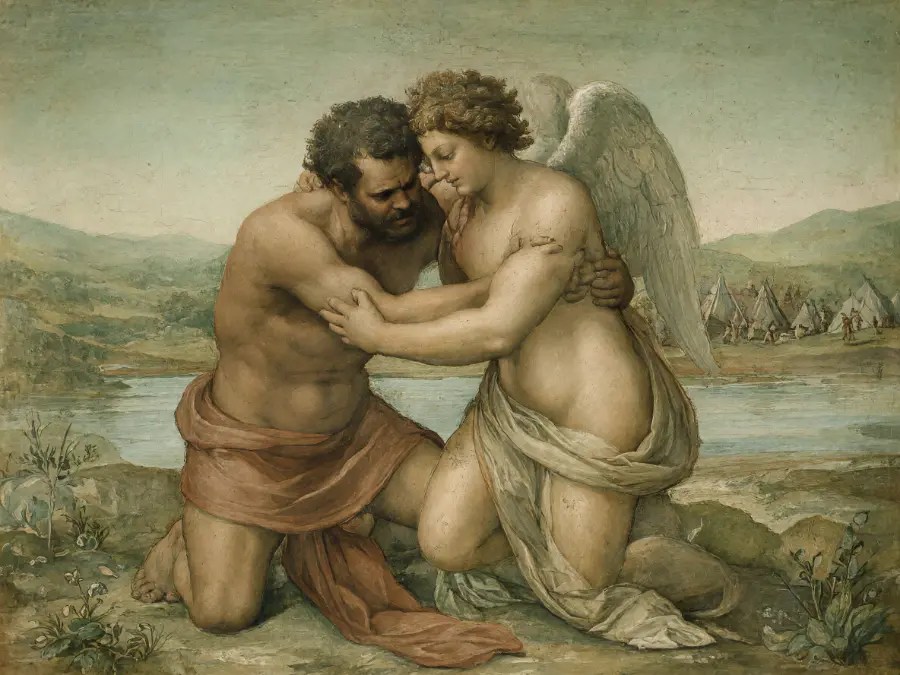
Как соотносятся основные английские переводы?
Вот десять основных английских переводов Библии, расположенных от тех, которые создатели называют наиболее буквальными, до тех, которые позиционируются как смысловые. Там, где издатель указывает свой собственный метод, в столбце «Метод» используются его формулировки.
| Перевод | Кем сделан | method | Для кого предназначена |
|---|---|---|---|
| Версия короля Иакова (KJV, 1611) | 47 учеными для короля Якова I | Переработанная «Библия епископов» 1568 года | Официальная английская Библия Церкви Иисуса Христа Святых последних дней; историческая Библия Епископальной церкви |
| Новая версия короля Иакова (NKJV, 1982) | 130 ученых, церковных лидеров и мирян для издательства Thomas Nelson | «Полная эквивалентность» | Читатели, которые хотят читать версию короля Иакова на современном английском |
| Новая американская стандартная Библия (NASB, 1971; 2020) | Фонд Lockman | «Формальная эквивалентность», слово в слово «насколько это возможно» | Студенты, ученые, пасторы и миссионеры, по словам фонда Lockman |
| Английская стандартная версия (ESV, 2001) | Crossway, с командой из более чем ста человек | «По сути буквальный» | Лютеранская церковь — Миссурийский синод, в своем Лютеранская служебная книга; Месса в Англии и Уэльсе (католическое издание) |
| Пересмотренная стандартная версия, католическое издание (RSV-CE, 1966) | Национальный совет церквей; RSV 1952 года | Пересмотр Американской стандартной версии 1901 года | Католики, как одобренное старое издание |
| Новая пересмотренная стандартная версия (NRSV, 1989; обновлена в 2021) | Национальный совет церквей; обновление 2021 года под руководством Общества библейской литературы | «Настолько буквально, насколько возможно, настолько свободно, насколько необходимо» | Епископальная церковь; католическое издание, одобренное епископами США |
| Новая американская Библия, пересмотренное издание (NABRE, 2011) | Учеными Католической библейской ассоциации | «Более буквальный перевод, чем оригинальная NAB» | Католики в Соединенных Штатах, до тех пор, пока Католическая американская Библия не заменит ее в 2027 году |
| Христианская стандартная Библия (CSB, 2017) | Holman Bible Publishers, пересматривающие Holman Christian Standard Bible | «Оптимальная эквивалентность» | Lifeway, Южная баптистская конвенция |
| Новая международная версия (NIV, 1978; 2011) | Комитет по переводу Библии, 15 евангелических ученых | Баланс между «прозрачностью по отношению к оригиналу и ясностью смысла» | Епископальная церковь; «наиболее часто используемая» в церквях США, по словам издателя |
| Новый живой перевод (NLT, 1996; 2015) | Более 90 ученых для Tyndale House | «Целые мысли (а не просто слова)» | Чтение вслух в церкви, как рекомендует Tyndale |
Если вам интересно, какую из них покупают люди, список продаж Библии в Соединенных Штатах по версии Ассоциации евангелических христианских издателей за сентябрь 2026 года поставил NIV на первое место, затем ESV, King James, NLT и NKJV, при этом CSB на седьмом месте, NASB на девятом, а NRSV на десятом. Учитываются только Библии от издателей, входящих в ассоциацию.
В английском языке почти каждая современная Библия берет начало от одного и того же еврейского и греческого текста: масоретского еврейского текста, напечатанного в Штутгарте Biblia Hebraica, and the Greek New Testament edited by Nestle and Aland and by the United Bible Societies. The exceptions are the New Testaments of the King James and the New King James, which follow the Textus Receptus, a text that grew from the Greek New Testament Erasmus first printed in 1516, and the old Catholic Douay-Rheims, which was translated from St Jerome’s Latin Vulgate. So most of what separates two modern Bibles is the English each one chooses for the same words.
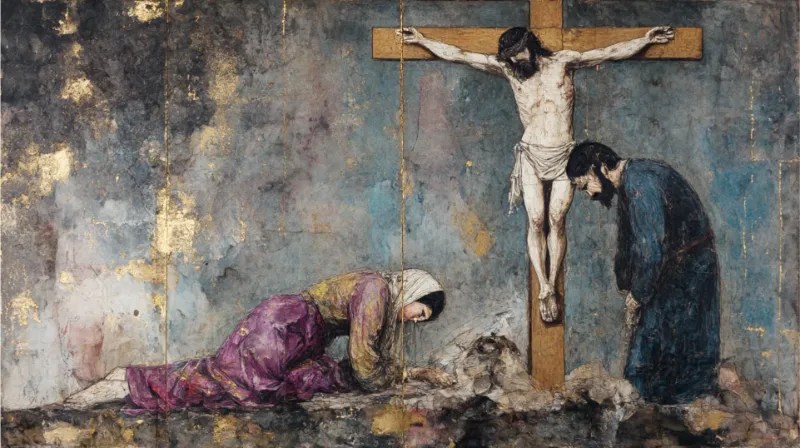
Что означают термины «дословный перевод» и «смысловой перевод»?
A word-for-word Bible, which publishers also call formal equivalence, keeps as near as English allows to the words and even the order of the original, and the Lockman Foundation says the NASB “translates word-for-word from the original languages as much as possible.” A thought-for-thought Bible, or dynamic equivalence, carries the meaning over into natural English. Where Luke says the crowd went home beating their breasts (Luke 23:48), the New Living Translation says “They went home in deep sorrow,” and keeps the Greek wording in a footnote.
Even the King James, which the NLT’s makers call “generally quite literal,” mixes the two. Where Paul’s Greek in Romans 6:2 means “may it not be,” it says “God forbid. How shall we, that are dead to sin, live any longer therein?” The ESV’s own preface says that every translation “is at many points a trade-off between literal precision and readability.” So the Bibles stand along one line rather than in two camps: the NASB, the ESV and the NKJV near the word-for-word end, the NLT near the other, and the CSB, the NIV and the NRSV Updated Edition in between, where the NRSV’s rule is “as literal as possible, as free as necessary.”
Scripture itself gives us a picture of both kinds of work. When the law of God was read aloud to the people in Nehemiah’s day, the readers “read in the book in the law of God distinctly, and gave the sense, and caused them to understand the reading” (Nehemiah 8:8). A word-for-word Bible gives us the reading as it stands, and a thought-for-thought Bible gives us more of the sense.
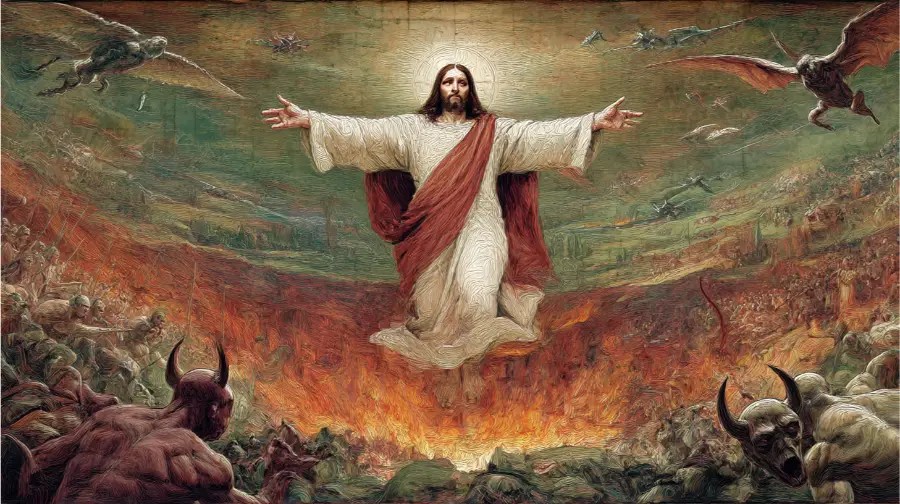
Насколько сильно различаются переводы? Одно слово в 1-м послании Иоанна 4:10
One sentence of John’s about love shows how close the translations stand and where they part. Here it is whole in three Bibles that are in the public domain. The King James has “Herein is love, not that we loved God, but that he loved us, and sent his Son to be the propitiation for our sins” (1 John 4:10). The Douay-Rheims has “In this is charity: not as though we had loved God, but because he hath first loved us, and sent his Son to be a propitiation for our sins.” And the World English Bible has “In this is love, not that we loved God, but that he loved us, and sent his Son as the atoning sacrifice for our sins.”
In all three the first half says the same thing in nearly the same words, though the Douay-Rheims, made from the Latin, says “charity” where the others say love. They part near the end, at a single Greek word, хиласмос, which Strong’s dictionary defines as “atonement, i.e. (concretely) an expiator.” Here is how each of the ten Bibles in the table above renders that word, in the same order:
| Перевод | Its word for хиласмос | method |
|---|---|---|
| KJV | Умилостивление | A revision of the Bishops’ Bible |
| NKJV | Умилостивление | Complete equivalence |
| NASB | Умилостивление | формальной эквивалентностью |
| ESV | Умилостивление | Essentially literal |
| RSV-CE | Очищение | A revision of the American Standard Version |
| Обновленное издание NRSV | искупительная жертва | As literal as possible, as free as necessary |
| NABRE | Очищение | More literal than the first NAB |
| CSB | искупительная жертва | Оптимальная эквивалентность |
| NIV | an atoning sacrifice | Balance of words and meaning |
| NLT | “a sacrifice to take away our sins” | Entire thoughts |
Four say propitiation, three say atoning sacrifice, two say expiation, and the NLT explains the word instead of translating it. The choice is more than a matter of which word is easier to read, because propitiation and expiation do not mean the same thing. A propitiation is a sacrifice that turns God’s anger at our sin away from us, so the word looks toward God, the judge. An expiation is a sacrifice that wipes the sin itself away, so the word looks toward us, the ones who have sinned. Atoning sacrifice is the plainer phrase, and in the text it does not choose between the two. Some Bibles that print it point the reader to propitiation in a note: the World English Bible’s footnote explains its atoning sacrifice as the sacrifice that turns away God’s anger, and the CSB gives propitiation in the margin. Whichever word we read, John tells us the same thing: the love began with God, before we had loved him at all.
If you want to share a verse like this, the King James (in the United States), the Douay-Rheims and the World English Bible are free for anyone to print, and most modern publishers let you quote hundreds of verses without asking, as long as their credit line goes with them.

В чем разница между KJV и NKJV?
The New King James keeps the Greek text behind the King James New Testament and changes its English. Thomas Nelson commissioned it in 1975 to make a modern translation “that would retain the purity and stylistic beauty of the original King James,” and 130 scholars, church leaders and lay Christians spent seven years on it; the New Testament came out in 1979 and the whole Bible in 1982. Its preface calls it “the fifth revision of a historic document,” and its makers kept it so close to the 1611 wording “that there is remarkable ease in listening to the reading of either edition while following with the other.”
Open a King James or an NKJV beside most modern Bibles, and the difference in the Greek you will notice most is a handful of verses, such as Matthew 18:11, Mark 9:44 and Acts 8:37. The King James and the NKJV print them in the text. Most modern Bibles move them to a footnote, because they “are not found in the oldest and most reliable manuscripts,” in the words of the NIV’s makers. The NKJV keeps them, and uses its own footnotes to show where the other Greek texts read differently. Most of the Greek is the same whichever text a Bible follows: by the NKJV preface’s count, “fully eighty-five percent of the New Testament text is the same in the Textus Receptus, the Alexandrian Text, and the Majority Text.”

ESV или NIV: что выбрать?
The NIV and the ESV, the two best-selling Bibles on that September list, were made with different aims. The NIV began with Howard Long, a Seattle engineer who found that the King James’s English did not reach a friend who was not a Christian. In 1965 evangelical scholars met near Chicago and chose to start from scratch with the Hebrew, Aramaic and Greek, and the complete NIV came out in 1978. Its Committee on Bible Translation, an independent body of fifteen, changes the text only when 70 percent of its members agree, and the 2011 update left about 95 percent of the 1984 text as it was.
Crossway made the ESV of 2001 for close study and for reading aloud in church, and calls it “essentially literal.” It began instead from the Revised Standard Version of 1971. Where the Revised Standard Version says expiation in 1 John 4:10, as its Catholic Edition in the table above shows, the ESV went back to the older word, propitiation, which the King James had used. The NIV says “an atoning sacrifice.” The ESV’s footnotes, which its preface calls “an integral part of the ESV translation,” show more of the Greek and Hebrew behind a passage, and they help most when you are working through it verse by verse. The NIV’s publisher puts it at an eighth-grade reading level, and if you want to read a whole Gospel in an evening, or to give a Bible to someone meeting it for the first time, it may serve you better.

Какую Библию используют католики, православные и другие церкви?
If you belong to a church, find out which Bible it reads aloud on Sunday and read the same one at home, so that the words we hear together become the words we know. Catholics read translations their bishops have approved, printed with notes, and a Catholic Bible has 73 books where most Protestant Bibles have 66; the reasons are set out in почему у католиков 73 книги, а у протестантов 66. In the United States the bishops list the NABRE, the NRSV Catholic Edition and its updated edition, and the Good News Translation, and they add that any translation approved “by the Apostolic See or a local ordinary prior to 1983, or by the Apostolic See or an episcopal conference following 1983” may be used for private prayer and study. That takes in older Catholic Bibles such as the RSV Catholic Edition and the Douay-Rheims, and how the King James and the Catholic Bibles differ has more on both. The NABRE came out in 2011, and the bishops have already approved a revised text for use at Mass, in November 2024, by 216 votes to 4. It is due in 2027 as the Catholic American Bible, which will replace the NABRE and give American Catholics one text for the readings at Mass, the Liturgy of the Hours and the Bible they keep at home. In England and Wales, since Advent 2024, the readings at Mass come from the English Standard Version–Catholic Edition.
The Orthodox Church in America says that “The Orthodox Church uses primarily translations from the Greek version of the Old Testament known as the Septuagint rather than translations from the Hebrew editions,” the version from which, it adds, the New Testament draws its many quotations of the Old. One small thing follows for anyone who opens a Psalter translated from the Septuagint: it numbers most of the Psalms one lower than Bibles translated from the Hebrew, so the psalm most of us know as Psalm 23 is Psalm 22 there. Among English Bibles, the Revised Standard Version took a step toward the Orthodox in 1977, when an expanded edition added 3 and 4 Maccabees and Psalm 151, books “considered canonical by Eastern Orthodox communions.” The editors of the NRSV Updated Edition record that the RSV was then “officially authorized for use by all major Christian churches: Protestant, Anglican, Roman Catholic, and Eastern Orthodox,” and that Bible was a grandchild of the King James, by way of the American Standard Version of 1901.
Among Protestants each church chooses for itself, and the Episcopal Church authorizes many translations, from the King James, “the historic Bible of The Episcopal Church,” to the NIV, the NRSV and its updated edition, and the Common English Bible. For Southern Baptists the CSB is close to home, because Lifeway, an entity of the Southern Baptist Convention, stewards it. The Lutheran Church–Missouri Synod chose the ESV for its hymnal, the Лютеранская служебная книга, and for the readings that go with it.
Two groups outside these churches each read a Bible of their own. The Church of Jesus Christ of Latter-day Saints calls the King James its official English Bible, and Jehovah’s Witnesses read their own Перевод нового мира.

Стоит ли читать более одного перевода?
When a verse puzzles you, it helps to open a second Bible beside the first, and the 1611 translators said so themselves, quoting St Augustine, “that variety of Translations is profitable for the finding out of the sense of the Scriptures.” Reading 1 John 4:10 with propitiation in one Bible and atoning sacrifice in the other shows us the very place where translators had to choose, and sends us back to John to see what he meant.
Philip’s question in Acts is the one to put to any Bible we pick up: “Understandest thou what thou readest?” The eunuch answered by asking for a guide, “How can I, except some man should guide me?” (Acts 8:30–31), and every faithful translator has tried to be that guide for readers who have no Hebrew or Greek. Whatever word a Bible uses in 1 John 4:10, every faithful translation carries what John says a few lines later, in the plainest words of all: “We love him, because he first loved us” (1 John 4:19).
Рекомендуемая литература
- Почему существует так много версий Библии?
- Какой перевод Библии является наиболее буквальным?
- Является ли Библия короля Иакова католической? Библии, которые используют католики
- Семь книг, входящих в католическую Библию, но отсутствующих в протестантской
- Какую Библию используют внеконфессиональные церкви?
- Jehovah’s Witness Bible vs King James


Добавить комментарий