 Japanese
  English
  Chinese
  Dutch
Dutch  Arabic
  Spanish
  Portuguese
  Russian
  French
  Italian
  German
 The “great cloud of witnesses” is the crowd of believers named in the chapter before it. Hebrews 11 names Abel, Noah, Abraham, Sarah, Moses, Rahab, David and the prophets, people who trusted God but “did not receive what was promised.” Their lives testify that God keeps faith, and Christians are told to run their own race “looking to Jesus.”
Therefore, since we are surrounded by so great a cloud of witnesses, let us also lay aside every weight, and sin which clings so closely, and let us run with endurance the race that is set before us, looking to Jesus, the founder and perfecter of our faith, who for the joy that was set before him endured the cross, despising the shame, and is seated at the right hand of the throne of God. (Hebrews 12:1–2)
The King James Version gives the wording most people know: “Wherefore seeing we also are compassed about with so great a cloud of witnesses.” It calls Jesus “the author and finisher of our faith.”

Who are the great cloud of witnesses in Hebrews 12:1?
They are the men and women of Hebrews 11. The chapter opens with a definition, “Now faith is the assurance of things hoped for, the conviction of things not seen,” and says that “by it the people of old received their commendation.” Then it walks through their stories, most of them introduced with the same two words, “by faith.”
Abel offered a better sacrifice than Cain, and “through his faith, though he died, he still speaks.” Enoch was taken up without seeing death. Noah built the ark. Abraham left home “not knowing where he was going,” and later offered up Isaac. Sarah “received power to conceive, even when she was past the age.” Isaac blessed Jacob and Esau, Jacob blessed the sons of Joseph, and Joseph at the end of his life gave directions about his bones. Moses was hidden as a baby by his parents, refused to be called the son of Pharaoh’s daughter, and kept the Passover. The people crossed the Red Sea, the walls of Jericho fell, and Rahab, who had welcomed Israel’s spies in that city, “did not perish with those who were disobedient.”
Then the writer runs out of room: “For time would fail me to tell of Gideon, Barak, Samson, Jephthah, of David and Samuel and the prophets.” The last verses of the chapter move from names to the unnamed. “Women received back their dead by resurrection.” Others “were stoned, they were sawn in two, they were killed with the sword,” people “of whom the world was not worthy.”
The chapter ends on an unfinished note: “And all these, though commended through their faith, did not receive what was promised, since God had provided something better for us, that apart from us they should not be made perfect.” The next verse begins “Therefore” and turns to the readers. John Chrysostom, in his homilies on Hebrews, read that last line as a shared finish: “They were before us as regards the conflicts, but are not before us as regards the crowns.”
Why does Hebrews call them a cloud?
A cloud was an old way of describing a crowd too large to count. The Cambridge Bible for Schools and Colleges calls it “a classical Greek and Latin, as well as Hebrew, metaphor for a great multitude,” and notes that Homer speaks of “a cloud of foot-soldiers.” Vincent’s Word Studies adds that the Greek word here, nephos, means a mass of cloud covering the sky, “a vast encompassing and overhanging mass,” rather than a single cloud with a sharp outline.
Chrysostom also heard shade in the word. Remembering these holy people, he said, revives a soul weighed down by trouble, “as a cloud does him who is burnt by the too hot rays” of the sun. And he noticed the verb: the writer does not say the cloud is “lifted on high above us, but, compassing us about.”
“Witness” and how it became “martyr”
The Greek word translated “witnesses” is martyrōn, は、 martys. It is the word that became the English “martyr,” but in Hebrews it has not yet narrowed to that meaning. As the Catholic Encyclopedia of 1910 explains, “The Greek word martus signifies a witness who testifies to a fact of which he has knowledge from personal observation.” Jesus uses it that way when he tells the apostles, “you will be my witnesses.”
Hebrews plays on the word. When chapter 11 says the people of old “received their commendation,” the Greek verb comes from the same root: God bore witness to them. The commentary of Jamieson, Fausset and Brown puts it neatly: “Those ‘witnessed of’ … become in their turn ‘witnesses.’” God testified to their faith, and now their lives testify to anyone who reads about them.
Because testifying to Christ could cost a life, the word leaned toward death within the New Testament itself. Paul recalls the day “the blood of Stephen your witness was being shed.” In Revelation the risen Christ remembers “Antipas my faithful witness, who was killed among you,” and John sees “the souls of those who had been slain for the word of God and for the witness they had borne.” The Catholic Encyclopedia traces the rest of the change. In the second century Christians at Lyons in Gaul who had endured torture for their faith refused the title for themselves while they still lived: “They are already martyrs whom Christ has deemed worthy to be taken up in their confession, having sealed their testimony by their departure; but we are confessors mean and lowly.” The letter from Lyons, which Eusebius preserved, records that others in the same persecution were beheaded, thrown to wild beasts or died in prison. By the middle of the fourth century, the Catholic Encyclopedia says, “the title was everywhere reserved to those who had actually suffered death for their faith.”
Chrysostom gave the Old Testament saints the same title. The writer of Hebrews, he said, calls “not those in the New [Testament] only, but those in the Old also, witnesses [or martyrs]. For they also were witnesses to the greatness of God.” When the church of Smyrna wrote down the death of its bishop Polycarp in the second century, it promised to keep the day each year “in memory of those who have already finished their course, and for the exercising and preparation of those yet to walk in their steps.”
Running the race, looking to Jesus
The instructions in verse 1 are a runner’s. Lay aside “every weight,” a word the Cambridge Bible says athletes used for “superfluous flesh,” to be reduced by training, and “sin which clings so closely.” Then run “with endurance,” a word for staying power. Calvin pictured the scene: “many witnesses stand around us,” and “the Son of God is the umpire who invites and exhorts us to secure the prize.” Then he enlarged his own picture: Christ “is not only the umpire, but also extends his hand to us.”
Verse 2 moves the runner’s eyes from the crowd to one person. The English Standard Version calls Jesus “the founder and perfecter of our faith”; the King James has “the author and finisher.” The first Greek word, archēgos, which Vincent renders “leader or captain,” means one who goes first and leads others; Hebrews uses it earlier for Christ as “the founder of their salvation,” made “perfect through suffering.” Vincent argues that Jesus is not the author of faith in the sense of inventing it, since Abel and Abraham believed long before him. “Christ is the leader or captain of faith, in that he is the perfecter of faith.” In himself, Vincent says, he gave “the supreme example of faith.”
That is why chapter 11 ends where it does. The witnesses finished their part without receiving the promise. Jesus “for the joy that was set before him endured the cross, despising the shame,” and sat down at God’s right hand. The next verse gives the reason for looking at him: “Consider him who endured from sinners such hostility against himself, so that you may not grow weary or fainthearted.” The witnesses show that the race can be run; Jesus ran it to the end, and Hebrews calls him the perfecter of our faith.
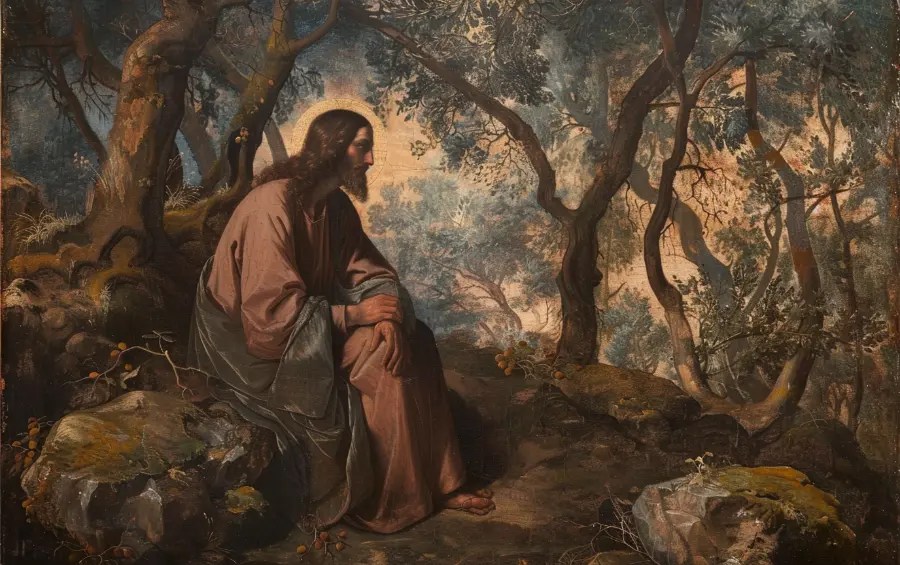
Are the witnesses watching us, or testifying to us?
Readers of Hebrews have long divided on this. The race suggests a stadium, and a crowd around a stadium watches the runners. But the word itself means people who give testimony, not people who look on.
Some commentators take the word strictly. The Hebrews volume of Meyer’s New Testament commentary says the writer “does not intend to imply that these witnesses are present as spectators,” and presents them instead “as persons who have borne testimony.” It dismisses any blend of the two meanings: “the combining of that which is logically irreconcilable is not exegesis.” Calvin, too, reads the word first as testimony: “faith is sufficiently proved by their testimony, so that no doubt ought to be entertained.”
Others see both. Vincent says that martyrōn “does not mean spectators, but those who have born witness to the truth,” then adds: “Yet the idea of spectators is implied, and is really the principal idea.” Calvin himself places the witnesses around the course. The writer called them witnesses rather than runners, he says, so that we would know they are not rivals for the prize but there “to applaud and hail our victory.” Lawrence Farley, an Orthodox priest writing for the Orthodox Church in America, describes the runners as “cheered on by a ‘great cloud of witnesses’ observing us from the heavenly stands.” Jamieson, Fausset and Brown also give both senses. The witnesses attest “by their own case the faithfulness of God to His people,” and they watch “our struggle of faith,” though the commentators add that this second sense “is not positively, unequivocally, and directly sustained by Scripture.”
A third group accepts the stadium picture but will not press it into a doctrine. Albert Barnes calls it “a figurative representation, such as is common,” meaning “that we ought to act as if they were in sight, and cheered us on.” Whether the departed see what happens on earth, he says, “is not revealed in the Scriptures.”
On every reading the witnesses give testimony. Whether they also look on, and pray, is where the churches part.

Do the saints in heaven pray for us?
Every tradition honours the witnesses as examples. They differ on whether the departed pray for the living, and whether the living should ask them to.
カトリックの教えは
The Catechism of the Catholic Church heads one of its sections on prayer “A cloud of witnesses” and cites Hebrews 12:1. It says: “The witnesses who have preceded us into the kingdom, especially those whom the Church recognizes as saints, share in the living tradition of prayer by the example of their lives, the transmission of their writings, and their prayer today.” It concludes: “We can and should ask them to intercede for us and for the whole world.” Elsewhere it says the saints “do not cease to intercede with the Father for us, as they proffer the merits which they acquired on earth through the one mediator between God and men, Christ Jesus.”
正教会の教え
The Orthodox Church calls on the saints’ prayers at every Divine Liturgy. 正教会の信仰, the Orthodox Church in America’s handbook, explains that at the end of the service the mercy of Christ is called down on the people “through the intercessions of the Theotokos and Ever-virgin Mary, and by the prayers of the saints.” The liturgy also remembers “every righteous spirit made perfect in faith,” an echo of Hebrews 12:23, where the church has come to “the spirits of the righteous made perfect.” Farley describes the Church’s practice as one of “asking the departed saints to pray for us.” He answers the usual objection from 1 Timothy 2:5, “there is one mediator between God and men, the man Christ Jesus,” by separating two roles: “Mary and the saints are not mediators, but intercessors.” A mediator reconciles; “an intercessor is merely one who prays for another.”
Lutheran teaching
The Augsburg Confession, which Philipp Melanchthon read before Emperor Charles V on 25 June 1530, is the founding Lutheran statement. The Evangelical Lutheran Church in America’s magazine, Living Lutheran, calls it “generally viewed as the most important and influential confessional document, with the possible exception of the Small Catechism.” It keeps the saints as examples: “the memory of saints may be set before us, that we may follow their faith and good works, according to our calling.” It stops at asking them for help: “But the Scripture teaches not the invocation of saints or to ask help of saints, since it sets before us the one Christ as the Mediator, Propitiation, High Priest, and Intercessor.” Its defence, the Apology of the Augsburg Confession, grants that “just as, when alive, they pray for the Church universal in general, so in heaven they pray for the Church in general,” and adds at once, “albeit no testimony concerning the praying of the dead is extant in the Scriptures, except the dream taken from the Second Book of Maccabees.” What it denies is that Scripture gives any command, promise or example for calling on them.
Anglican, Reformed and Baptist teaching
The Church of England’s Thirty-Nine Articles, agreed in 1562, put it more sharply. Article XXII names the “invocation of Saints” among teachings it calls “a fond thing vainly invented, and grounded upon no warranty of Scripture, but rather repugnant to the Word of God.”
The Westminster Confession, finished in 1646, is the historic confession of Presbyterian churches, and its reasoning runs through worship. “Religious worship is to be given to God, the Father, Son, and Holy Ghost; and to him alone; not to angels, saints, or any other creature,” it says, and not “in the mediation of any other but of Christ alone.” The next section calls prayer “one special part of religious worship,” so on this reasoning prayer belongs to God alone. Catholics and Orthodox do not count asking for a saint’s prayers as worship; to them it is a request for intercession, the distinction Farley draws above. Westminster does not say whether the saints in heaven pray for the church. It rules only on prayer addressed to them. The 1689 Confession of the Reformed (Particular) Baptists, most of whose paragraphs come from the Savoy Declaration, a Congregationalist revision of Westminster, repeats the sentence almost word for word. Calvin said the writer of Hebrews listed the saints of chapter 11 so “that every one should be prepared to imitate them.” Protestants also use the word saint for every believer; our article on whether Protestants believe in saints explains how.
Where the churches agree is on the witnesses as examples. The Catechism puts “the example of their lives” first among the ways the saints share in prayer, the Augsburg Confession sets their memory before us “that we may follow their faith,” and Calvin reads the whole list as a call to imitate them.
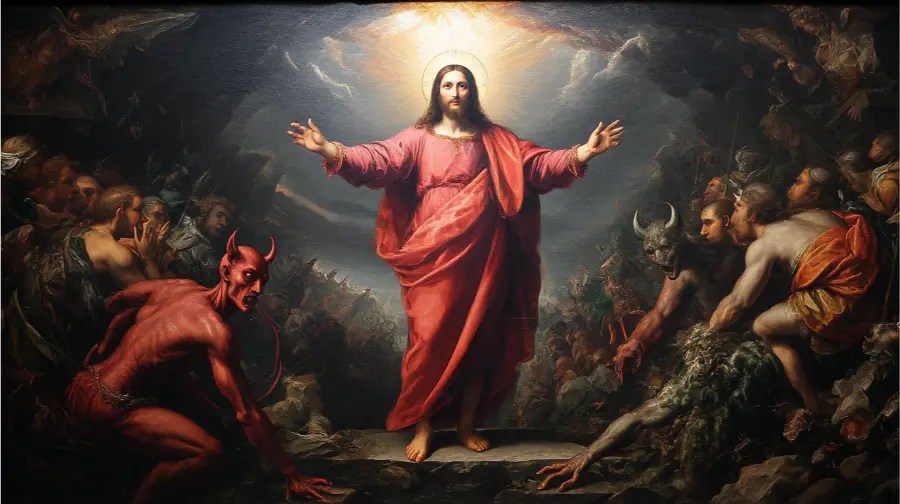
When churches read Hebrews 12:1
The passage belongs to the feasts of the saints. The Catholic Church and many other Western churches keep All Saints’ Day on 1 November, a feast, in the Catholic Encyclopedia’s words, “to honour all the saints, known and unknown.” The Orthodox keep the Sunday of All Saints on the first Sunday after Pentecost, and its epistle is Hebrews 11:33–12:2, so the list of the faithful and the call to run are heard together, one straight after the other, as the letter wrote them.